

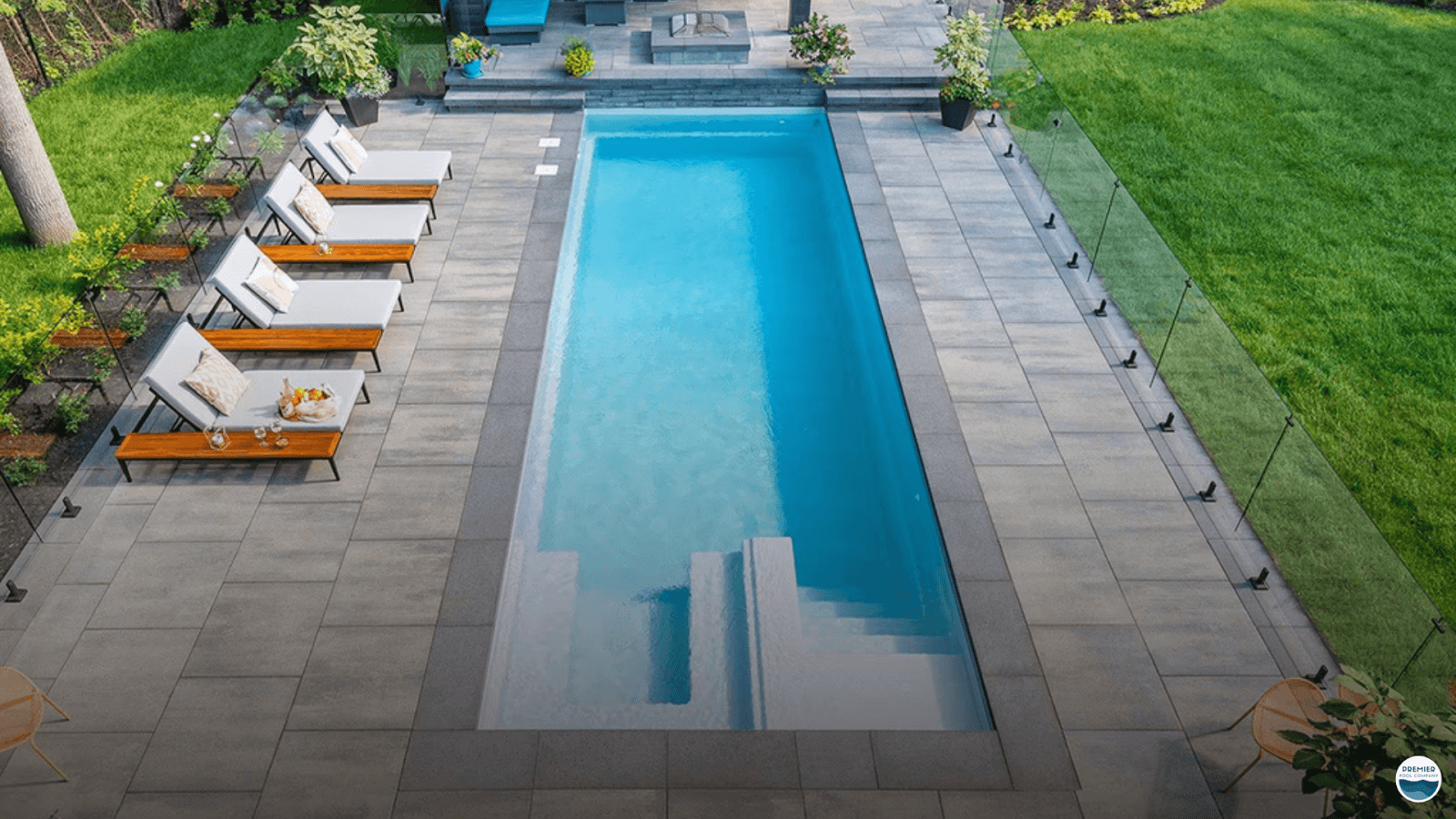
Fiberglass Inground Pools: Pros and Cons You Must Know
Are you considering a fiberglass inground pool? Discover the essential pros and cons you need to know before making this investment for your backyard oasis.
I've been in the pool construction business for years, and the most common question I hear at Premier Pool Co. is: "Aaron, should I go with a fiberglass pool?" The answer isn't straightforward. After hundreds of installations across Central Ohio, I've learned fiberglass works perfectly for some homeowners, while others benefit more from vinyl or concrete.
Choosing the right pool isn't about trends or aesthetics alone, it's about understanding what you're really getting. Today, I'll walk you through the complete truth about fiberglass inground pools: the benefits, the real limitations, installation timelines, and long-term costs. This way, you can make the smartest decision for your backyard.
Quick Summary: What You'll Learn About Fiberglass Inground Pools
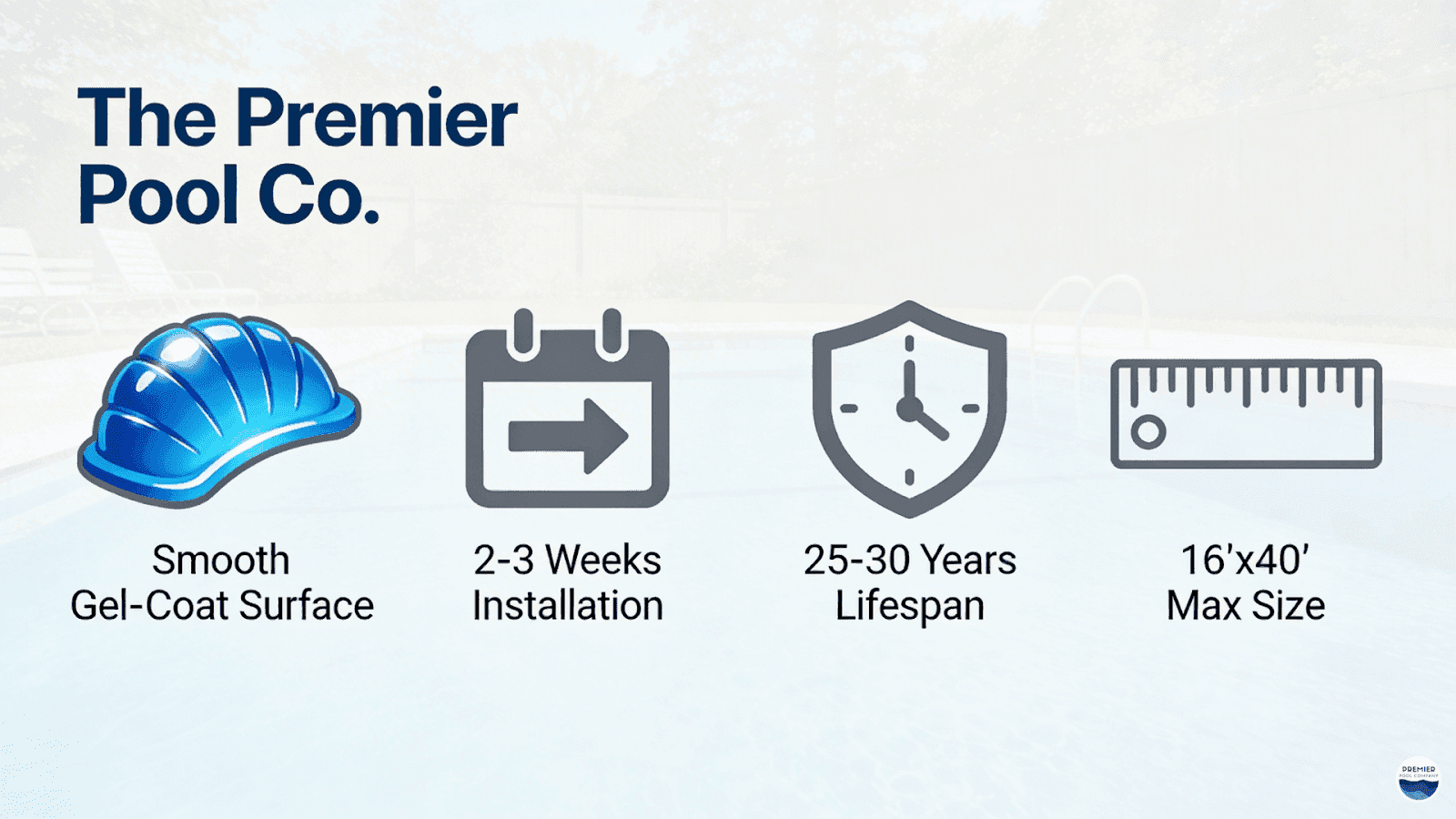
1. Fiberglass pools offer the smoothest, most algae-resistant surface of any pool type, reducing chemical usage by up to 30% compared to concrete pools.
2. Installation is remarkably fast, most fiberglass pools are swim-ready within 2-3 weeks, compared to 8-12 weeks for concrete pools.
3. The non-porous gel-coat surface means you'll spend 50-70% less time on maintenance compared to traditional pool types.
4. Limited customization is the biggest trade-off, you're restricted to pre-manufactured shell sizes, typically maxing out at 16 feet wide and 40 feet long.
5. Initial costs range from $45,000 to $85,000 in Central Ohio, but lifetime maintenance savings can offset this investment.
6. These five fiberglass pool characteristics matter most:
- Pre-manufactured one-piece shell construction
- Gel-coat finish that resists algae and staining
- Flexibility that handles ground shifts without cracking
- 2-3 week installation timeline
- 25-30 year lifespan with proper care
7. Best for: Homeowners who want low maintenance, quick installation, and don't need unusual shapes or sizes.
8. Not ideal for: Those requiring custom dimensions over 16'x40', unique shapes, or integrated vanishing edges.
Final Verdict: If you want standard dimensions with time savings and low maintenance, fiberglass pools from Premier Pool Co. deliver exceptional value. For custom designs or larger pools, explore our vinyl pool options.
Advantages of Fiberglass Inground Pools
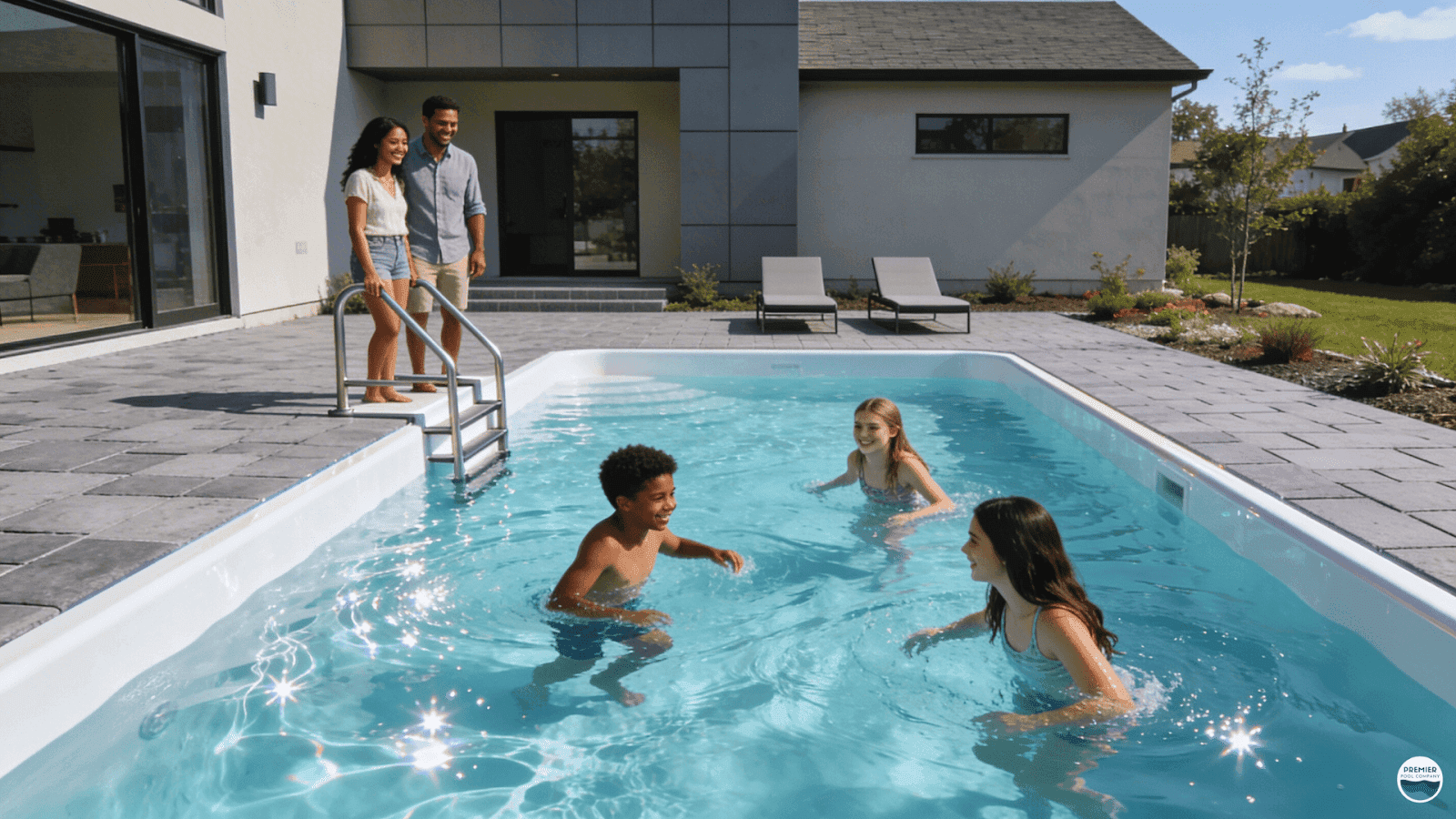
Fiberglass pools are renowned for low-maintenance and durability. Their smooth, non-porous surface resists algae better than other materials, meaning less scrubbing and fewer chemicals. This gentle, non-abrasive surface is perfect for families with young children or frequent swimmers.
Let me break down the key advantages into specific categories based on what I see most homeowners care about:
1. Low Maintenance Requirements
The gel-coat surface of fiberglass pools is a game-changer for maintenance. Here's why:
• Algae Resistance: The non-porous surface prevents algae from anchoring into microscopic pores, unlike concrete pools where algae can embed deep into the surface.
• Chemical Usage: You'll typically use 30-40% fewer chemicals compared to concrete pools. This translates to $300-500 in annual savings for most Central Ohio pool owners.
• Cleaning Time: Most of my clients spend only 1-2 hours per week on basic maintenance, compared to 3-4 hours for concrete pool owners.
• No Resurfacing: Unlike concrete pools that need resurfacing every 10-15 years (costing $10,000-15,000), fiberglass pools maintain their finish for decades.
Who Benefits Most: Busy professionals, families with young children, and anyone who wants more swimming time and less maintenance hassle. If you're looking for guidance on maintaining your pool once it's installed, check out our pool maintenance best practices.
2. Rapid Installation Timeline
Time is money, and fiberglass pools save you both:
Pool Type | Week 1-2 | Week 3-4 | Week 5-8 | Week 9-12 |
Fiberglass | Excavation + Shell installation | Plumbing + Decking | COMPLETE ✓ | - |
Concrete | Excavation + Steel | Gunite application | Curing + Plumbing | Plaster + Finishing |
Vinyl Liner | Excavation + Walls | Base + Liner install | Plumbing + Filling | - |
Fiberglass pools offer quick installation. Unlike concrete pools that take months, fiberglass pools are typically ready in just a few weeks. The pre-manufactured shell is delivered in one piece, significantly shortening construction time so you can enjoy your pool sooner.
Fiberglass pools are exceptionally durable, lasting decades with proper care. They resist common pool issues like cracking and staining. Their flexibility handles ground shifts and weather changes without damage, ensuring years of enjoyment with minimal repairs.
Disadvantages of Fiberglass Inground Pools
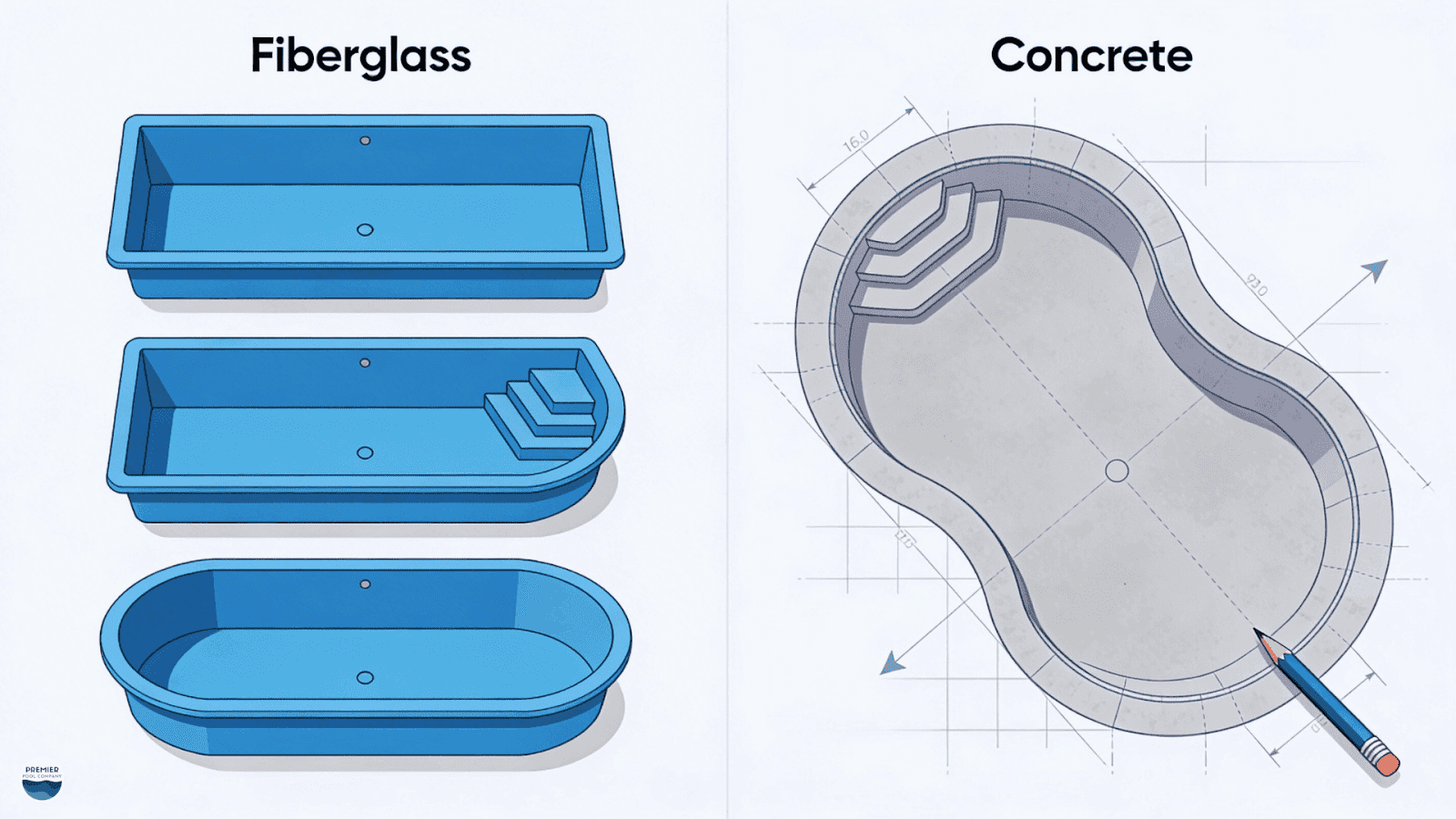
Despite their benefits, fiberglass pools have limitations. The biggest drawback is limited customization, you're restricted to pre-fabricated shapes and sizes from manufacturers. This can be challenging if you have specific design visions or irregularly shaped yards needing custom solutions.
Let me be transparent about the real disadvantages you'll face:
1. Design Limitations
• Maximum Width: 16 feet (industry standard due to highway transportation restrictions)
• Maximum Length: Typically 40 feet, though some manufacturers offer 42-foot options
• Depth Restrictions: Most pools max out at 8 feet deep; true diving pools are rare
• Shape Options: Limited to manufacturer's molds—no truly custom freeform designs
2. Upfront Cost Considerations
Central Ohio Fiberglass Pool Cost Breakdown:
• Basic Pool Shell (14'x28'): $25,000-$35,000
• Excavation & Site Prep: $5,000-$8,000
• Plumbing & Equipment: $6,000-$10,000
• Decking & Coping: $8,000-$15,000
• Additional Features: $5,000-$17,000
Total Investment Range: $45,000-$85,000
This is 15-25% higher than comparable vinyl liner pools upfront, though this gap closes over time due to maintenance savings.
3. Transportation & Site Access Challenges
I've had to turn down several jobs over the years due to site access issues:
• Narrow driveways (need minimum 10-12 feet clearance)
• Overhead power lines or tree branches below 18 feet
• Steep slopes that cranes can't navigate safely
• HOA restrictions on heavy equipment access
If your property has any of these limitations, you might need to consider alternatives.
Our team at Premier Pool Co.always conducts a thorough site evaluation before committing to a fiberglass installation.
Who Should Avoid Fiberglass Pools:
• Homeowners wanting L-shaped or highly custom designs
• Properties requiring pools larger than 16'x40'
• Sites with difficult access for crane delivery
• Buyers on a very tight budget (consider our vinyl pool options instead)
• Anyone wanting integrated infinity edges or perimeter overflow systems
Cost Analysis: Fiberglass vs. Other Pool Types
Let me give you real numbers from actual installations we've completed in Central Ohio:
20-Year Total Cost of Ownership Comparison:
Cost Factor | Fiberglass | Vinyl Liner | Concrete |
Initial Install | $45,000-$85,000 | $35,000-$65,000 | $50,000-$100,000+ |
Liner Replacement (20yr) | $0 | $16,000-$24,000 | $0 |
Resurfacing (20yr) | $0 | $0 | $20,000-$30,000 |
Chemicals (20yr) | $6,000-$10,000 | $8,000-$12,000 | $10,000-$16,000 |
20-Year Total | $51,000-$95,000 | $59,000-$101,000 | $80,000-$146,000 |
As you can see from this breakdown, fiberglass pools save you $6,000-$8,000 compared to vinyl liner pools and $29,000-$51,000 compared to concrete pools over 20 years. The key takeaway? The higher upfront cost of fiberglass pays for itself through reduced maintenance expenses.
For homeowners planning to stay in their homes long-term (10+ years), fiberglass is typically the most economical choice. If you're budget-constrained initially, vinyl liner pools offer a lower entry point, though you'll pay more over time. Want to explore all your options? Check out our complete pool cost guide.
Maintenance Requirements for Fiberglass Pools
One of the standout features of fiberglass inground pools is their relatively low maintenance requirements. The smooth, non-porous surface of the fiberglass shell makes it resistant to algae growth and staining, which are common issues with other pool types. This means you’ll spend less time scrubbing the pool walls and more time enjoying the water. Regular cleaning typically involves brushing the pool walls and floor with a soft brush and occasionally vacuuming the pool to remove debris.
Here's what I tell my clients about maintaining a fiberglass pool, it's significantly easier than you think:
Weekly Maintenance Checklist:
• Skim debris from surface (5-10 minutes)
• Brush walls and steps with soft-bristle brush (10-15 minutes)
• Vacuum pool floor or run automatic cleaner (15-20 minutes)
• Test water chemistry (pH, chlorine, alkalinity) (5 minutes)
• Empty skimmer and pump baskets (5 minutes)
• Check water level and adjust if needed (2 minutes)
Total Weekly Time: 45-60 minutes (vs. 2-3 hours for concrete pools).
Monthly Maintenance Tasks:
• Test calcium hardness and adjust
• Shock pool to eliminate contaminants
• Clean or backwash filter system
• Inspect equipment for leaks or issues
• Check pool automation systems
Seasonal Maintenance (Central Ohio):
• Spring Opening: Remove cover, clean pool, balance chemistry, start equipment ($200-400 DIY or $300-500 professional)
• Fall Closing: Balance chemistry, drain equipment, install cover ($150-300 DIY or $250-400 professional)
Chemical Cost Comparison (Annual):
Pool Type | Chlorine/Chemicals | Water Testing | Annual Total |
Fiberglass | $300-500 | $50-80 | $350-580 |
Vinyl Liner | $400-600 | $60-100 | $460-700 |
Concrete | $500-800 | $80-120 | $580-920 |
The bottom line? Fiberglass pools save you $120-340 annually on chemicals alone, and cut your weekly maintenance time in half. For busy homeowners, this is a game-changer. Want more maintenance tips? Check out our comprehensive vinyl pool liner care guide, which applies to fiberglass maintenance as well.
Installation Process of Fiberglass Inground Pools
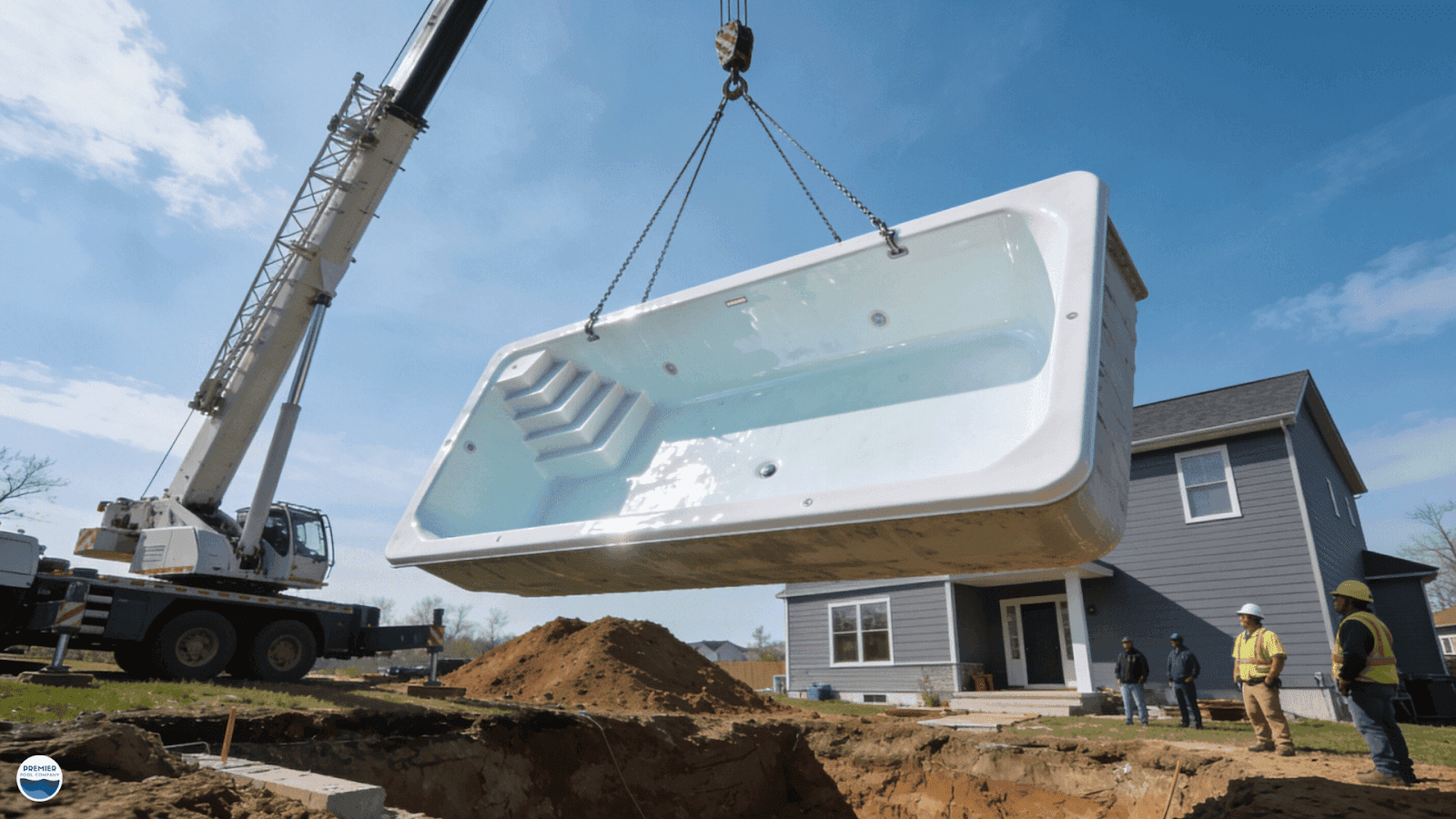
The installation process of a fiberglass inground pool is notably quicker and more streamlined compared to other pool types. It begins with selecting the desired pool shape and size from a manufacturer’s catalog. Once the choice is made, the pool shell is fabricated in a controlled factory environment, ensuring high-quality construction and adherence to strict standards. This pre-manufacturing process is a significant time-saver, as the pool shell is delivered to your home in a ready-to-install state.
At Premier Pool Co., we've perfected the fiberglass pool installation process. Here's what happens during your installation:
Step-by-Step Installation Timeline:
Day 1-2: Site Preparation & Excavation
• Mark pool location and utility lines
• Excavate hole to exact specifications (typically 2-3 feet larger than pool shell)
• Remove soil and debris from property
• Grade excavation floor
• Install drainage system if needed for high water table areas
Day 3: Base Preparation & Delivery
• Create 6-8 inch gravel or sand base layer
• Compact and level base to within 1/4 inch tolerance
• Coordinate crane delivery (requires 12-foot minimum clearance)
• Inspect pool shell before lowering
Day 4: Shell Placement
• Position crane (typically 90-ton capacity for larger pools)
• Carefully lower pool shell into excavation
• Level pool to exact specifications using laser levels
• Brace pool shell temporarily
• Begin initial backfilling around shell
Day 5-7: Plumbing & Electrical
• Connect main drain and skimmer plumbing
• Install return lines
• Set pump, filter, and heater equipment
• Run electrical connections (requires licensed electrician)
• Install pool automation systems if specified
• Complete backfilling with sand/gravel mix
Day 8-10: Finishing Touches
• Install pool coping
• Begin decking installation (concrete, pavers, or composite)
• Add pool lighting and water features
• Install safety fence/barriers
Day 11-14: Final Steps
• Fill pool with water (48-72 hours)
• Balance water chemistry
• Complete landscaping around pool area
• Final equipment testing and walkthrough
• Homeowner training on maintenance and equipment
Total Installation Time: 2-3 weeks (weather permitting)
Critical Success Factors I've Learned:
• Proper base preparation prevents 90% of future issues
• Backfilling technique is crucial, we fill with water simultaneously to prevent shell flexing
• Professional crane operators are non-negotiable, I've seen DIY attempts go very wrong
• Soil conditions in Central Ohio require extra attention to drainage
Want to see our complete installation process? Check out our step-by-step pool construction guide.
Lifespan and Durability of Fiberglass Pools
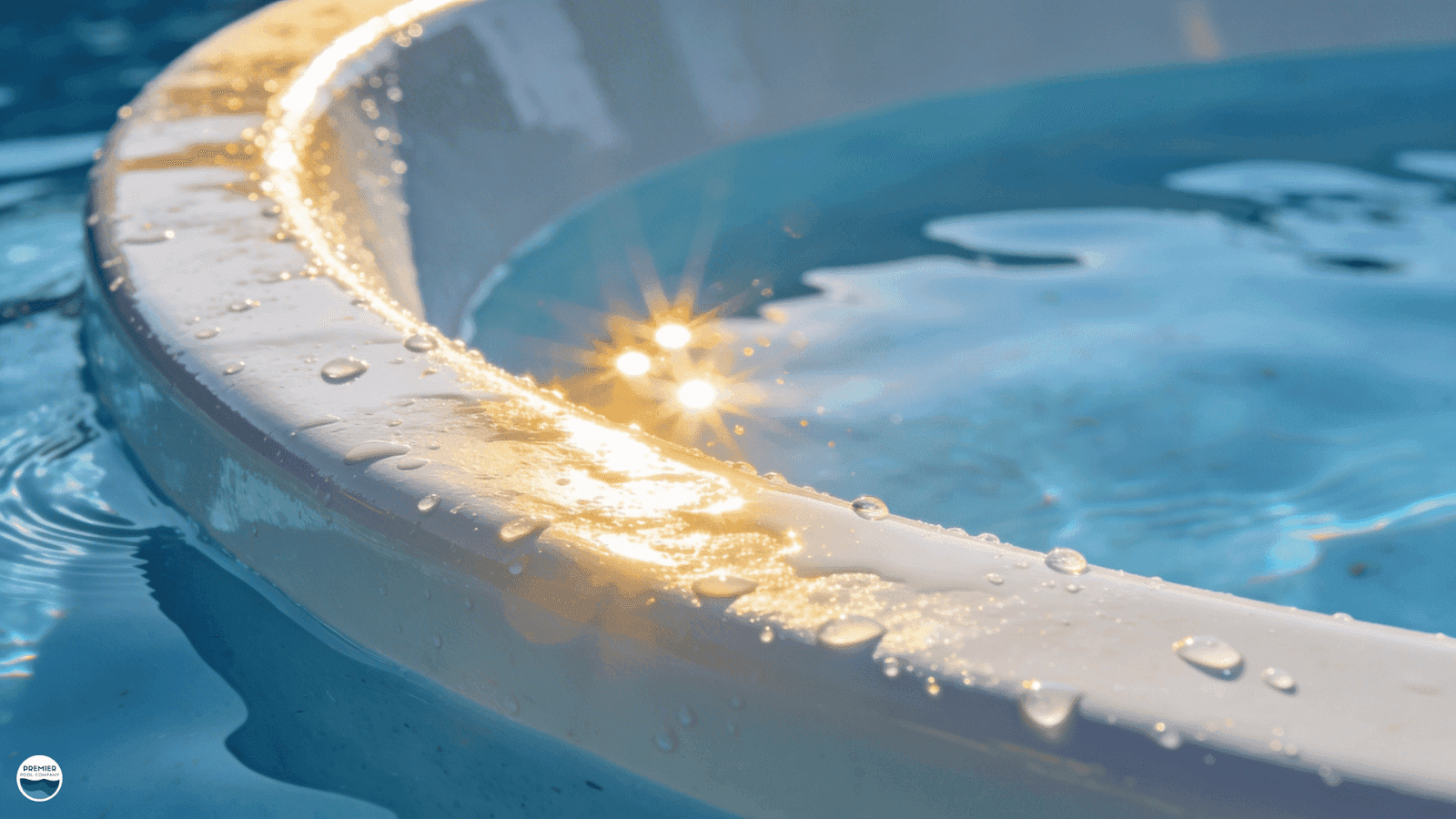
Fiberglass inground pools are renowned for their durability and long lifespan. One of the key factors contributing to their longevity is the inherent strength of fiberglass material. Unlike concrete, which can crack and require resurfacing, or vinyl liners that need periodic replacement, fiberglass pools are constructed from a robust composite material that can withstand various environmental stresses. This resilience ensures that a fiberglass pool can last for several decades with proper care.
Let me give you realistic expectations based on hundreds of installations:
Expected Lifespan Components:
• Gel-Coat Surface: 25-30 years before showing wear
• Structural Shell: 30-40+ years with proper installation
• Overall Pool Life: 30+ years (some fiberglass pools from the 1980s are still in use)
Factors That Extend Lifespan:
• Proper installation with adequate base preparation
• Regular water chemistry maintenance (pH 7.2-7.8, alkalinity 80-120 ppm)
• Winter covering in Central Ohio's climate
• Avoiding harsh chemicals or abrasive cleaning tools
• Professional annual inspections
Common Issues & When They Occur:
• Gel-coat fading: 15-20 years (cosmetic, not structural)
• Surface scratches: Can happen anytime (easily repairable)
• Stress cracks: Rare, typically due to poor installation or ground shift
• Delamination: Extremely rare with quality manufacturers
Durability Advantages Over Other Pool Types:
• Flexibility prevents cracking from ground movement (unlike concrete)
• No liner replacements needed every 7-10 years (unlike vinyl)
• Gel-coat doesn't degrade from UV exposure like vinyl liners
• Withstands Ohio's freeze-thaw cycles better than concrete
If you're planning to stay in your home for 15+ years, a fiberglass pool is an excellent long-term investment with lower lifetime costs and less hassle.
The non-porous surface is less susceptible to damage from water and chemicals, requiring fewer repairs. The smooth surface also prevents algae growth and staining, reducing maintenance needs.
While initial costs may be higher, reduced maintenance and repair costs make fiberglass more economical long-term. With proper care, a fiberglass pool can provide a beautiful backyard oasis for 25+ years, making it a wise investment for homeowners seeking durability and low maintenance.
Popular Fiberglass Pool Designs and Features
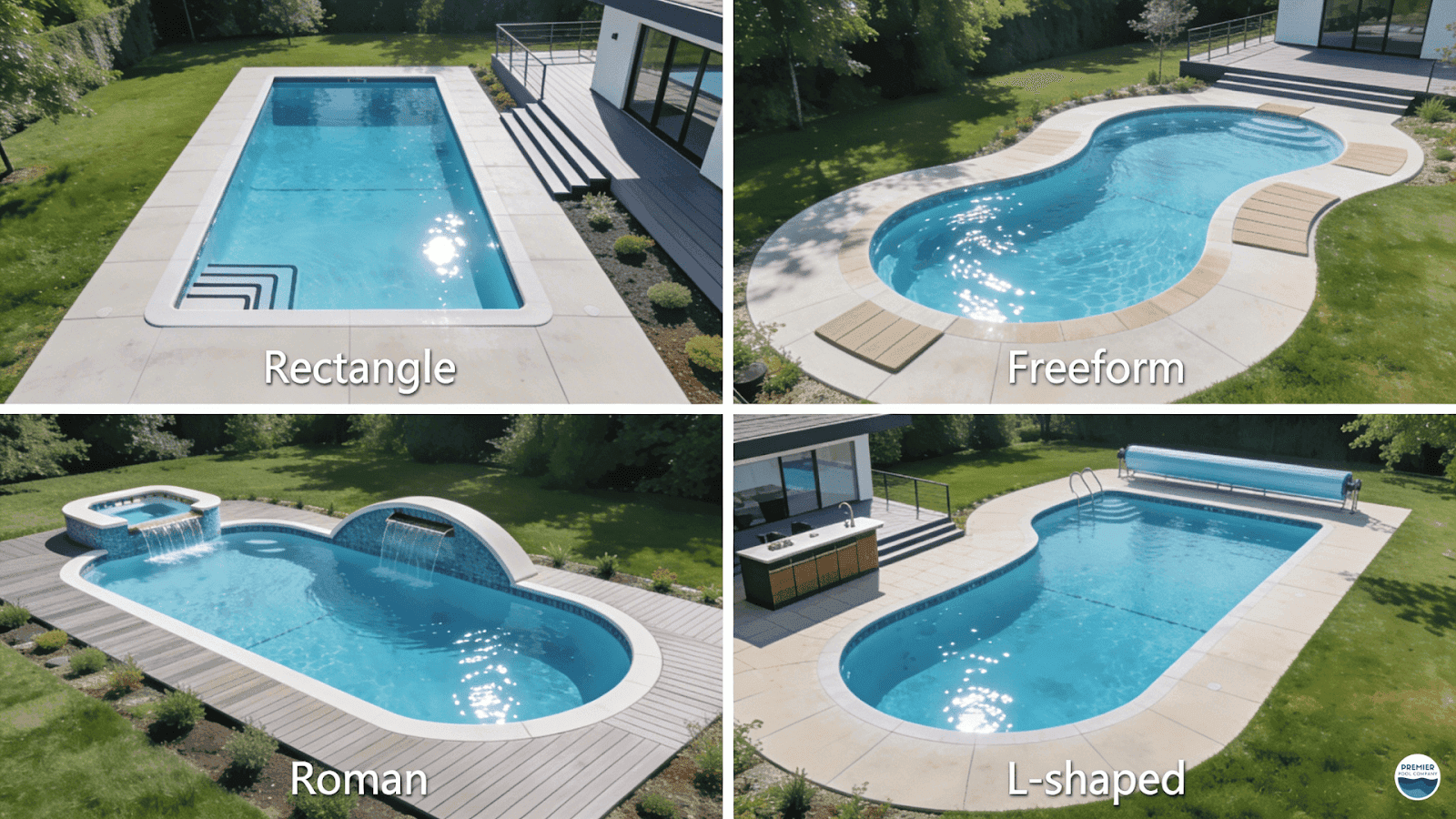
Fiberglass inground pools come in a variety of designs and features to suit different preferences and backyard layouts. One of the most popular designs is the rectangular pool, which offers a sleek and modern look. Rectangular pools are ideal for lap swimming and can be easily integrated with additional features such as automatic covers and integrated spas. Their clean lines and versatile design make them a favorite choice among homeowners.
Based on my experience at Premier Pool Co., here are the most popular designs we install:
Most Popular Shapes for Central Ohio:
1. Rectangle Pools (35% of our installations)
• Best for: Lap swimming, modern aesthetic, maximizing space
• Typical sizes: 12'x24', 14'x28', 16'x32'
• Great for: Families who entertain, fitness enthusiasts
2. Freeform/Kidney Pools (30% of installations)
• Best for: Natural aesthetic, flexible landscaping
• Typical sizes: 14'x26', 16'x30'
• Great for: Homeowners wanting organic, resort-style look
3. Roman/Grecian Pools (20% of installations)
• Best for: Classical elegance, symmetrical yards
• Typical sizes: 14'x28', 16'x32'
• Great for: Traditional home styles, formal gardens
4. L-Shaped Pools (15% of installations)
• Best for: Separating deep/shallow ends, volleyball/basketball
• Typical sizes: 16'x36' overall
• Great for: Active families, multi-use requirements
Must-Have Features (Based on Client Preferences):
• Tanning Ledge/Baja Shelf (60% of clients add this) - $3,000-6,000
• Built-in Steps (95% include) - Typically standard
• LED Color-Changing Lights (75% choose) - $1,500-3,000
• Benches/Seating Areas (40% include) - Usually built into design
• Water Features (Waterfalls, deck jets) (30% add) - $2,000-8,000
Color Options:
• Sapphire Blue (most popular - tropical look)
• Aquamarine (lighter, Caribbean feel)
• Graphite Gray (modern, natural stone appearance)
• Pearl White (brightest, clearest water)
Premier Pool Co. offers all major fiberglass pool brands and can help you choose the perfect design for your backyard. View our gallery of completed pools or explore our custom pool design process.
Environmental Impact of Fiberglass Inground Pools
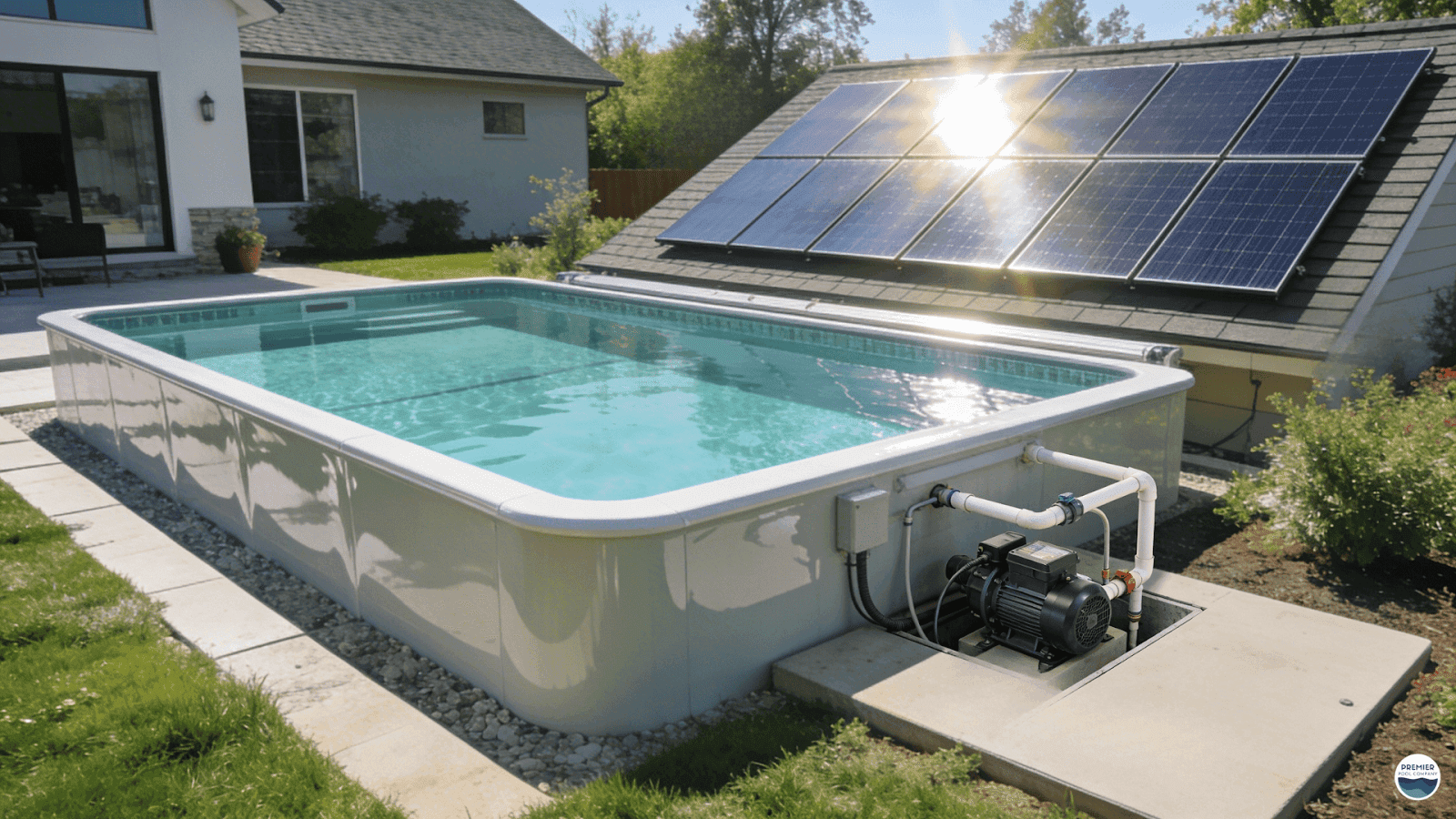
Fiberglass pools are eco-friendly for conscious homeowners. Their key environmental benefit is energy efficiency, the smooth, non-porous surface reduces energy needed to maintain clean water, allowing filtration systems to operate more efficiently and lower utility bills. The insulating properties also retain heat better, reducing heating needs.
They're also more water-sustainable. The non-porous surface reduces water evaporation, resulting in significant savings over the pool's lifetime. Because fiberglass resists algae and staining, fewer chemicals are needed for water quality. This reduces both maintenance costs and environmental chemical impact.
Their long lifespan is another environmental advantage. Fiberglass pools rarely need replacement or major repairs, reducing demand for raw materials and manufacturing energy. Many manufacturers now use recycled materials and sustainable manufacturing processes, further reducing fiberglass pools' environmental footprint.
Conclusion: Is a Fiberglass Inground Pool Right for You?
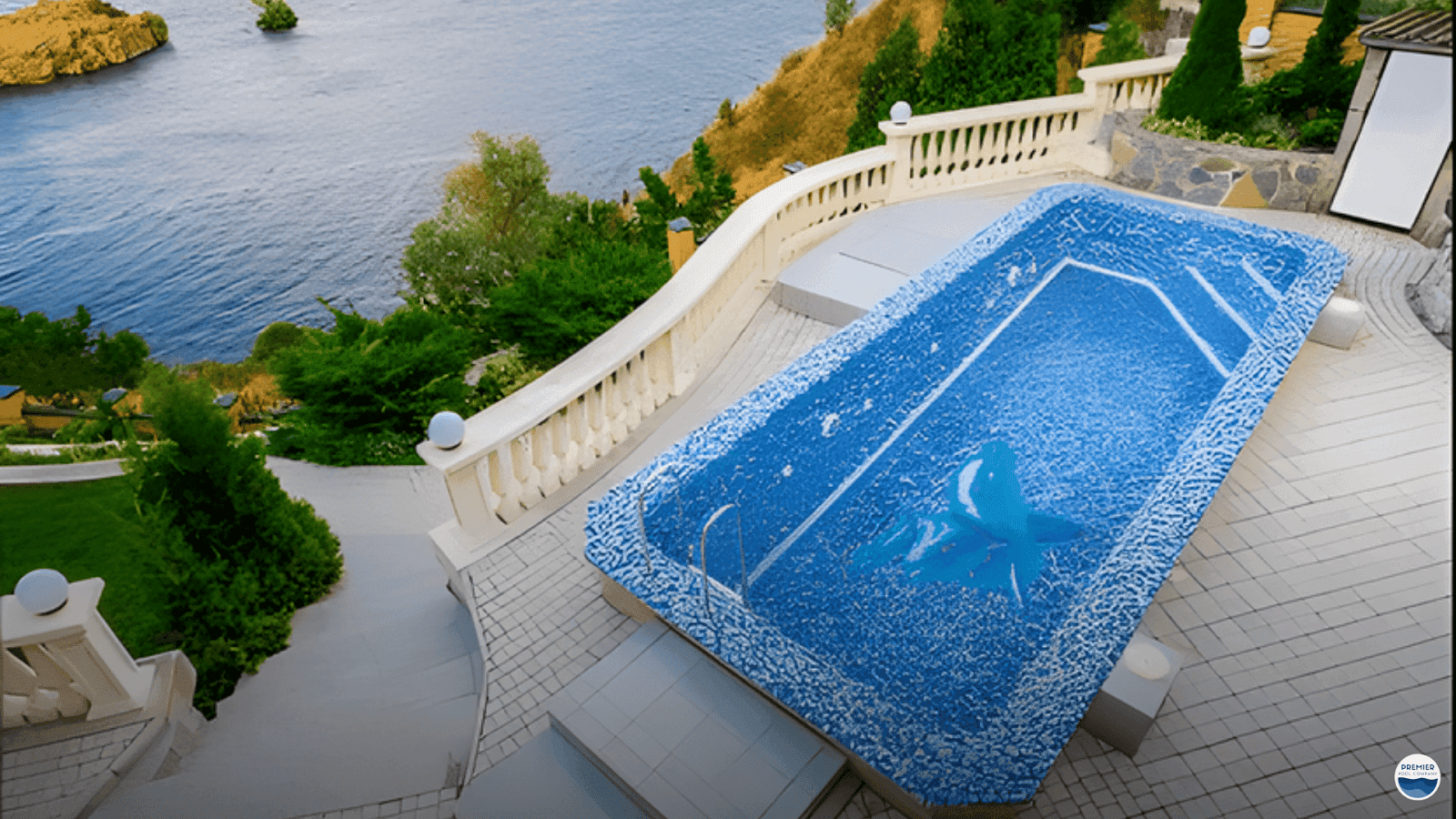
Deciding on a fiberglass pool requires weighing the pros and cons. The advantages are clear: low-maintenance, durable, and quick installation that enhances your backyard. The smooth surface reduces cleaning and chemical needs, ideal for busy homeowners who prioritize swimming over maintenance.
However, consider the drawbacks: limited customization and higher initial costs may matter for some homeowners. If you have a specific design vision or irregularly shaped yard, pre-fabricated pools might not fit your needs. Additionally, transporting and installing large shells can be challenging for properties with limited access.
The decision depends on your specific circumstances, preferences, and budget. If you want durability, low maintenance, and quick installation, fiberglass is an excellent choice. However, if customization and budget are priorities, explore other options. By carefully weighing the pros and cons, you can make an informed decision for years of enjoyment.
My Recommendation as a Pool Builder:
After years of installing pools across Central Ohio, here's my honest take: Fiberglass pools are the right choice for about 70% of homeowners I work with. They're perfect if you:
• Value your time (minimal maintenance means more swimming, less work)
• Want a pool that lasts 30+ years without major renovations
• Need installation completed within 3 weeks
• Can work within the 16'x40' size constraints
• Prefer lower chemical costs and easier water management
However, I always tell clients when fiberglass ISN'T the best fit:
• If you need a custom L-shaped, T-shaped, or truly unique design
• If your property has access challenges for crane delivery
• If you're designing a pool larger than 16 feet wide
• If you have very specific depth requirements over 8 feet
For these situations, I'd recommend exploring our vinyl liner options or considering a shipping container pool for unique spaces.
Ready to Take the Next Step?
At Premier Pool Co., we've helped hundreds of Central Ohio families transform their backyards with beautiful fiberglass pools. Whether you're in Columbus, Dublin, New Albany, or surrounding areas, we'd love to discuss your pool vision.
Here's what happens next:
1. Schedule a free consultation: We'll visit your property, discuss your needs, and provide honest recommendations
2. Site assessment: We'll evaluate access, soil conditions, and optimal placement
3. Design selection: Choose from our extensive catalog of shapes, sizes, and colors
4. Transparent pricing: No hidden fees—you'll know exactly what your investment includes
5. Professional installation: 2-3 weeks from excavation to swimming
Contact us todayto schedule your consultation. Let's make your backyard dreams a reality.
Frequently Asked Questions About Fiberglass Inground Pools
1. How long do fiberglass pools actually last in Ohio's climate?
From my experience installing pools throughout Central Ohio for years, I can tell you that fiberglass pools handle our freeze-thaw cycles exceptionally well. The gel-coat surface typically lasts 25-30 years before showing any significant wear, and the structural shell can last even longer, often 40+ years with proper care. The key is working with an experienced installer who understands proper backfilling techniques and drainage systems for our regional soil conditions.
2. Can I install a fiberglass pool myself to save money?
I wouldn't recommend it. While DIY enthusiasts might think they can handle it, the reality is that improper installation can lead to serious structural issues. The excavation must be precise, the base must be perfectly leveled and compacted, and the plumbing connections need to meet code. One mistake during installation can cost thousands to fix later. At Premier Pool Co., we've seen too many DIY disasters that ended up costing more to repair than professional installation would have cost initially. Learn more about our professional installation process.
3. What's the real cost difference between fiberglass and vinyl liner pools?
In Central Ohio, fiberglass pools typically cost $45,000-$85,000 installed, while vinyl liner pools run $35,000-$65,000. However, when you factor in liner replacements every 7-10 years ($4,000-$8,000 each time), the lifetime cost often favors fiberglass. Over 20 years, most homeowners save $8,000-$15,000 with fiberglass due to lower maintenance and no liner replacements. Check out our complete cost breakdown comparing all pool types.
4. Will a fiberglass pool increase my home's resale value?
Based on what I've seen in the Central Ohio market, a well-maintained fiberglass pool can add $20,000-$40,000 to your home's value, depending on your neighborhood and the overall quality of the installation. The key word is "well-maintained." Buyers love fiberglass pools because they know the maintenance will be minimal. That said, in some neighborhoods, pools can actually decrease value if they take up too much yard space or if the buyer doesn't want the responsibility.
5. How much does it actually cost to maintain a fiberglass pool annually?
For my typical Central Ohio clients, annual maintenance costs run $800-$1,200, which includes:
• Chemicals: $300-$500/year
• Electricity (pump/heater): $300-$500/year
• Water: $100-$150/year
• Professional opening/closing: $200-$300
This is roughly 30-40% less than concrete pool maintenance costs.
6. Can fiberglass pools be heated, and how well do they retain heat?
Absolutely! Fiberglass pools actually retain heat better than concrete pools due to their non-porous surface. The smooth gel-coat acts as a slight insulator, and many manufacturers now offer enhanced insulation options. We typically recommend heat pumps or gas heaters, depending on how frequently you plan to use the pool. A properly heated fiberglass pool can extend your swimming season from May through September in Ohio.
7. What happens if my fiberglass pool gets damaged, can it be repaired?
Yes, fiberglass pools can be repaired, though it's rarely necessary. I've seen maybe 2-3 structural issues in hundreds of installations. Surface chips or cracks can be repaired with gel-coat repair kits for minor damage, or professional refinishing for larger issues. The flexibility of fiberglass actually makes it more resistant to cracking compared to concrete, especially in areas with soil movement.
More Blogs

Aaron Lehner
Do Fiberglass Pools Crack In Cold Weather As Per Ohio's Climate Changes?
Do fiberglass pools crack in cold weather? Learn what causes a fiberglass pool crack, how Ohio winters affect it, and how to prevent structural damage.
Aaron Lehner
Pool Safety Regulations In Ohio - Everything You Need To Know
Learn Ohio pool safety regulations, including pool safety requirements, swimming pool fence rules, permits, gates, barriers, and local laws.

Aaron Lehner
Do Pools Add Value To A House In Ohio?
Do pools add value to a house in Ohio? Learn how pools affect resale value, appraisal, costs, buyer demand, and when an inground pool makes sense.