

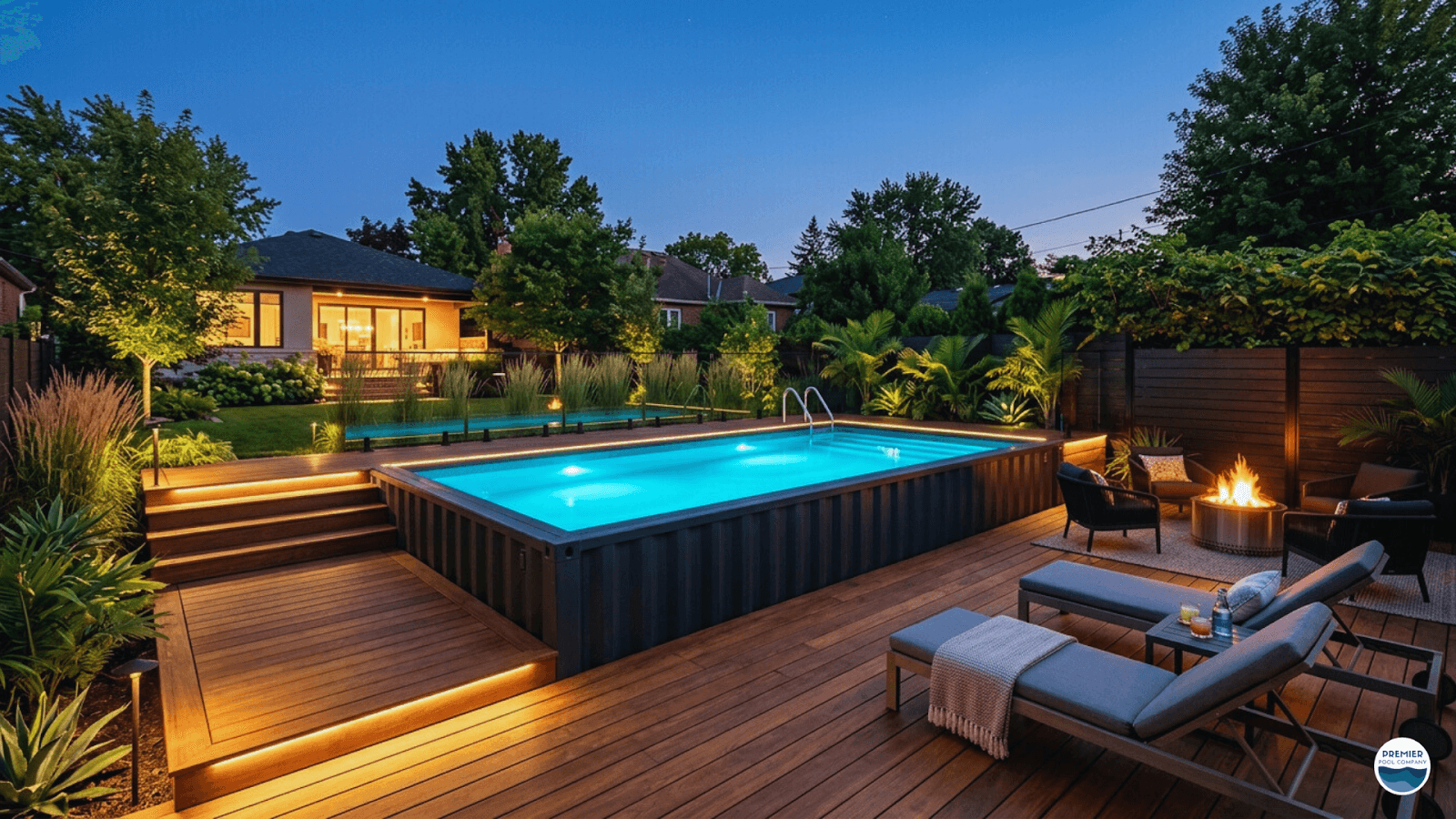
Shipping Container Pool Installation: A Step-by-Step Guide
I've been building pools in Central Ohio for years, and I have to say shipping container pool installation is one of the most exciting shifts I've seen in the backyard pool industry. When homeowners first hear about it, they're skeptical. A steel box as a swimming pool? But once I walk them through the process, the reaction almost always flips. According to recent industry data, the shipping container pool market is growing at over 15% annually, largely driven by homeowners wanting affordable, eco-friendly pool solutions without the 8–12 week wait of a traditional in-ground build.
I'm not going to sugarcoat it container pool installation isn't a one-weekend project. There are structural modifications, waterproofing decisions, filtration choices, and permitting steps that can trip people up if they're not prepared. I've seen DIY pool projects stall because someone skipped a foundation step, or chose the wrong liner material. That's exactly why I put this guide together.
Whether you're a homeowner exploring unique swimming pool options, or someone serious about starting their container pool build, this step-by-step breakdown covers what I personally recommend and what I've learned from doing this hands-on.
TLDR - Quick Takeaways
Here's what this guide covers and what you need to know upfront:
Shipping container pool installation takes 10–14 days on average compared to 8–12 weeks for traditional in-ground pools.
A 20-ft container pool costs $15,000-$30,000 fully installed; a 40-ft model runs $25,000-$50,000 still well below the $35,000-$65,000 average for a traditional in-ground pool.
The 5-step installation process covers: site prep → container delivery → structural modifications → waterproofing & plumbing → finishing touches.
Liner material choice (vinyl, polyurea, or fiberglass) directly impacts durability and long-term maintenance cost.
Local permits are required in most municipalities, including Central Ohio. Don't skip this step I've seen unpermitted builds forced to be removed.
Container pools are an eco-friendly pool solution repurposing a steel Conex box reduces scrap metal waste and requires less excavation than in-ground builds.
Planning Your Shipping Container Pool
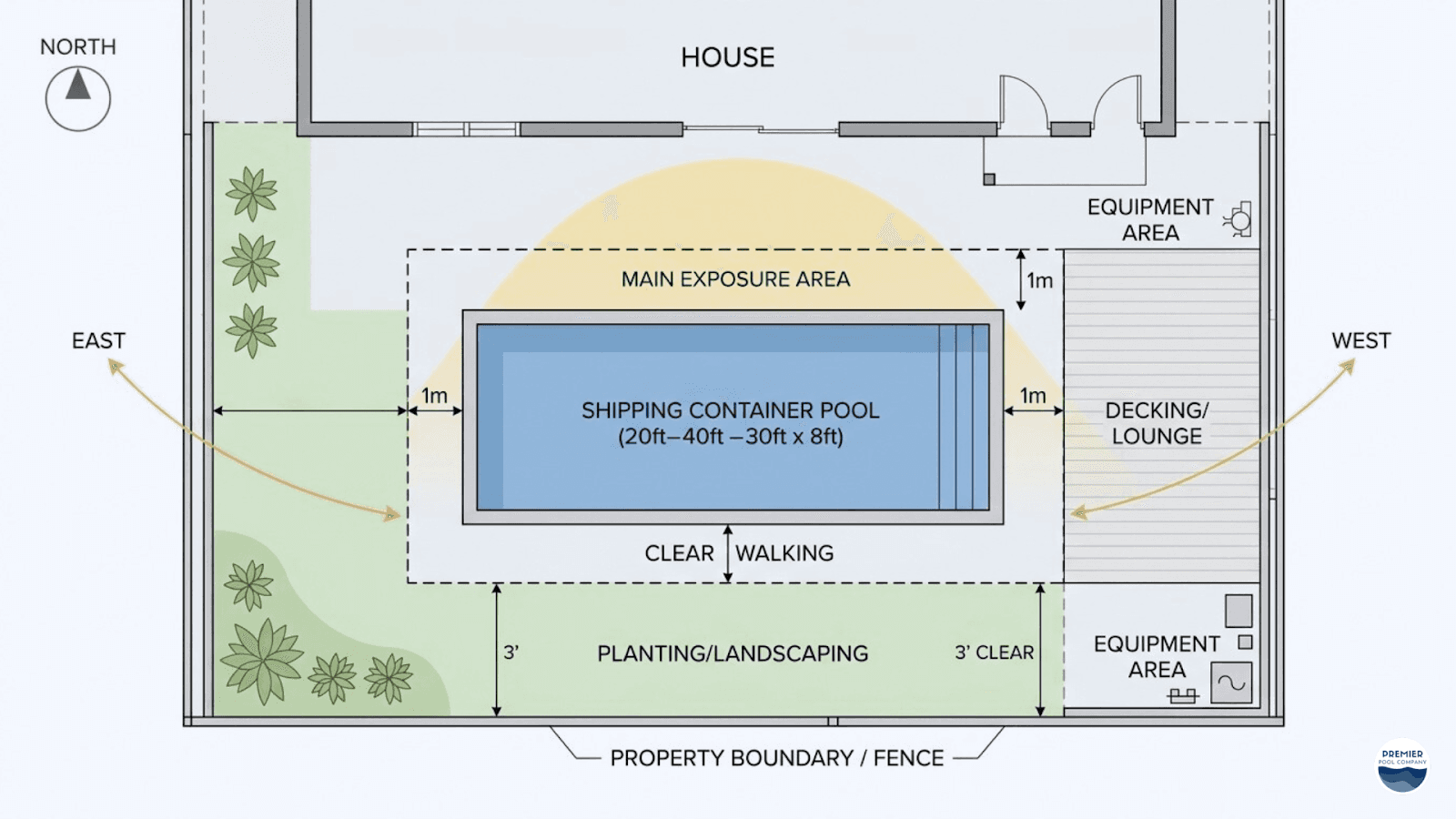
Before anything else, you need to get three things right: location, permits, and container size. Skipping any one of these during the planning phase creates real problems later.
Location: Choose a spot with 6+ hours of direct sunlight, away from overhanging tree branches. Make sure the spot is accessible for crane delivery; most 40-ft containers need at least 15 feet of clearance.
Permits: In Ohio (and most U.S. states), a pool including a container pool requires a building permit. You'll also need to comply with local fence requirements (typically 4-foot minimum barrier height) and setback rules from property lines.
Container Size: A 20-ft container (8' wide x 20' long) is ideal for smaller backyards or DIY enthusiasts on a tighter budget. A 40-ft container (8' wide x 40' long) gives families more swim space and room to add seating or a shallow wading section.
Getting these three elements right upfront will save you significant time, money, and headaches. At Premier Pool, we always walk homeowners through a site assessment before recommending a container size or configuration. You can explore our shipping container pool options to see what fits your backyard best.
Preparing the Site: Foundation, Drainage, and Leveling
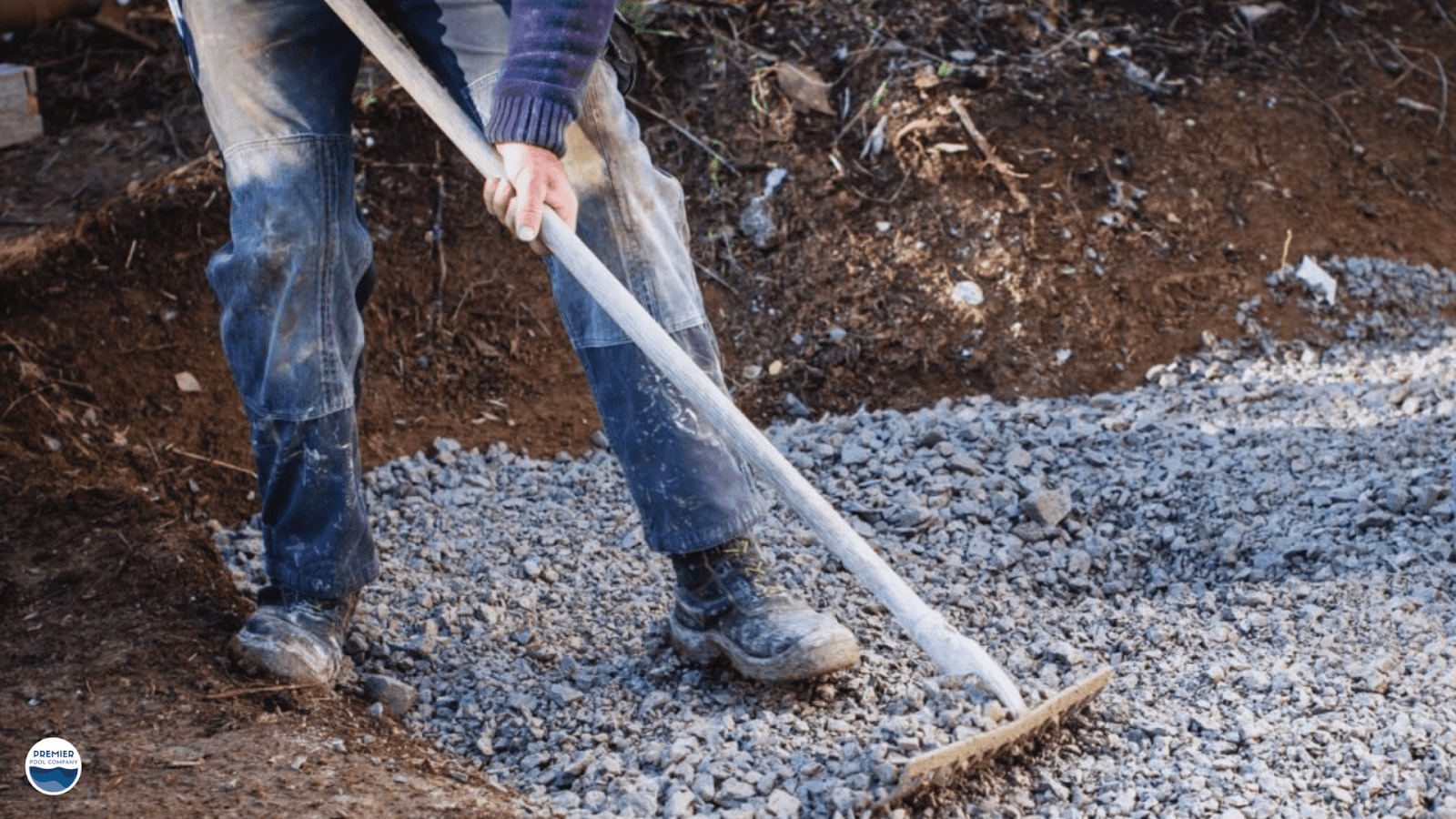
This is the step I see most homeowners rush through and it almost always causes problems down the road. I've had clients come to me after their DIY build started sinking or leaning because the foundation wasn't done right. Take your time here; it's worth it.
Clear and level the ground: Remove debris, rocks, and vegetation. Use a spirit level or laser level to identify high and low spots. Any slope greater than 1 inch per foot needs to be corrected before proceeding.
Set up drainage: Water must drain away from the container. Install a perforated drainage pipe or create a graded landscape (a 2% grade minimum is ideal). Poor drainage leads to rust buildup on the container base and soggy yards.
Build a compacted gravel or concrete foundation: This is the most important step. A 4-6 inch layer of compacted crushed gravel works well for above-ground installations. For in-ground or semi-inground setups, a reinforced concrete slab ($6-$12 per sq ft installed) is recommended. The base should extend at least 6 inches beyond the container on all sides.
A properly built foundation extends the life of your container pool significantly. Cost for site prep typically runs $1,000–$5,000, depending on the size and condition of your yard, a small investment compared to what a failed foundation will cost you to fix.
Shipping Container Modifications: Structural Reinforcement and Waterproofing
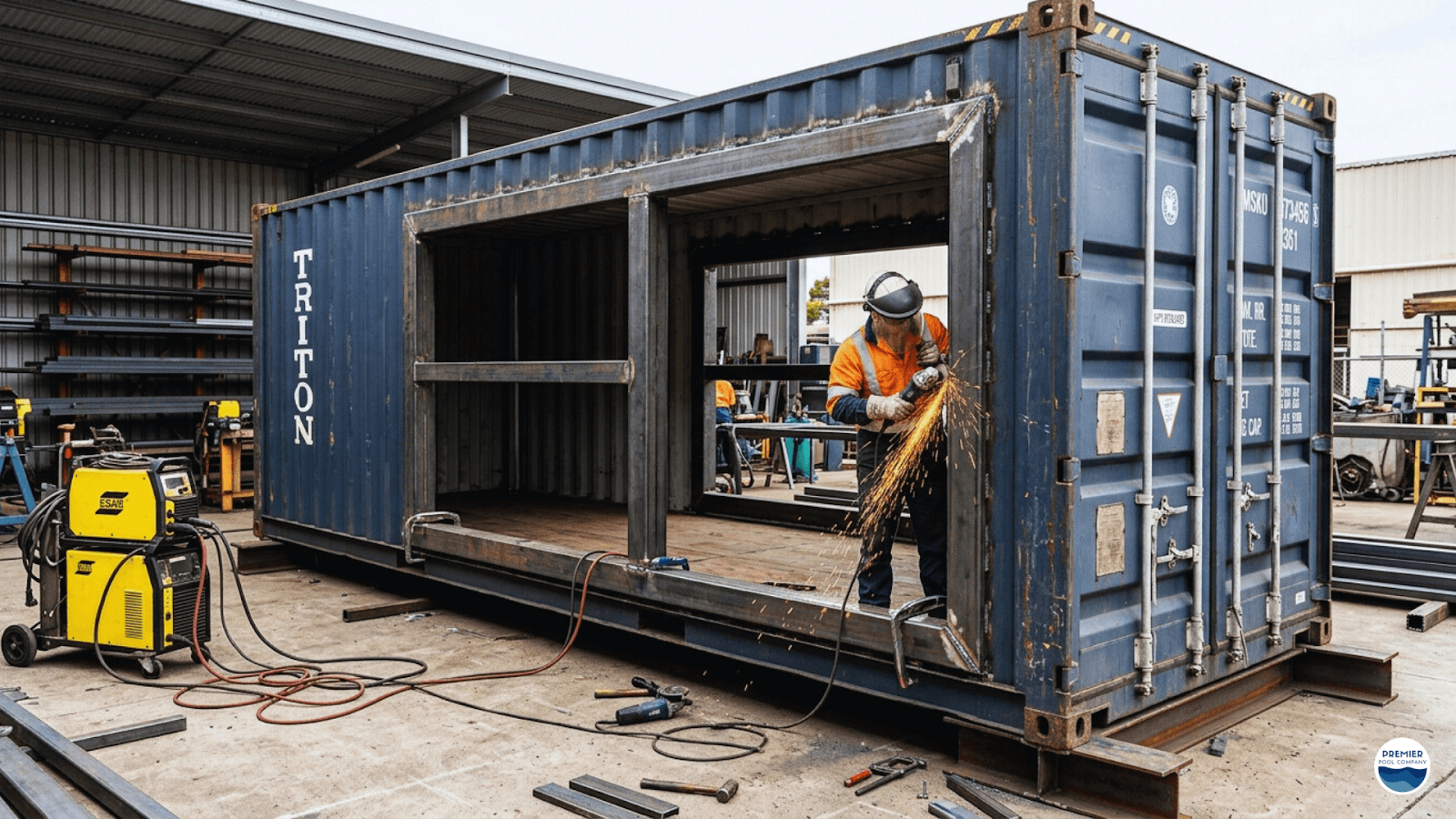
Once the foundation is solid, the real work on the container begins. This is where a shipping container gets transformed into an actual swimming pool. There are four major modification areas every container pool build needs to address.
Structural reinforcement: Cutting the top opening weakens the container's side walls. I recommend welding steel box section beams (typically 50x50mm or 75x75mm RHS steel) across the top opening and along the long walls to restore rigidity. Skipping this step can cause the walls to bow outward under water pressure.
Interior liner (waterproofing): This is the most critical part.
Your three main options are:
(a) Vinyl liner budget-friendly ($500–$900) but requires replacement every 8–12 years;
(b) Spray-applied polyurea the gold standard, seamless and UV-resistant, typically lasting 20+ years with proper maintenance;
(c) Fiberglass coating durable and chemical-resistant but labor-intensive to apply. At Premier Pool, I personally recommend polyurea for its longevity and seamless finish.
Insulation: Shipping containers heat up fast in summer and lose heat quickly in colder months. Spray foam insulation on the exterior walls and underneath the container is the most effective option. It creates a tight thermal barrier and also helps prevent condensation, which can accelerate rust formation on the steel walls.
Entry, ventilation, and customization: Cut the entry steps opening using a plasma cutter or angle grinder, then reinforce the edges. Add composite or stainless steel steps for durability. Proper ventilation prevents moisture buildup inside the pool area. You can also create a built-in bench seat or shallow end during this stage for a more versatile swimming experience.
These modifications are where most of the cost lies typically $5,000–$15,000 for systems installation including plumbing, electrical, and waterproofing. Don't cut corners here. A well-modified container pool can last decades; a poorly waterproofed one will be leaking rust and liner issues within a few years.
Installing the Plumbing, Filtration, and Heating System
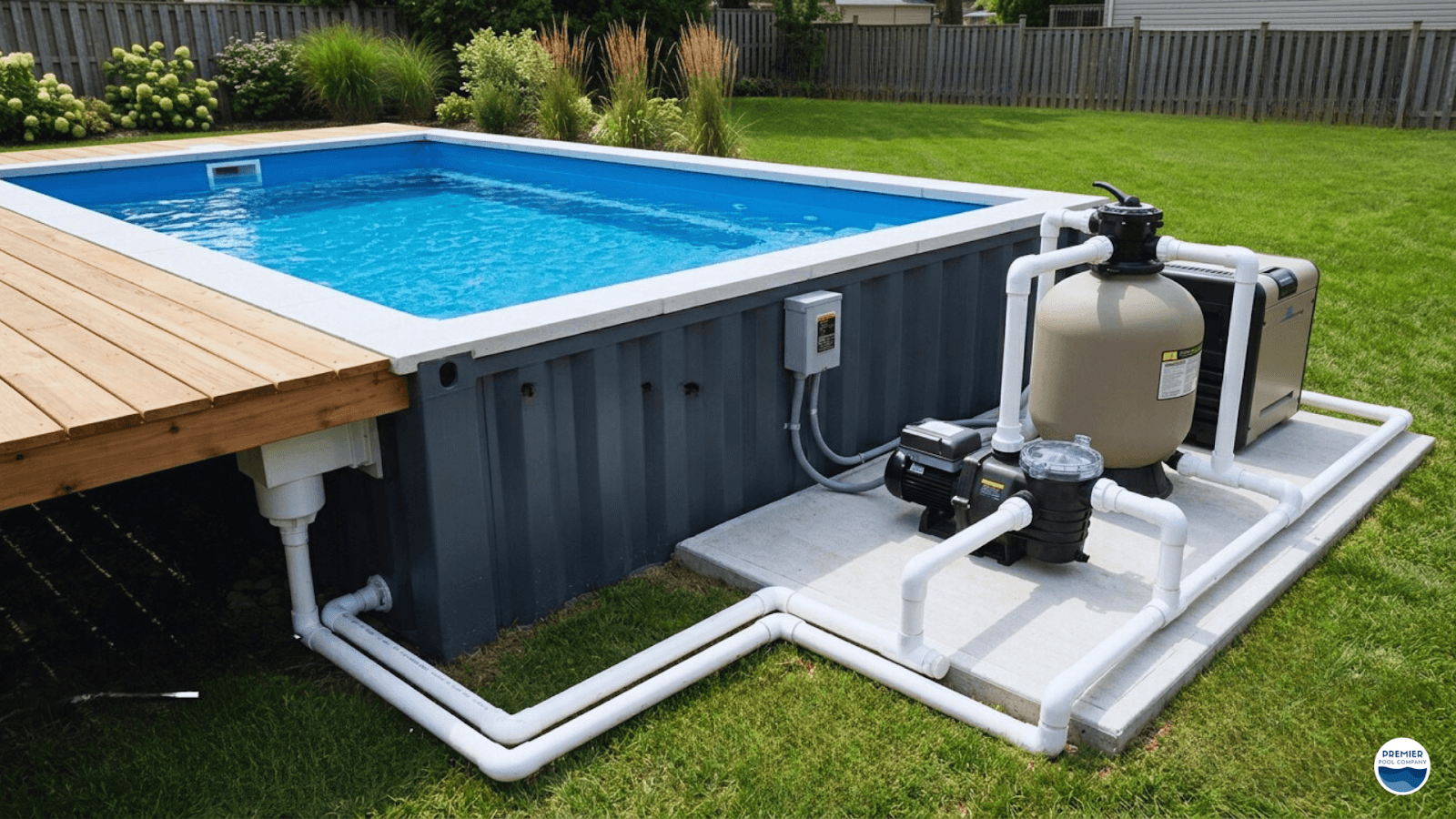
Once the container is structurally modified and waterproofed, the plumbing and filtration phase begins. This is where your pool becomes actually functional. I always recommend using a circulation pump and sand filter as the baseline system, with an optional heat pump for year-round use.
Pump & filtration system: A 1.5 HP variable-speed circulation pump paired with a sand filter or cartridge filter is suitable for both 20-ft and 40-ft containers. Budget $1,000–$2,000 for a reliable pump and filter combo. Don't skimp on filtration; it's the heart of your pool's water quality.
Plumbing: Use Schedule 40 PVC piping for the water supply and return lines. The skimmer (for surface debris) and main drain should be welded through the container walls with proper fittings. Run the return jets (typically 2-4 for a standard container pool) along the long walls for efficient water circulation.
Heating (optional but recommended in Ohio): For year-round swimming in Central Ohio, a heat pump (cost: $1,600–$5,200) is worth the investment. Pair it with a solar cover to reduce heat loss overnight and cut energy costs. A well-insulated container with a heat pump can maintain comfortable swim temperatures even in spring and fall.
Getting the plumbing and filtration right is what separates a pool that's a pleasure to maintain from one that becomes a chore. If you're unsure about sizing or setup, our team at Premier Pool is happy to walk you through it here's a quick guide on how to maintain your pool like a pro once it's running.
Safety Tips for Your Shipping Container Pool
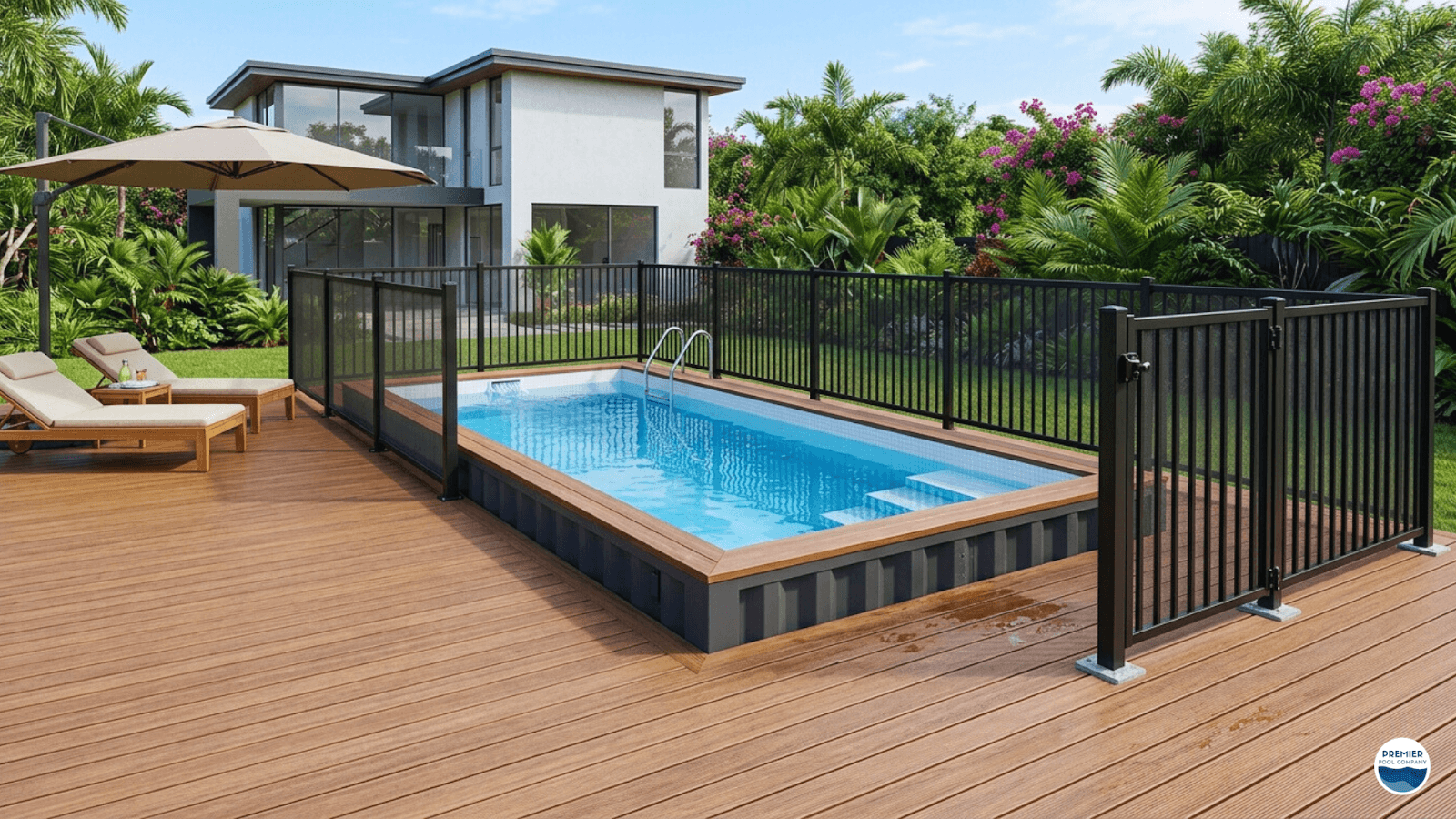
I want to be straightforward here: safety isn't an optional add-on for a container pool. It's a requirement. Here are the non-negotiable safety measures I recommend to every homeowner:
Pool fencing: In Ohio and most states, any pool including container pools must be enclosed with a fence of at least 4 feet (many municipalities require 5 feet). The gate must be self-latching and inward-swinging. This isn't just legal compliance; it's a genuine drowning prevention measure, especially for families with young children.
Electrical safety: All pool lighting and electrical components must be rated for wet or damp locations (UL Listed). Ground Fault Circuit Interrupters (GFCIs) are required for all poolside outlets and electrical connections within 20 feet of the pool. Have a licensed electrician handle this part always.
Anti-slip surfaces and pool edges: The container walls and entry steps can get dangerously slippery when wet. Install anti-slip grip tape or textured composite decking around the pool edge and on steps. Sharp cut metal edges should be ground smooth and capped.
Taking safety seriously upfront isn't just about regulations, it's what allows you to enjoy your pool with real peace of mind for years to come.
Landscaping and Aesthetic Touches: Turning Your Container Pool Into a Backyard Oasis
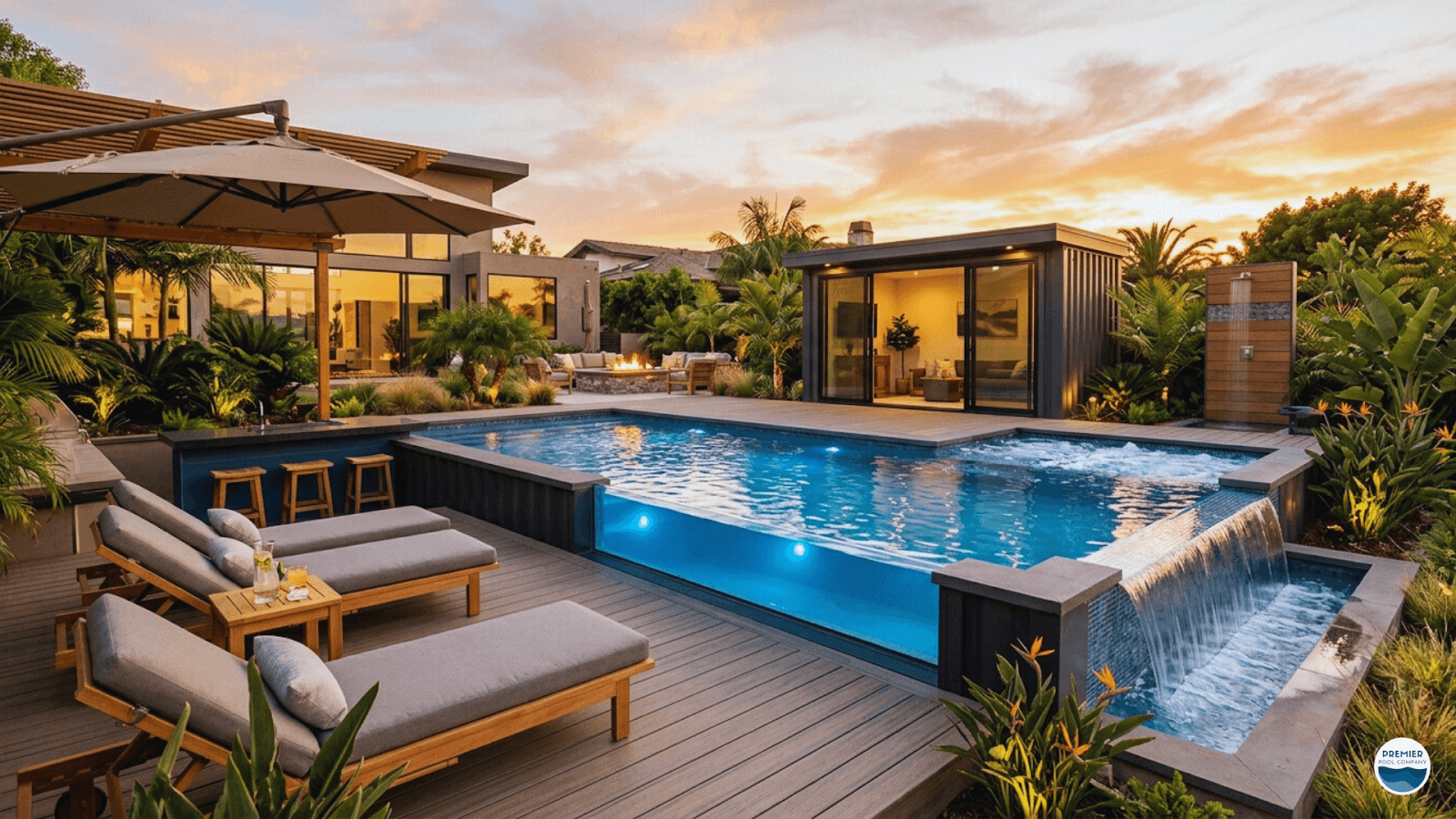
The structural and functional work is done now comes the part homeowners really get excited about. This is where your container pool stops looking industrial and starts looking like a luxury backyard feature. Here are the upgrades I personally recommend to transform any container pool:
Composite wood decking: Build a deck around the container (or on top for a rooftop access) using composite or hardwood decking boards. This instantly upgrades the look and creates a functional lounge area. It also hides the steel container walls, making it blend naturally with any backyard style.
LED pool lighting: Submersible LED lights transform the pool for evening use. Costs range from $200 to $1,000 depending on the number of fixtures and color-changing options. For families with kids, the lighting also adds an element of fun and visibility.
Exterior paint or cladding: Coat the exterior with weather-resistant industrial paint or apply wood/metal cladding to match your home's aesthetic. Neutral tones like charcoal, white, or earthy greens work well. This also helps protect against rust on the exterior steel.
Native plants and screening: Planting low-maintenance native shrubs or ornamental grasses around the pool perimeter adds privacy and softens the industrial look. Avoid plants that drop seeds or debris near the pool, as these clog filters.
If you want inspiration for what your finished container pool could look like, check out our
gallery at Premier Pool.We've installed everything from sleek modern setups to resort-style backyard oases right here in Central Ohio.
Shipping Container Pool: Pros and Cons Compared to Traditional Pools
I get asked this all the time: "Aaron, is a container pool actually better than a regular pool?" My honest answer is: it depends on your goals.
Here's how they stack up:
Pros of Shipping Container Pools
Faster installation: 10-14 days vs. 8-12 weeks for traditional in-ground pools
Lower cost: $15,000-$50,000 installed vs. $35,000-$100,000 for a comparable in-ground pool
Eco-friendly: Repurposes existing steel containers, reducing scrap metal waste and requiring significantly less excavation
Highly customizable: Choose your liner material, container size, entry style, heating, and landscaping to create a truly unique above-ground pool or semi-inground pool
Cons to Keep in Mind
Narrower swim area: Standard containers are 8 feet wide, which is narrower than many traditional pools. Not ideal for lap swimming or pool parties with large groups
Rust risk on exterior: Without proper exterior coating and annual maintenance checks, steel containers can develop surface rust, particularly at the base and weld seams
Requires professional modifications: Cutting, welding, and waterproofing the container safely is not a true beginner DIY project. For best results especially on the structural reinforcement and liner application hiring a professional is strongly advisable
My bottom line: if you're a homeowner in Central Ohio (or anywhere with a yard and a budget) who wants a pool faster and for less money than a traditional build a shipping container pool is a smart, beautiful, and genuinely sustainable choice.
You can explore more on how a shipping container pool compares to other pool types on our website, or take a look at the detailed cost breakdown in our shipping container pool cost guide.
Summary: Key Topics Learned
Here's a quick Q&A recap of everything covered in this guide:
What does shipping container pool installation involve?
It covers five stages: site prep and foundation, container delivery, structural modifications, waterproofing and plumbing installation, and aesthetic finishing.
How much does it cost?
A 20-ft container pool costs $15,000-$30,000 fully installed. A 40-ft model runs $25,000-$50,000. Both are significantly more affordable than a traditional in-ground pool ($35,000-$100,000).
What is the most important step?
Foundation and waterproofing. A poorly built base or wrong liner choice causes long-term structural and leakage problems.
Is a container pool eco-friendly?
Yes. Repurposing a Conex steel box reduces scrap metal waste and requires far less excavation than a traditional in-ground pool build.
Final Thoughts
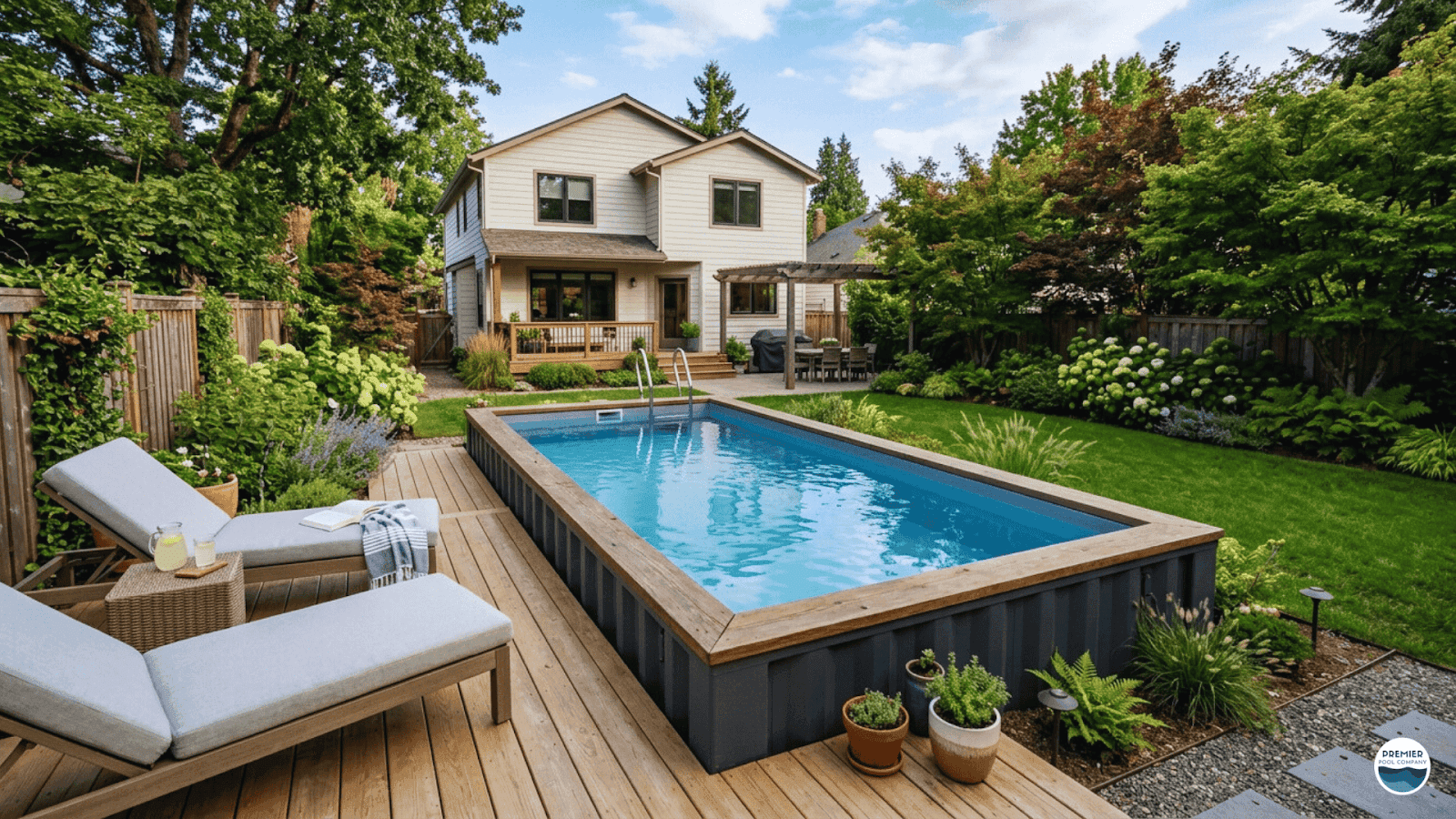
Shipping container pool installation has come a long way since I first started working with them. What started as a niche DIY trend has become a genuinely viable backyard pool solution for homeowners who want quality, speed, and sustainability without the cost of a traditional in-ground build.
If you take one thing from this guide, let it be this: the quality of your installation directly determines the lifespan of your pool. A properly reinforced, waterproofed, and maintained container pool can serve your family for 20 or more years. A rushed or under-budgeted one can cause headaches within the first season.
At Premier Pool, we've helped many Central Ohio homeowners design and build their perfect container pool, from initial planning through final landscaping. If you're ready to explore your options, check out our
fiberglass poolsandvinyl poolspages to compare pool types, or reach out for afree consultation. We'd love to help you bring your backyard pool vision to life.
Frequently Asked Questions (FAQs)
Do I need a permit for a shipping container pool in Ohio?
Yes, in Ohio you'll typically need a building permit for any permanent pool installation. Check with your local municipality, as setback requirements and fence regulations also apply. At Premier Pool, we help clients navigate the permitting process as part of our consultation and contact us to get started.
How long does a shipping container pool installation take?
For most residential projects in Central Ohio, the full process takes 10-14 days. Site prep typically takes 1-3 days, container delivery and positioning takes 1-2 days, and systems installation (plumbing, electrical, waterproofing) takes 5-10 days. This compares favorably with 8-12 weeks for a traditional in-ground pool build.
What is the best liner for a shipping container pool?
For long-term durability, spray-applied pure polyurea is the gold standard liner for shipping container pools. It's seamless, UV-resistant, and can last 20+ years. Vinyl liners are more budget-friendly ($500-$900) but need replacement every 8-12 years. Fiberglass coatings offer excellent chemical resistance but are more labor-intensive to apply.
Can a shipping container pool be installed in-ground or semi-inground?
Yes. Container pools can be installed above ground, semi-inground, or fully in-ground. Semi-inground installations (partially buried) are popular because they reduce the visual height of the container while keeping excavation costs lower than a full in-ground build. Full in-ground installations require soil testing and additional reinforcement but result in the most seamless backyard integration.
More Blogs

Aaron Lehner
Pool Water Testing in Ohio: A Beginner's Guide to Getting It Right
Pool water testing in Ohio was simple. Learn how to test chlorine, pH, alkalinity, and calcium hardness to keep your pool clear, balanced, and swim-ready.

Aaron Lehner
Paver Patio vs Concrete Pool Decks (Based on Ohio Climate)
Compare paver patio vs concrete pool decks in Ohio. Learn how pavers vs concrete patio options handle freeze-thaw cycles, drainage, heat, and maintenance.

Aaron Lehner
7 Best Pool Features To Add To Your Backyard In 2026
Discover the best pool features, custom pool features and swimming pool features for 2026, plus practical pool feature ideas that keep your Ohio backyard stunning and durable.