

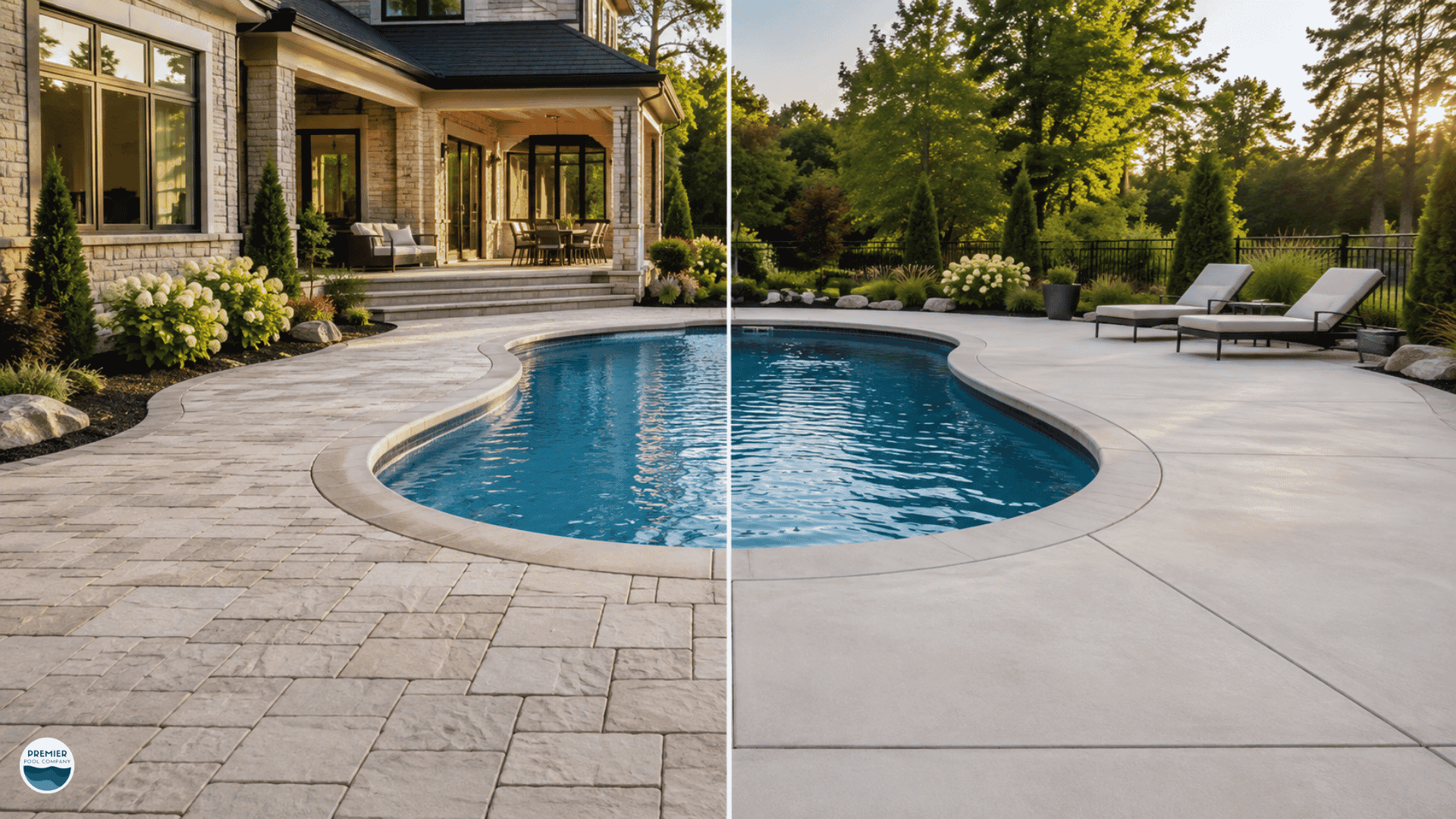
Living in Ohio, you already know how bad freeze-thaw cycles can affect pool quality. But still, I regularly see amateur pool builders making silly mistakes costing homeowners way more money in the long run than they should.
The risk here is that a pool is not something you build every day. And it's certainly not something you can repair easily. So even the material used in the patio or backyard has to be handled correctly, not just the pool surface.
In that regard, today we've decided to discuss paver patio vs concrete pool decks. And trust me, you'd want to know this because I've seen pool owners going for options just to make the pool look good, and not for longevity. As an Ohio resident, that would be a terrible mistake leading to thousands in repair costs in the future.
What I will really try to convey in this article is which one should be your option considering how a material handles Ohio's freeze-thaw cycle, chlorine and salt chemistry, and the kind of foot traffic that happens barefoot, wet, and close to a pool edge.
So let's find out which one of the two should be your priority.
TL;DR - Quick Takeaway On Paver Patio vs Concrete Pool Decks In Ohio
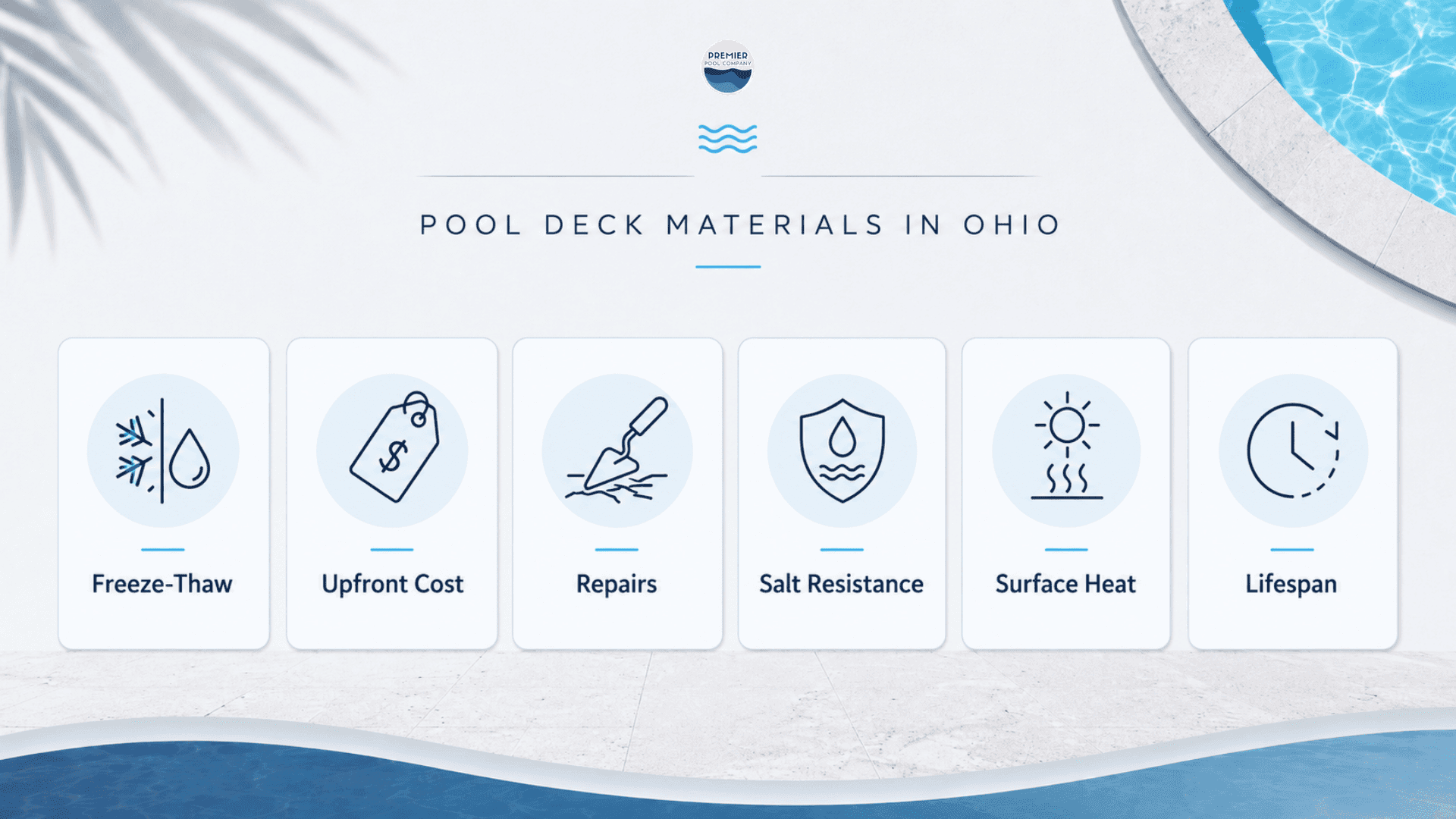
Pavers generally outperform concrete around Ohio pools because they are more flexible in shape and more enduring to ground movements compared to solid slabs.
Concrete pool decks cost less upfront but carry a higher lifetime cost in Ohio once you factor in sealing, crack repair, and eventual replacement.
Salt-chlorine pools are harder on plain concrete than traditional chlorine pools; pavers and properly sealed concrete both need salt-specific attention.
Heat retention matters a lot in Ohio's humid summers; lighter-colored pavers or concrete stay significantly cooler underfoot.
Drainage and base preparation determine long-term performance besides the surface material itself.
Neither material is universally "better" ; the right choice depends on your soil, budget, horizon, and how much maintenance you're realistically willing to do.
If you are unsure or if the current pool builder you are working with is not being transparent about it, you may consider switching to pool experts (such as Premiere Pools) with a proven track record.
Why Ohio's Climate Changes Is Important In This Decision
Ohio sits in a freeze-thaw zone that's genuinely rough on rigid materials. We get real winters, but we also get the false springs and thaw-refreeze cycles in January and February that can do more damage than a steady cold snap.
Water gets into hairline cracks or porous concrete, freezes, expands roughly nine percent in volume, and widens whatever gap it found. Then it thaws, more water gets in, and the cycle repeats.
A single Ohio winter can run through a dozen or more freeze-thaw cycles depending on the year.
Now, due to this freeze-thaw cycle, the pool deck is easily vulnerable because the ground around a pool shell is never perfectly stable. It takes a few years for it to settle, and in Ohio, it can take longer. The backfill compacts unevenly over the first few years, and the excavation itself disturbs soil structure in ways that may not fully resolve for a decade.
As you can tell, it’s natural for the ground around the pool to shift over time.
So what happens when you use concrete and when you use a paver patio?
A rigid concrete slab poured over that ground has to move as one piece. If there’s too much movement, it may crack.
In the case of a paver patio, when the ground shifts a little, the pavers shift with it and do not lead to a long crack.
A paver patio is made of thousands of individual units sitting on a compacted base and bedding layer, connected by sand in the joints rather than by a rigid bond. When the ground shifts a little, the pavers shift with it, unit by unit, instead of transferring stress into one continuous crack.
I've seen concrete pool decks in central and northeast Ohio, less than eight years old, already showing two or three cracks running from the coping toward the yard. In almost every case, base prep was the actual problem rather than the concrete mix, and being the rigid substance it is, it cannot handle the tension leading to cracks.
Paver Patio vs Concrete: What Actually Happens Underground
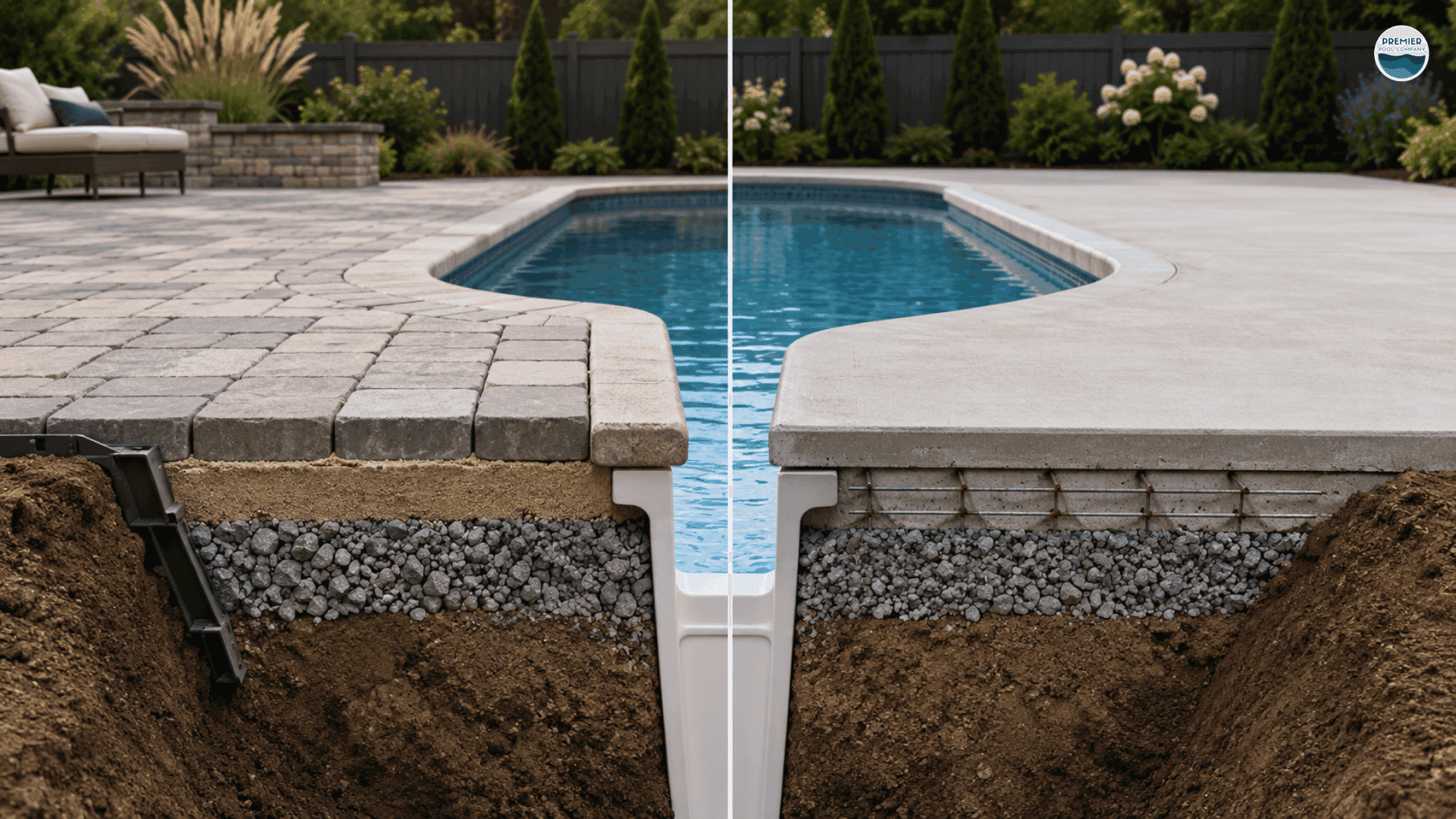
Before comparing surface materials, it's worth explaining what "base" means in this context, because it's where most of the problems originate.
Both a paver patio and a poured concrete patio need excavation down below the frost-sensitive layer, a compacted aggregate base (typically crushed limestone in Ohio), and proper grading away from the pool for drainage.
Concrete additionally needs steel reinforcement (rebar or wire mesh) and control joints cut at the right intervals to control where cracking could most likely happen.
Pavers need a sand setting bed on top of the compacted base, and edge restraints to keep the perimeter units from creeping outward over time.
The base requirements sound similar, but the tolerance for error is different for concrete vs pavers. Concrete demands a nearly perfect base because once it's poured, you cannot adjust it and any settling underneath shows up as a crack or a low spot that holds water (leading to cracks after freeze-thaws). Pavers are safer during installation because a contractor can shim, adjust, and level individual units on the fly. Also, if the area below sinks the feature, pavers can be lifted, releveled, and reset without replacing the whole surface.
Hence, I personally prefer using pavers. Technically speaking, the excavation for the pool shell itself will cause some soil disturbance right where the deck sits, and pavers make it easy to work on without getting heavy cracks.
We at Premier Pool Co mostly recommend pavers. If you need pool service done in Ohio, feel free to reach out.
Heat, Bare Feet, and Pool Deck Comfort
Normally, when walking around a pool, most people go barefoot, especially kids.
But if you ever walk across a dark concrete pool deck at 2 PM in July, you will understand how uncomfortable it gets. The surface simply heats up to an unbearable level sometimes.
Plain gray concrete can get slightly hot.
Stamped concrete or a colored concrete surface, especially in darker tones similar to stone or wood, can run noticeably hotter due to the darker pigment absorbing more heat from the sun.
In the case of pavers, it’s a lot more comforting.
Pavers are manufactured with a wider range of lighter, reflective color blends specifically engineered for pool surrounds.
The material composition (often a denser, more compacted concrete product than poured-in-place slab) tends to hold slightly less heat for the same color value.
Some paver lines also include a textured, chatter-cut or shot-blasted finish that both reduces slip risk and lowers surface temperature slightly compared to a smooth-troweled slab.
Being an Ohio resident, this should be a priority, especially if you have kids. Summers do tend to be very warm here, and kids running while having fun won’t realize instantly, but later find they have sore feet.
I recommend you lean toward lighter color values regardless of which material you choose, and ask specifically about "cool deck" or heat-reflective paver lines if you're going the paver route.
Concrete Pool Decks: The Honest Case For and Against

Concrete deserves a fair hearing, because for the right project it's still a good choice.
First of all, the upfront cost of getting a concrete pool deck is significantly less.
A standard broom-finished or lightly stamped concrete pool deck typically runs less per square foot than a full paver installation, sometimes by a meaningful margin.
For homeowners working with a tighter budget but need a decking done in the same project as the pool itself, this can be a viable option. You don't want to reduce budgets on other areas such as plumbing or filtration if you want a pool that lasts for a decade. So going for concrete at that time is a better choice.
Concrete also gives a cleaner, more monolithic look with no visible joint lines or sand lines between units. If you want such a continuous surface, then pavers can’t be used.
Stamped concrete can mimic natural stone patterns reasonably well from a distance, and colored or acid-stained concrete offers design flexibility. For luxury pools, these could be great options.
The case against concrete in Ohio specifically comes down to three things.
First, the freeze-thaw cracking risk (as explained earlier).
Second, concrete needs resealing roughly every two to three years around a pool to maintain water and chemical resistance, or else it may lead to surface spalling (the flaking, pitting look).
Third, once concrete does crack or spall, repair is visually imperfect. You can patch a crack, but the patch is quite visible. A full replacement means breaking out and repouring, which risks damage to the pool shell and is costly compared to lifting and resetting a section of pavers.
Salt Pools and Concrete: A Specific Ohio Problem
A growing number of Ohio pool installations are switching to salt-chlorine generation systems rather than traditional liquid or tablet chlorine.
Salt systems maintain a low but constant salinity in the pool water, and when people go in and out of the pool, the salt splashes onto the deck.
Now, plain concrete is porous, and this splashed salt water can accumulate around the pool edges between the pool and the deck. When it freezes during winter, it causes spalling to appear much faster than when it is with fresh water.
Here, it’s a combination of the expansion force of ice with the corrosive, crystallizing behavior of salt within the pore structure. So the damage is larger.
So, if your pool is going to have a saltwater system, then using concrete does reduce the longevity of the pool deck. The only way to reduce the effect is to have proper sealing done, which most amateur pool builders often mess up.
Pavers handle this dynamic better because the individual units are typically denser and less absorbent than poured concrete, and even where salt does penetrate, the segmented structure means any resulting damage is done around one or two units rather than spreading through a continuous slab.
Pavers Vs Concrete Patio: Cost Over a 15-20 Year Horizon
Most sticker prices by companies are based on a one-year estimate. What you should worry more about is the lifetime cost. You would want a swimming pool that can last 10-20 years without major renovations.
Concrete's advantage narrows once you account for resealing every two to three years, occasional crack repair, and the real possibility of full replacement somewhere in year twelve to eighteen if base prep or reinforcement wasn't ideal.
Pavers cost more initially but require less frequent sealing (every three to five years is typical, sometimes longer with polymeric sand joints), and repairs are localized and inexpensive; lifting a handful of settled units and resetting them costs a fraction compared to breaking and repouring a concrete section.
Here’s a direct comparison based on different factors.
(I’m not using specific numbers as they vary depending on the size, material, soil condition, and shape of the pool. But it gives you a high-level idea.)
Factor | Concrete Pool Deck | Paver Patio |
Upfront cost | Lower | Higher |
Freeze-thaw cracking risk (Ohio) | Higher | Lower |
Sealing frequency | Every 2-3 years | Every 3-5 years |
Repair method | Patch or repour (remains visible after repair) | Lift and reset ( not visible after repair) |
Salt-chlorine resistance | Needs consistent sealing | Naturally more resistant |
Surface heat (equal color) | Slightly higher | Slightly lower |
Design flexibility | Stamped patterns, few color options | Wide range of shapes, colors, and borders |
Typical lifespan before major work | 12-18 years | 20-30+ years |
Neither of them is universally "cheaper" if you bring both the upfront cost and the long-term costs into the equation.
A well-built, properly reinforced concrete deck that gets sealed on schedule can genuinely last two decades with only minor touch-up work. The table above describes the likelihood and typical outcomes across the projects I've seen, not a guarantee in either direction.
Backyard Patios Beyond the Pool: Does the Same Logic Apply?
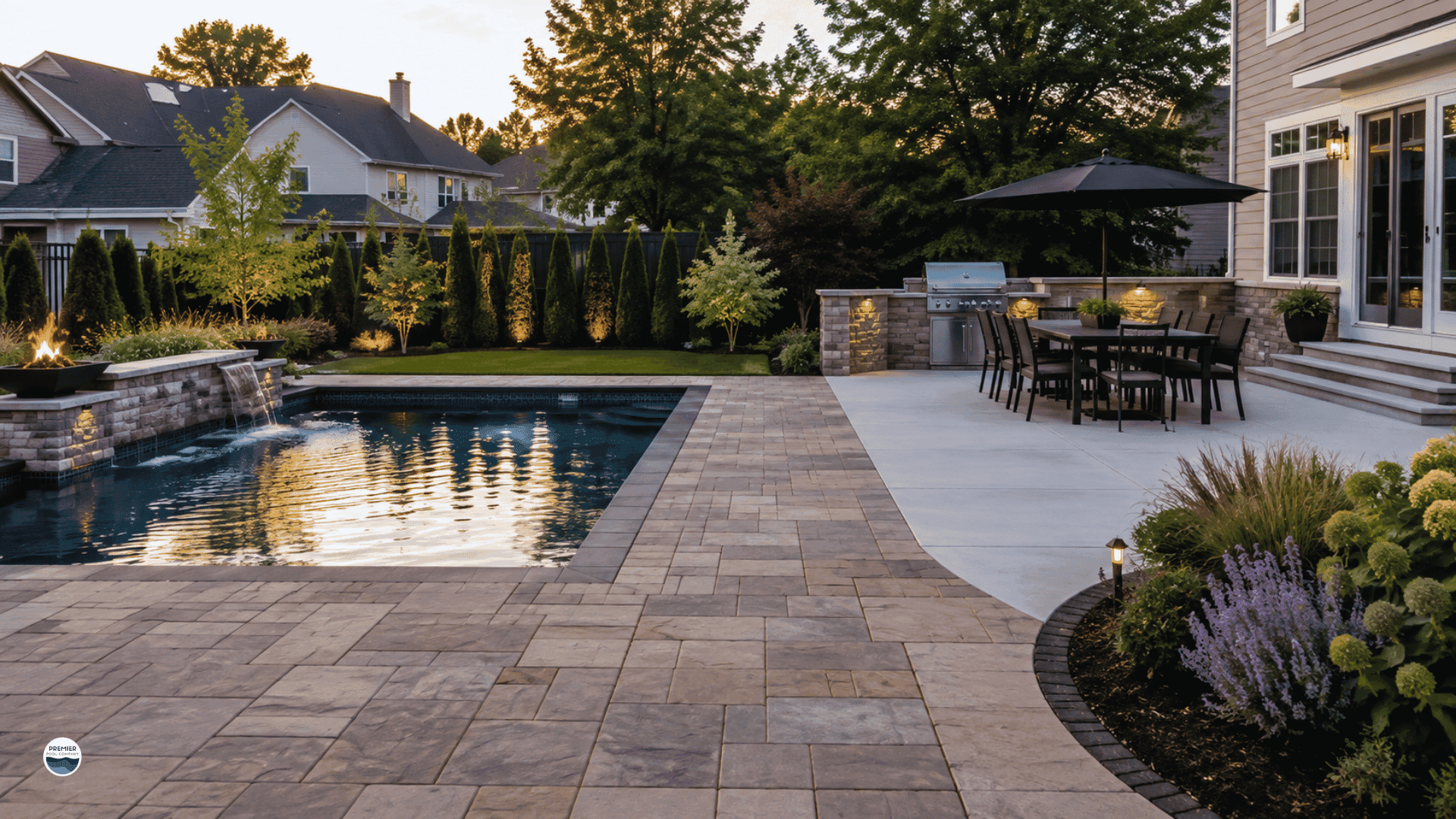
Everything above is specific to pool decks because pool decks face unique conditions including constant water and chemical exposure, disturbed soil from excavation, and heavy barefoot traffic. For backyard patios that aren't adjacent to a pool, some of these factors matter less.
A patio away from the pool doesn't deal with chlorine or salt splash-out, and if it's not near recent excavation, the soil underneath is more likely to be settled and stable.
That said, Ohio's freeze-thaw cycle affects any installation the same way regardless of proximity to water. If you're deciding between a concrete or paver patio for a grilling area, fire pit surround, or general seating space, the base preparation and material logic stays the same. But there are lower stakes if something eventually cracks, since it's not next to a pool shell (which needs protection from water intrusion at the joint).
So How Do You Decide? Here’s How I Would
Rather than declaring a universal winner, here's how I'd actually walk a homeowner through the decision on-site.
1. Start with your soil and site conditions.
If you're building the deck at the same time as a new pool installation, or your yard has heavy clay soil that expands and contracts significantly with moisture, weigh that toward pavers. The segmented structure of pavers tolerates the settling.
If you're working with well-established, stable soil away from any recent excavation, concrete's cracking risk is lower. So then, your decision would be most based on budget and aesthetic preference, pavers being more expensive of the two.
2. Next, be honest about your maintenance appetite.
If resealing every two to three years, watching for early crack signs, and budgeting for eventual patchwork is realistic for you, concrete's lower upfront cost is a legitimate reason to choose it.
If you'd rather deal with the surface less often and accept a higher initial investment for lower ongoing attention, pavers fit better.
3. Then factor in your pool's sanitation system specifically.
For Salt-chlorine pools, pavers are the better choice. But if you still prefer concrete, then you need a commitment to firm sealing. Traditional chlorine systems reduce that particular pressure somewhat, though freeze-thaw risk remains unchanged either way.
4. Finally, think about how long you plan to own the home.
A twenty-year decking investment makes more sense if you're willing to stay there for most of that time. If you're likely to sell within five to seven years, the visual condition matters more for resale compared to long-term durability. Both concrete and pavers can look excellent in that window if installed and maintained correctly from day one.
FAQs
1. Does a paver patio actually cost more to maintain than concrete over time, or just upfront?
Pavers cost more initially but generally cost less over a fifteen-to-twenty-year period in Ohio because sealing intervals are longer and repairs are localized rather than requiring a full section repour.
Concrete is of lower upfront cost but can end up costing more once you add resealing every two to three years and the higher likelihood of crack repair driven by freeze-thaw cycling.
2. Can I install pavers directly over an existing cracked concrete pool deck instead of removing it?
In some cases, yes, using a properly designed mortar or sand-set overlay system, but it depends on the existing slab's structural condition and whether the cracking indicates ongoing settlement.
If the concrete is actively moving, overlaying it just transfers the movement to the new surface. Your pool builder should evaluate whether the underlying cause has stabilized before recommending an overlay over full removal.
3. Do polymeric sand joints on pavers actually hold up in Ohio winters?
Quality polymeric sand generally performs well, but it does need reapplication over time as it wears from foot traffic, pressure washing, and freeze-thaw cycling, loosening the bond.
Expect to top off joints every few years rather than treating the initial installation as permanent, and avoid pressure washing directly into the joints at high pressure, which accelerates sand loss.
4. Is stamped concrete a reasonable compromise between plain concrete and pavers for a pool deck?
Stamped concrete gives you a stone-like appearance at a cost closer to plain concrete than pavers, but it inherits concrete's underlying freeze-thaw and cracking risk, and stamped patterns can make cracks more visually disruptive since they break the intended pattern rather than blending into a grout-line look. It's a reasonable aesthetic middle ground, not a structural one.
5. How much does base preparation actually add to the project cost, and is it worth insisting on?
Proper excavation depth and compaction typically adds a modest percentage to overall project cost compared to a shortcut base, but it's the single factor most responsible for whether either material lasts fifteen years or fails within five. Insisting on documented compaction testing or, at minimum, a clear explanation of base depth and material from your contractor is worth it.
6. Should I match my pool deck material to my existing patio, or is it fine to mix pavers and concrete on the same property?
Mixing materials is common and functionally fine. Many Ohio homeowners use pavers immediately around the pool where salt and settling risk are highest, and concrete for a separate patio or walkway further from the water. There's no structural downside to mixing, and it can actually be a practical way to balance budget against the areas of highest risk.
Final Thoughts
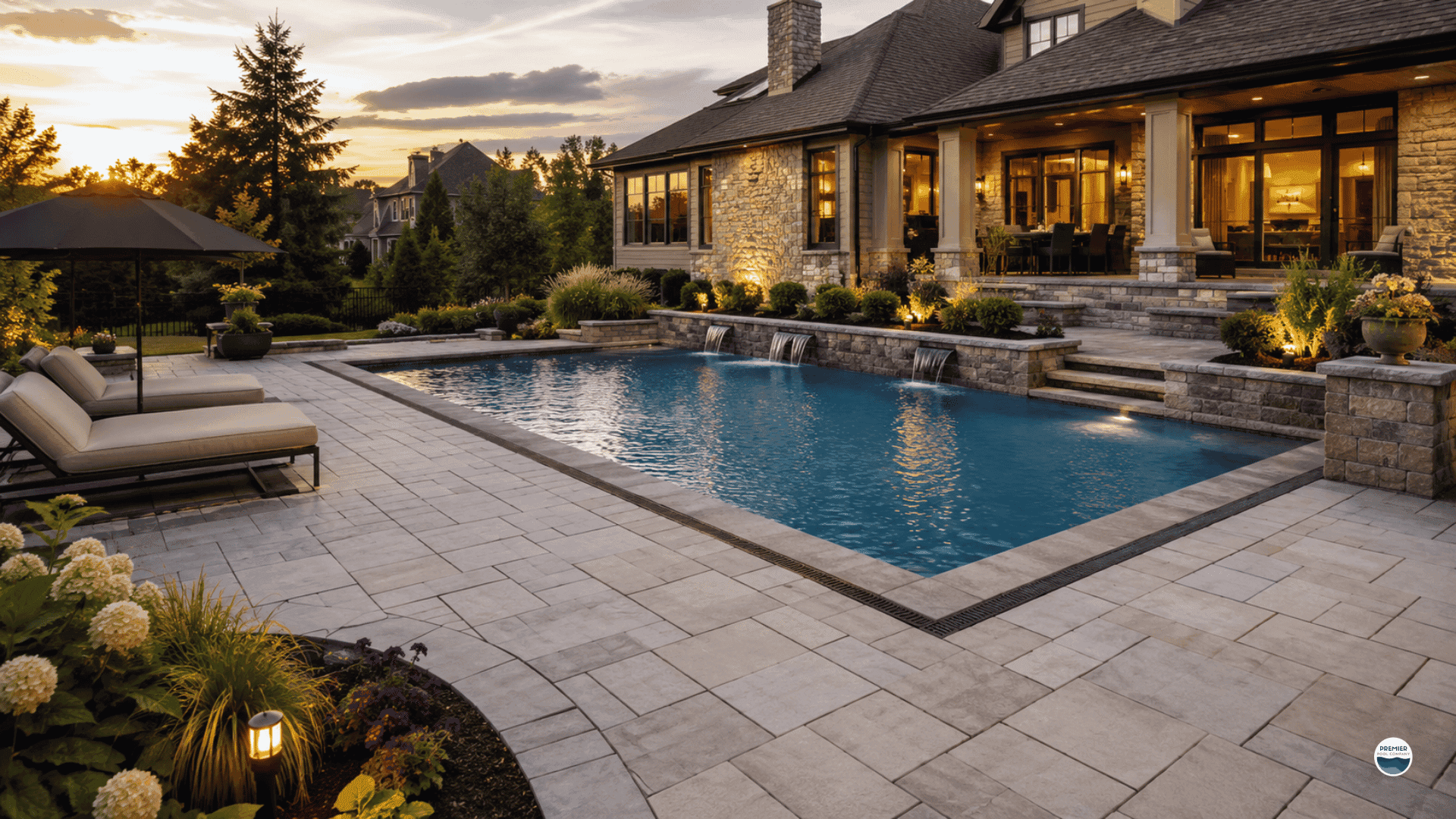
I have worked with both concrete and pavers for years. And I have helped in several pool repairs that were messed up by the original builders.
Personally, as I said, I prefer pavers. It’s the safer choice in Ohio for most pool-adjacent decks or patios. They can handle soil disturbance more firmly, resist the freeze-thaw better, and help to tackle salt exposure in a more affordable manner compared to concrete.
But concrete is not entirely a negative. It's a legitimate choice if you prioritize upfront cost, are willing to commit to a real sealing schedule, and are working with reasonably stable soil.
In my case, I always like to keep in mind what Ohio winters and salt water can do to concrete over time compared to pavers, and if budget is not the issue, pavers are what I always recommend.
Whichever direction you go, the base preparation matters more than the surface material itself. A poorly prepped base under premium pavers will still fail. A well-prepped base under standard concrete will still outperform expectations.
If you're evaluating contractors for either pavers or concrete pool decks, ask specifically about their base depth, compaction method, and, for concrete, reinforcement and control joint spacing before you ask about finish options.
Or simply take help from experts with a proven track record on the matter. You can always reach us at
Premier Pool Coto get a quick consultation and pool building services. We know Ohio too well and can promise top quality.Contact Us Here.
More Blogs

Aaron Lehner
Pool Water Testing in Ohio: A Beginner's Guide to Getting It Right
Pool water testing in Ohio was simple. Learn how to test chlorine, pH, alkalinity, and calcium hardness to keep your pool clear, balanced, and swim-ready.

Aaron Lehner
Paver Patio vs Concrete Pool Decks (Based on Ohio Climate)
Compare paver patio vs concrete pool decks in Ohio. Learn how pavers vs concrete patio options handle freeze-thaw cycles, drainage, heat, and maintenance.

Aaron Lehner
7 Best Pool Features To Add To Your Backyard In 2026
Discover the best pool features, custom pool features and swimming pool features for 2026, plus practical pool feature ideas that keep your Ohio backyard stunning and durable.