

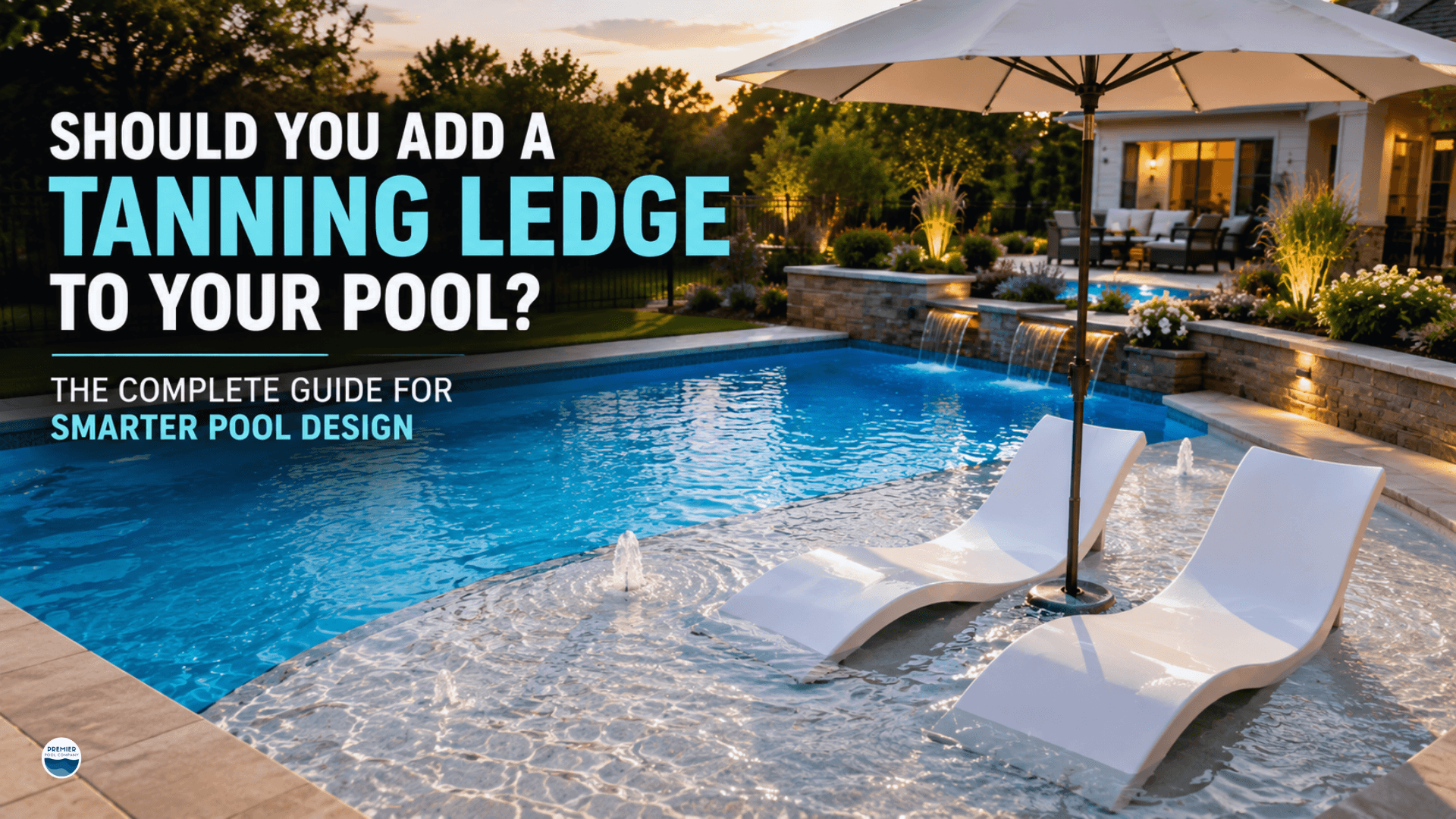
Should You Add A Swimming Pool Tanning Ledge To Your Pool Design? Here’s My Take On This.
So, you're thinking about a tanning ledge. You've probably seen one at a friend's house, or spotted one in a pool photo online, and thought, “That looks amazing.”
And you're not wrong. A tanning ledge genuinely changes how you enjoy your time around the pool. Instead of just having a place to swim, you suddenly have a place to actually hang out in the water.
But I would like to ask you… Do you think it’s worth investing in setting up a swimming pool tanning ledge?
I've seen tanning ledges that get used every single day of summer. And I've seen ones that sit empty because they were designed a little too small, or placed in the afternoon shade, or added to a pool that was already on the compact side.
So, while setting up one sounds great. Its usefulness and positive effect really depend on if you’ve planned it;s placement correctly.
Now, I would like to give you some knowledge on the matter out of my years of experience. And believe me, it’s not a bad thing to have, but also not the right thing for many pools.
I’ve had a few cases where the owner requested to remodel their swimming pool by removing the tanning ledge…
But most importantly, this article is actually for genuine pool lovers.
If you are obsessed with getting good deck materials, updating the surrounding decorations, or showing off your pool to friends, then you would love to read this
Let’s begin.
TL;DR - Quick Takeaways
A tanning ledge (also called a sun shelf or Baja shelf) is a shallow, flat platform , usually about 9 to 12 inches deep , built into the entry end of your pool. You lounge in it rather than swim.
It's a great addition for families with young kids, sun lovers, and anyone who uses the pool to relax and entertain. Such households use the ledge constantly.
The main trade-off is space. A properly sized ledge takes up 80 to 100+ square feet of your pool. In smaller pools, that's a real sacrifice.
For
fiberglass pools, a ledge is usually built into the shell at little or no extra cost. For gunite (concrete) pools, adding one typically runs $1,500–$10,000, depending on size.The people who get the most value from a tanning ledge have a pool that's at least 18x36, kids in the family, or someone who genuinely loves to sit in the water rather than swim.
Thinking about adding a tanning ledge to your pool? Contact us today to discuss your pool design and get a free consultation.
What Is A Tanning Ledge? (Just Sharing Some Facts)
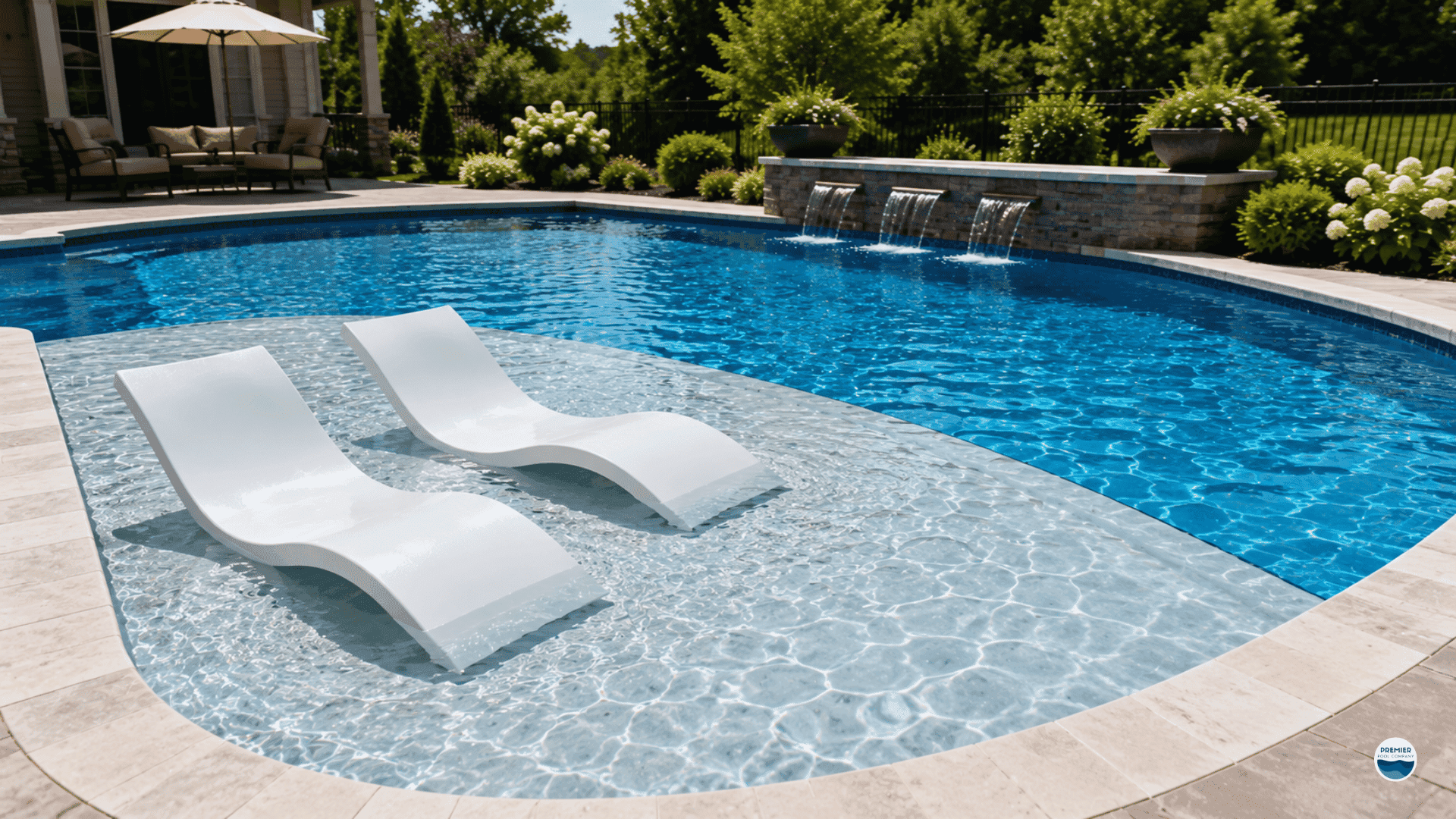
A tanning ledge is a broad, flat shelf built right into your pool, usually at the entry end, that may sit only about 9 to 12 inches deep.
It's designed so you can set up a pool lounger right in the water and relax without actually swimming. You're wet from the thighs down, cool and comfortable, but you're not floating or treading water. It's more like a very upscale wading situation.
You'll hear it called a few different things, such as a sun shelf, Baja shelf, tanning shelf, or swimout (though technically a swimout is a bench seat, which is a little different).
The name depends on your region and sometimes the pool company.
But the concept is the same everywhere.
In plain terms: A tanning ledge in a pool is where you go when you want to be in the pool water without actually swimming. About 10 inches of water, a good lounger chair, maybe an umbrella, and a drink… Not that it's a relaxing experience. |
One thing worth knowing:
In fiberglass pools, the ledge is built right into the mold of the shell. You simply choose a pool model that has one.
In gunite pools (or concrete pools), your pool builder will sculpt it as a custom addition during construction.
In vinyl liner pools, it can be done too, though the shape options are more limited.
The best tanning ledges I've seen are wide enough for two people to sit side by side without crowding, positioned to catch afternoon sun, and designed as part of the pool from the start.
Who Actually Gets the Most Out of It?

I decided to keep this question so that you get a clear picture of whether a pool tanning ledge is worth it for your family. The feature earns its space when it matches how you actually live.
Families with young kids
This is honestly the strongest case for a tanning ledge. Kids under 7 or 8 can spend hours splashing around in 10 inches of water without you holding your breath every two minutes.
A toddler playing on the ledge while you're right there in a lounger means you have less worry about their safety, compared to when there is four feet of water. (I’m not saying you don’t need to keep an eye on them. But you will be a lot calmer and relaxed knowing there is less risk for the little ones.)
Families consistently tell me the ledge ends up being the most-used part of the entire pool, especially in those first several years.
People who prefer lounging to swimming
There's a sizable group of pool owners who love having a pool but honestly don't love swimming laps.
If you or your partner are among them, then I understand your perspective. You want to be near the water, feel it, enjoy it, but on your terms.
And in your case, a tanning ledge is definitely something you’ll love as part of your pool.
Without it, you'll probably sit on the deck. But with it, you'll spend entire afternoons in the water and relax.
People who entertain a lot
A tanning ledge creates a social zone in your pool.
Instead of guests either swimming or sitting on deck chairs, they can stand or sit in shallow water, have a conversation, or even hold a drink, comfortably.
It will make the pool the star of your house and certainly uplift the energy if you throw a pool party.
And you will be surprised to see that people who normally wouldn't get in the water find themselves in it.
Anyone with mobility or joint issues
The ledge acts as a gentle entry point into the pool, much easier than negotiating traditional steps.
Someone with bad knees, a hip issue, or just some general stiffness can ease into the shallow water from a seated position before deciding whether to move into the deeper end.
Elderly family members or guests get a place to participate in pool time comfortably.
In fact, this particular use case is one of the top reasons why homeowners want tanning ledges in their swimming pools.
On the flip side: if everyone in your house is a swimmer and the main goal is exercise or water sports, a pool tanning ledge will likely be a waste of space as people will mostly ignore it. So do think about it before you add this to the |
How Much Does It Cost To Add A Tanning Ledge To Your Pool?
Online cost estimates for tanning ledges tend to be pretty vague, so let me give you the real breakdown by pool type, because it's very different depending on which route you're going.
Gunite (concrete) pools
Adding a tanning ledge to a concrete pool costs the most compared to other pool types.
It's custom-built during construction. Your contractor sculpts the ledge, frames it with rebar, and finishes it with plaster, pebble, or tile.
A basic, moderately sized ledge typically adds $1,500 to $5,000 to the build cost.
A larger or more elaborately shaped ledge can push the cost to $7,000–$10,000.
If the ledge also requires increasing the overall pool footprint, you may see excavation and plumbing costs go up as well.
Fiberglass pools
Most fiberglass pool shells that include a ledge come with it molded right in, i.e., it's part of the design.
Choosing a model with a tanning ledge versus one without often adds little to nothing to the cost.
Sometimes it's a modest premium of $500 to $2,000, depending on the manufacturer.
If you're already leaning toward fiberglass, the ledge is essentially a near-free upgrade. (Salespeople don't always highlight this, as it adds almost no extra money to the price.)
Vinyl liner pools
Vinyl liner pools can include ledges, but have less options or flexibility in terms of shape.
A structural ledge form adds roughly $1,500 to $3,500 to the pool.
The liner has to be carefully fitted around the ledge.
When you eventually replace the liner (every 8–15 years), that area requires a little extra care.
Add-ons that make it better
The ledge itself is just the shell. What makes it genuinely enjoyable are the extras:
Add-On | Typical Cost | Worth It? |
Bubbler / water jet | $300–$800 each | Yes , kids love them, and they keep water moving |
Umbrella anchor | $150–$400 | Absolutely , shade makes the ledge usable on hot days |
LED ledge lighting | $500–$1,500 | Great for evenings; transforms the whole look at night |
Ledge lounger chairs | $450–$1,200 each | Essential , regular outdoor chairs won't work in water |
Umbrella | $300–$900 | Pair with the anchor; you'll want it |
Budget tip: Plan for at least one or two purpose-built ledge loungers (not standard outdoor chairs as they'll float and rust). The ledge without proper furniture is just a wet concrete shelf. You should budget $1,000–$2,500 for furnishings on top of construction costs. For a full breakdown of what an inground pool costs in Ohio, see our comprehensive |
Getting the Size Right (Trust Me, This Is Important)
I’ve seen many people suggest a straightforward size like, "get one that is at least 5 feet wide and 9–12 inches deep."
While this is technically the most ideal size, I think it sets the bar way too low.
A 5-foot-wide ledge fits exactly one lounger with almost no clearance. That means two people won’t be able to use it without feeling cramped.
Width Matters The Most If Comfort Is Your Concern.
From my experience, I recommend the following:
If you picture two people using the tanning ledge at once, which is the most common scenario for couples and families, you need a minimum of 8 feet.
Ten feet is the sweet spot for a comfortable, social ledge.
Anything over 12 feet starts to feel like a dedicated wading zone, which is great if that's what you want. But I wouldn’t recommend it if you don’t throw large pool parties too often.
Now let’s talk about the depth.
Depth in the 9–12 inch range is standard.
Around 10–11 inches works best for adults who want a relaxed, partially submerged experience.
Shallower (9 inches) keeps users drier and is better if young children are the primary users.
Go deeper than 12 inches, and furniture starts to float. So don’t go for that.
The Width and Depth Should Also Depend On The Pool Size
A properly sized two-lounger ledge takes up 80 to 100+ square feet of pool. Here's how that plays out at different pool sizes:
Pool Size | Ledge That Works | How It Feels |
14x28 or smaller | Not recommended | Ledge takes too much swim space |
16x32 | 6–8 ft (one lounger) | Workable, but plan carefully |
18x36 | 8–10 ft (two loungers) | The sweet spot , feels right |
20x40 or larger | 10–14 ft (two to three loungers) | Plenty of room for everything |
For more tips on how pool size affects your overall design, check out our guide on custom pool design in Central Ohio.
Don't Forget The Placement And Sun Direction
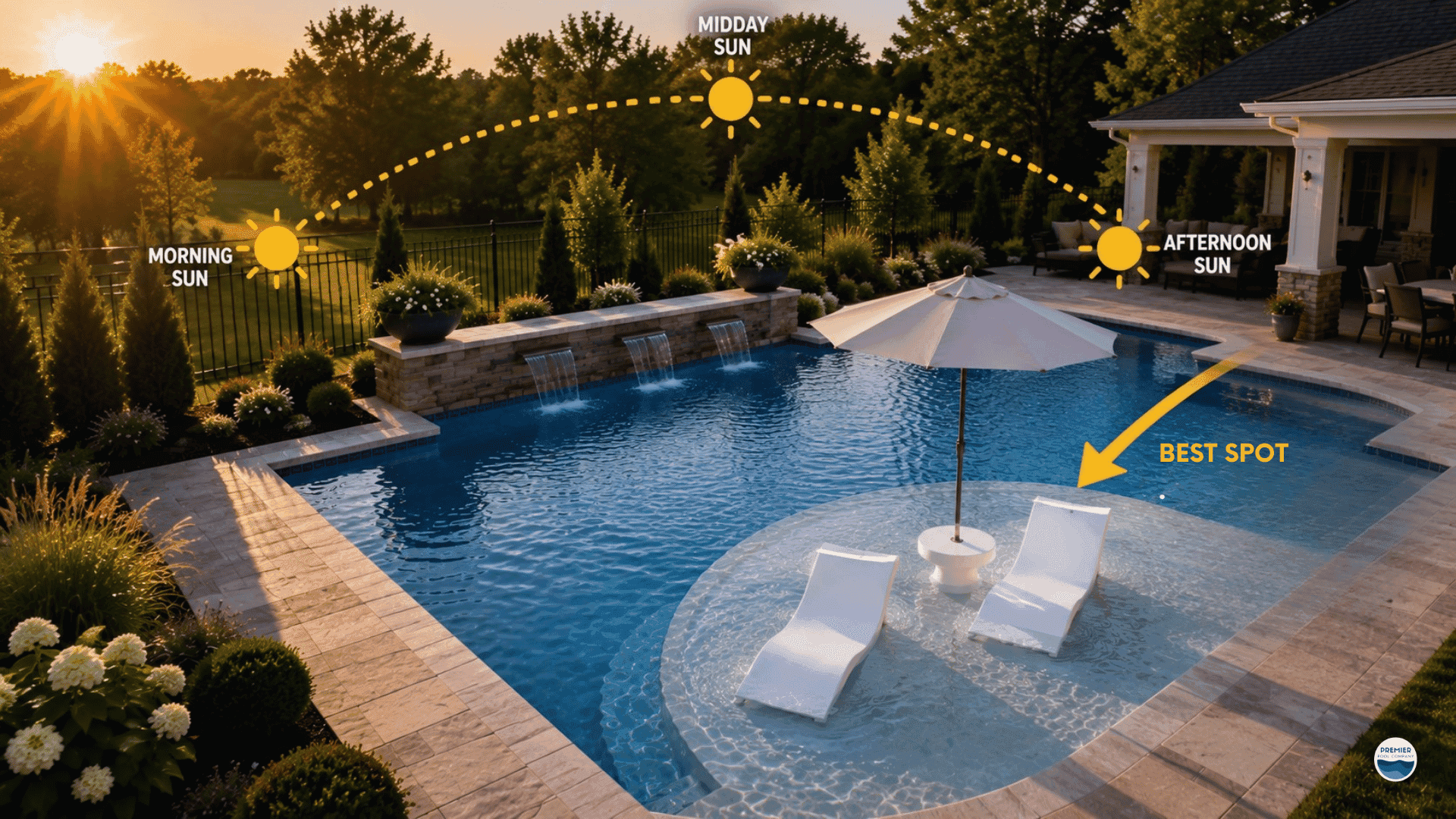
This is something you can’t afford to overlook. I’ve seen people get distracted with size, purpose, and other pool properties and forget about the placement of the tanning ledge.
The problem here is that it is difficult to fix once built. And remodeling a pool can be very expensive.
Why I am pointing this out is because a tanning ledge facing north or one that falls into afternoon shade is not too desirable. So if you don’t think about it early, things can get very expensive or disappointing compared to what you wanted.
Before your pool design is finalized, go outside around 1–3 PM on a clear summer day and look at where the shade falls in your yard. Your ledge needs to sit in the sunniest part of that picture.
It sounds obvious, but I've seen builders position ledges based on how the pool shape looks aesthetically, and the result is a beautiful feature that just never gets used.
The Honest Pros and Cons
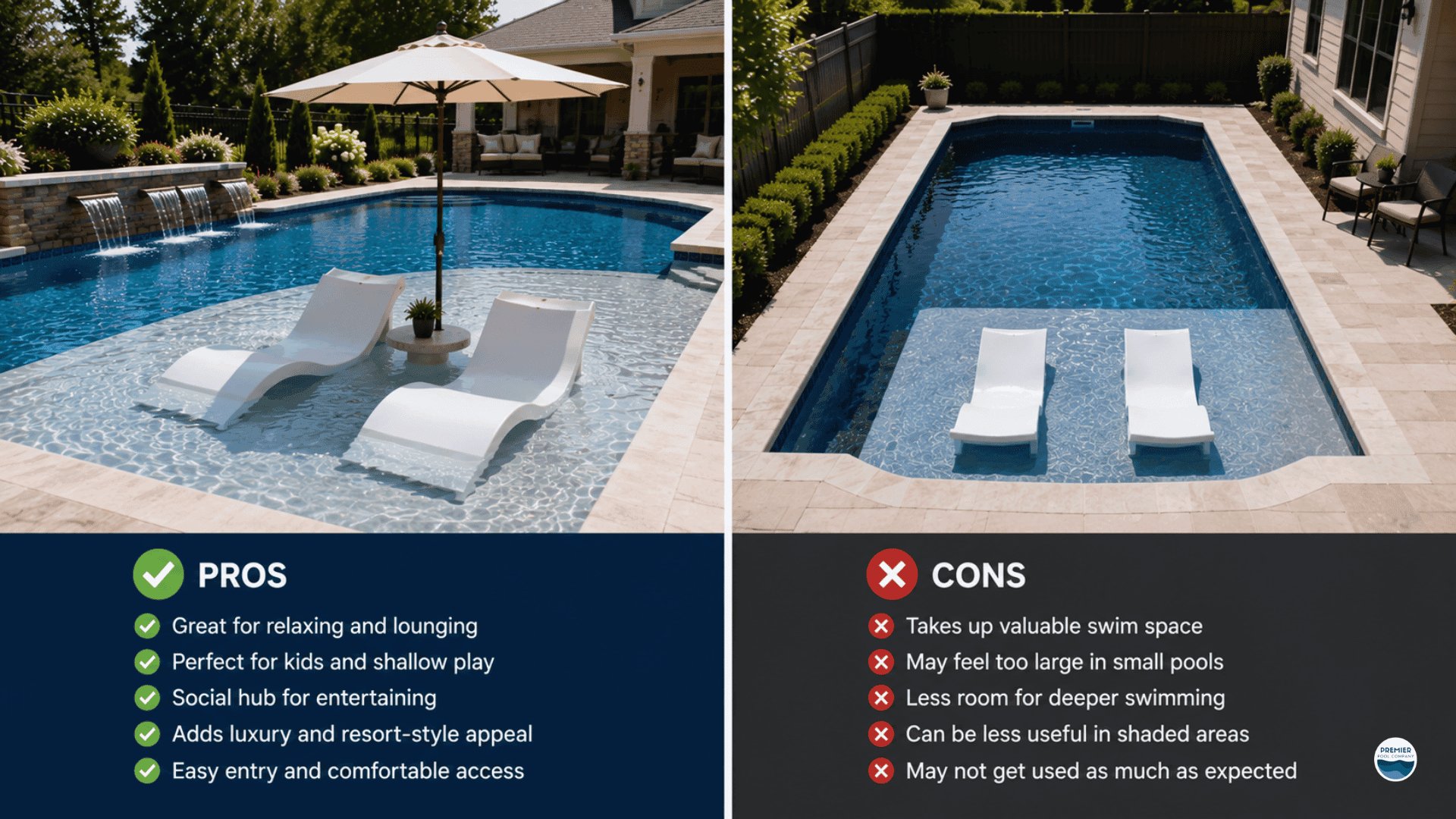
Rather than a generic pros-and-cons checklist, here's the nuanced version… The stuff that actually matters in day-to-day life with a tanning ledge, all out of my own experience.
Why people love them
The biggest thing a swimming pool tanning ledge does is lower the bar for getting in the water. You don't have to "go swimming"...
You can just sit in the water for twenty minutes with a book, decide you're done, and get out. That optionality gets used all the time, especially by the people in your household who like the pool but don't love swimming. The ledge makes the pool something everyone wants to be near, not just the swimmers.For young children, the ledge is a revelation. Parents relax more. Kids have a safe zone they can play in for hours.
Pool time becomes something the whole family does together rather than an event that requires constant vigilance.On the aesthetic side, a tanning ledge with two loungers, an umbrella, and a couple of bubblers just looks spectacular. It turns a regular backyard pool into something that feels
genuinely resort-like.
If you ever sell your home, buyers in most markets respond very well to this feature. It photographs beautifully and sells itself.
What to watch out for
Space is the real cost. This is worth repeating because it's the trade-off most people underestimate. If you add a tanning ledge to a smaller pool, you will feel it every time someone tries to swim and bumps up against the ledge boundary. Lap swimmers and water sport players are especially likely to find it frustrating.
If active swimming is a priority for your household, be honest about the size implications before you commit.Automatic pool covers need extra planning. If you have or want an automatic cover that runs on a track, the ledge creates a complication.
Any furniture or umbrellas on the ledge have to come off before the cover operates. Not a dealbreaker, but it adds friction to daily pool use.
Make sure your builder thinks through the cover track routing around the ledge geometry before construction.Ledge maintenance is slightly more hands-on. Because the water on the ledge is shallow and sits in direct sun, it heats up faster than the rest of the pool, sometimes by a few degrees.
This means chlorine gets consumed a little faster in that zone, and debris (leaves, pollen, bugs) tends to settle on the flat surface rather than get swept toward skimmers. It's not a big deal.
A quick skim and weekly brush keeps it clean, but it's worth knowing you'll be giving the ledge a bit of attention that the rest of the pool doesn't need.
Is a Tanning Ledge Right for You? Ask Yourself These Four Questions
After years of watching families live with their pools, these four questions predict satisfaction with the tanning ledge better than anything else.
1. Is your pool large enough?
If you're working with 18x36 or bigger, you have enough room for a proper two-person ledge without giving up meaningful swim space. At 16x32, it's doable but tight, so plan for one lounger, not two. Smaller than that, and the ledge will likely feel like it's in the way.
2. Will people in your household actually use it?
Are there kids under 10? Does anyone in the house prefer lounging to swimming? Do you entertain a lot? If you answered yes to any of those, the ledge will get real use. If your household is all swimmers who want to move through the water, to be honest , a ledge might just become a decorative feature you swim around.
3. Is the placement right for the sun?
If your designer has placed the ledge on the shady side of the pool, push back. A well-designed ledge captures afternoon sun from around noon to 4 PM. If that's not possible given your yard layout, the feature loses a lot of its appeal. Confirm sun exposure before the design is finalized.
4. Have you budgeted for the full experience?
The construction cost gets the ledge built. The furniture cost , purpose-built loungers, umbrella, and anchor, maybe a bubbler , is what makes it actually usable. Don't design a ledge and then discover you need another $1,500–$2,500 to furnish it properly. Build that into your planning from day one.
FAQs
1. How deep should a tanning ledge be?
The ideal range is 9 to 11 inches. At 9 inches, you stay mostly dry from the waist up in a ledge lounge. At 11 inches, you get a more immersive feel. Go deeper than 12 inches and your furniture will start floating, which gets old fast. If your main users are young kids, stay on the shallower end.
2. Can you add a tanning ledge to an existing pool?
In a gunite pool, yes , but it's expensive and disruptive. Retrofitting a ledge means breaking out part of the existing pool wall, restructuring the rebar, and replastering the area. Expect $8,000–$20,000 and several weeks with the pool out of commission. In fiberglass pools, you can't add one after the fact without replacing the whole shell. The strong recommendation: if you want a tanning ledge, plan for it during the initial build. The cost difference at that stage is minimal.
3. What kind of chairs work on a tanning ledge?
You need purpose-built ledge loungers , the most well-known are LedgeLounger Signature chairs. Regular outdoor chaises will float, rust, or fall apart in constant water contact. These ledge-specific chairs are made from heavy-duty resin that's designed to stay stable in 9–12 inches of water and hold up to years of sun exposure. They run $400–$1,200 each. It's an investment, but they're what make the ledge actually feel like a luxury feature rather than a wet concrete shelf.
4. Does a tanning ledge affect pool water chemistry?
A little, yes. The shallow water on the ledge heats up faster in the sun, which means chlorine gets consumed slightly quicker in that area. Debris also tends to settle on the flat ledge surface. Neither is a big problem , brush the ledge when you're doing your regular pool maintenance and keep your water chemistry balanced, and you won't notice much difference. If you add bubblers, the moving water helps a lot.
5. Is it safe for toddlers?
Safer than deeper water , yes. Safe without supervision , no. Children can drown in very shallow water, including a tanning ledge. What the ledge gives you is a more controlled environment: your toddler is in plain sight, right next to you, in ankle-deep water where you can reach them instantly. That's genuinely better than the alternative. But active adult supervision is still non-negotiable. The ledge improves the safety equation; it doesn't replace the adult watching.
The Bottom Line
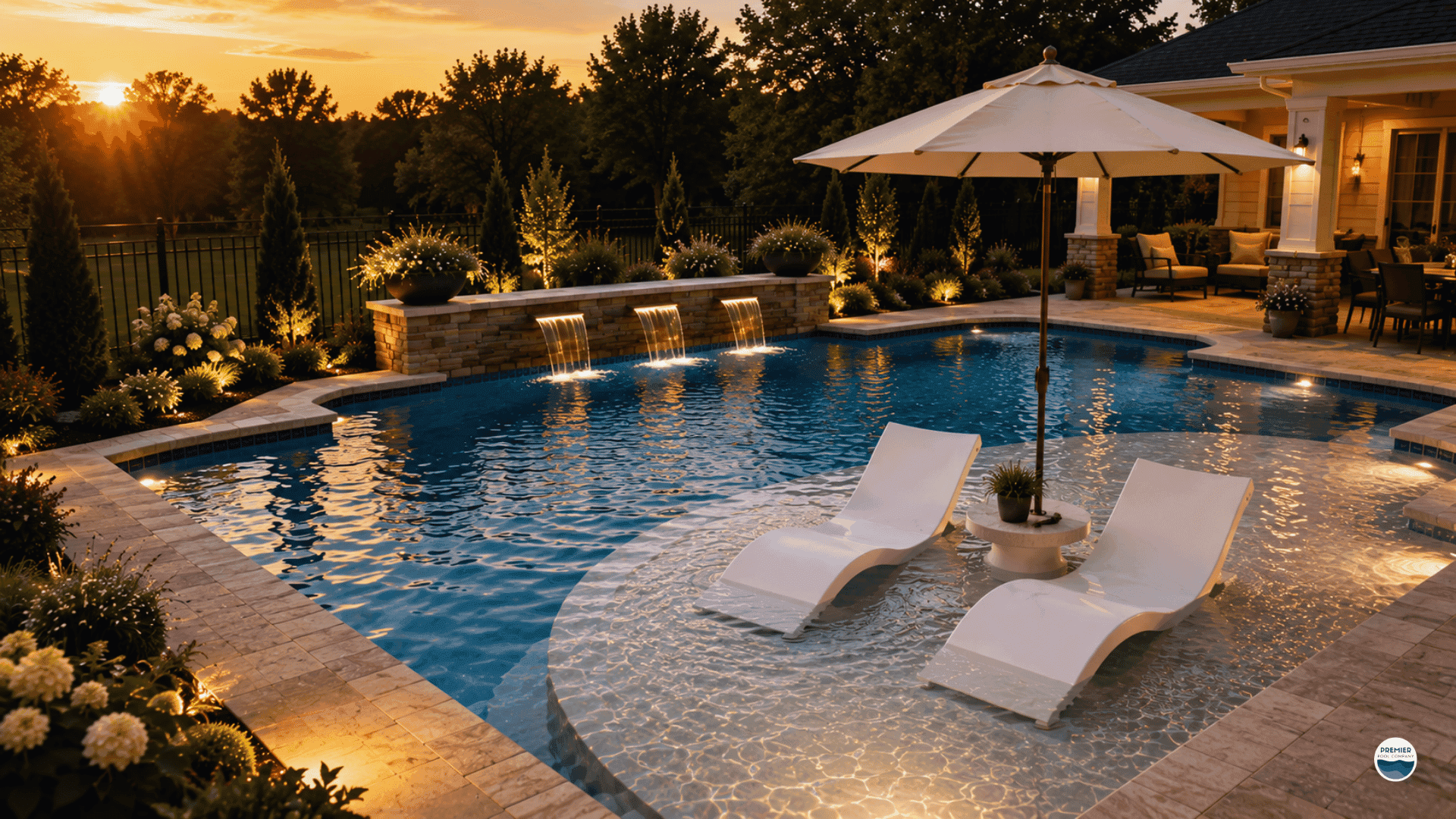
A tanning ledge is one of the most consistently loved pool features I've seen over the years. When it's right for a household, it genuinely changes how the family uses the backyard: people spend more time outside, more people use the pool, and the whole space just feels better.
The regrets are almost always about design, not about the feature itself: too small, placed in the shade, or squeezed into a pool that didn't have the room for it.
If you've got the pool size to support it, kids or sun-lovers in the family, and a yard that gets good afternoon sun, add a tanning ledge to the pool design.
Design it generously, position it for the sun, budget for proper furniture, and it will earn its space every single summer. That's a pretty good return on a one-time decision.
Ready to include a tanning ledge in your next pool build?
Get in touch with our team at Premier Pool Co, we'd love to help you design it right from the start
More Blogs

Aaron Lehner
Pool Water Testing in Ohio: A Beginner's Guide to Getting It Right
Pool water testing in Ohio was simple. Learn how to test chlorine, pH, alkalinity, and calcium hardness to keep your pool clear, balanced, and swim-ready.

Aaron Lehner
Paver Patio vs Concrete Pool Decks (Based on Ohio Climate)
Compare paver patio vs concrete pool decks in Ohio. Learn how pavers vs concrete patio options handle freeze-thaw cycles, drainage, heat, and maintenance.

Aaron Lehner
7 Best Pool Features To Add To Your Backyard In 2026
Discover the best pool features, custom pool features and swimming pool features for 2026, plus practical pool feature ideas that keep your Ohio backyard stunning and durable.