

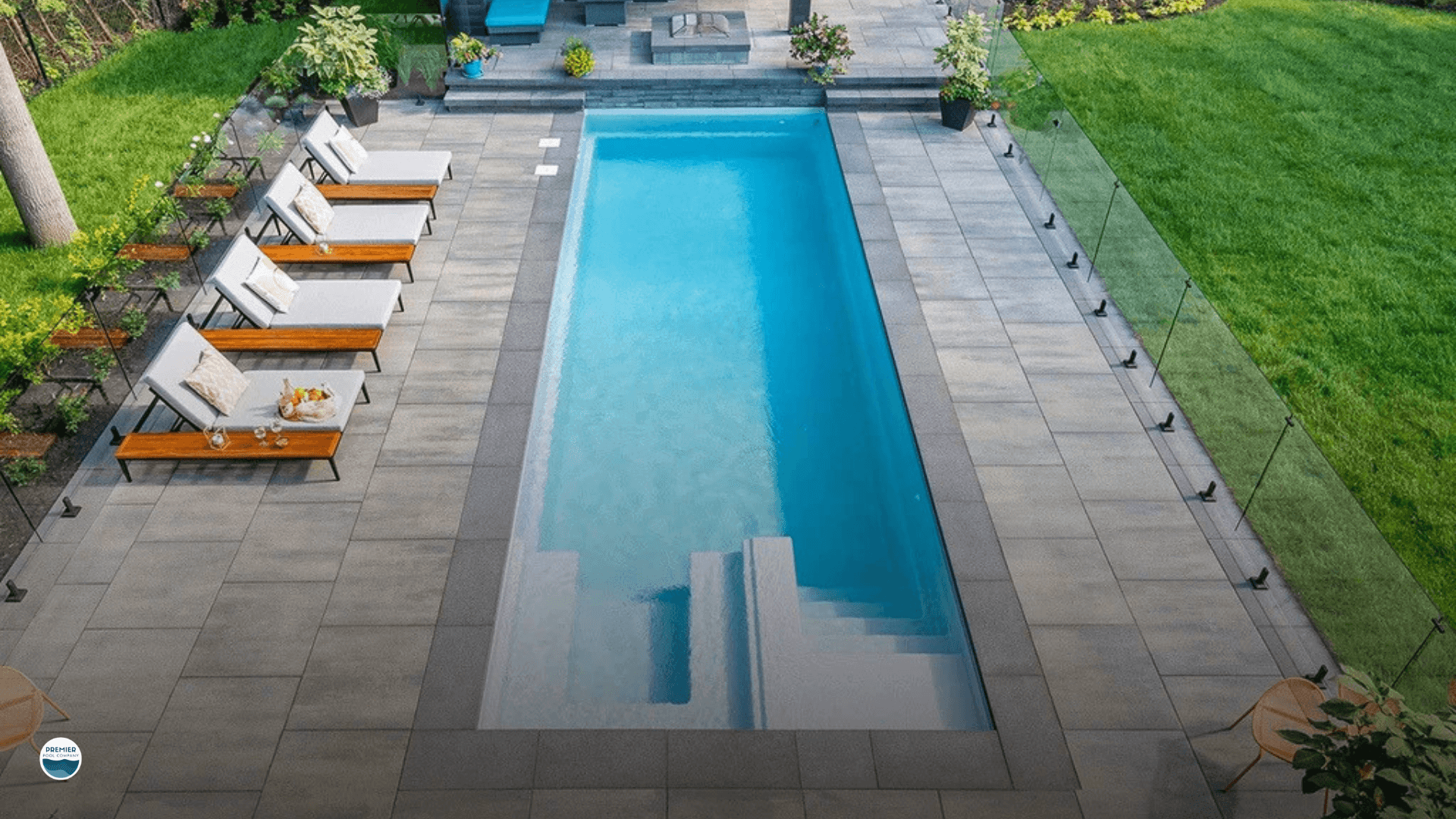
How Long Do Fiberglass Pools Last (Based on Ohio Climate)
A guide for Ohio homeowners from the ground up.
I know this is a simple question you have when planning to get a pool done soon. But, I’ll tell you this: with such an expensive investment, you would definitely want more details if you want to avoid unnecessary costs later. So I went ahead and shared what I know from my experience.
The Short Answer…. And Why the Details Actually Matter
A quality fiberglass pool installed correctly in Ohio will last 25 to 50 years, and many exceed that. But that number alone tells you almost nothing useful.
The difference between a pool that looks pristine at year thirty and one that needs major work at year twelve depends a lot on the quality of the shell, the competence of the installation, and the consistency of the maintenance over time.
Ohio makes this question more interesting than it seems. The freeze-thaw cycle, the clay-heavy soils across much of the state, and the relatively short swim season all create conditions that affect fiberglass pools in ways you wouldn’t otherwise face elsewhere.
So in this guide, I focused specifically on what Ohio homeowners, such as yourself, need to understand… Not just the lifespan number, but the variables that matter.
And I’ll be honest. With some of the things, I have gone a bit technical. So sorry if they sound complicated. But just read them twice and it will make more sense. I promise.
TL;DR — Key Takeaways
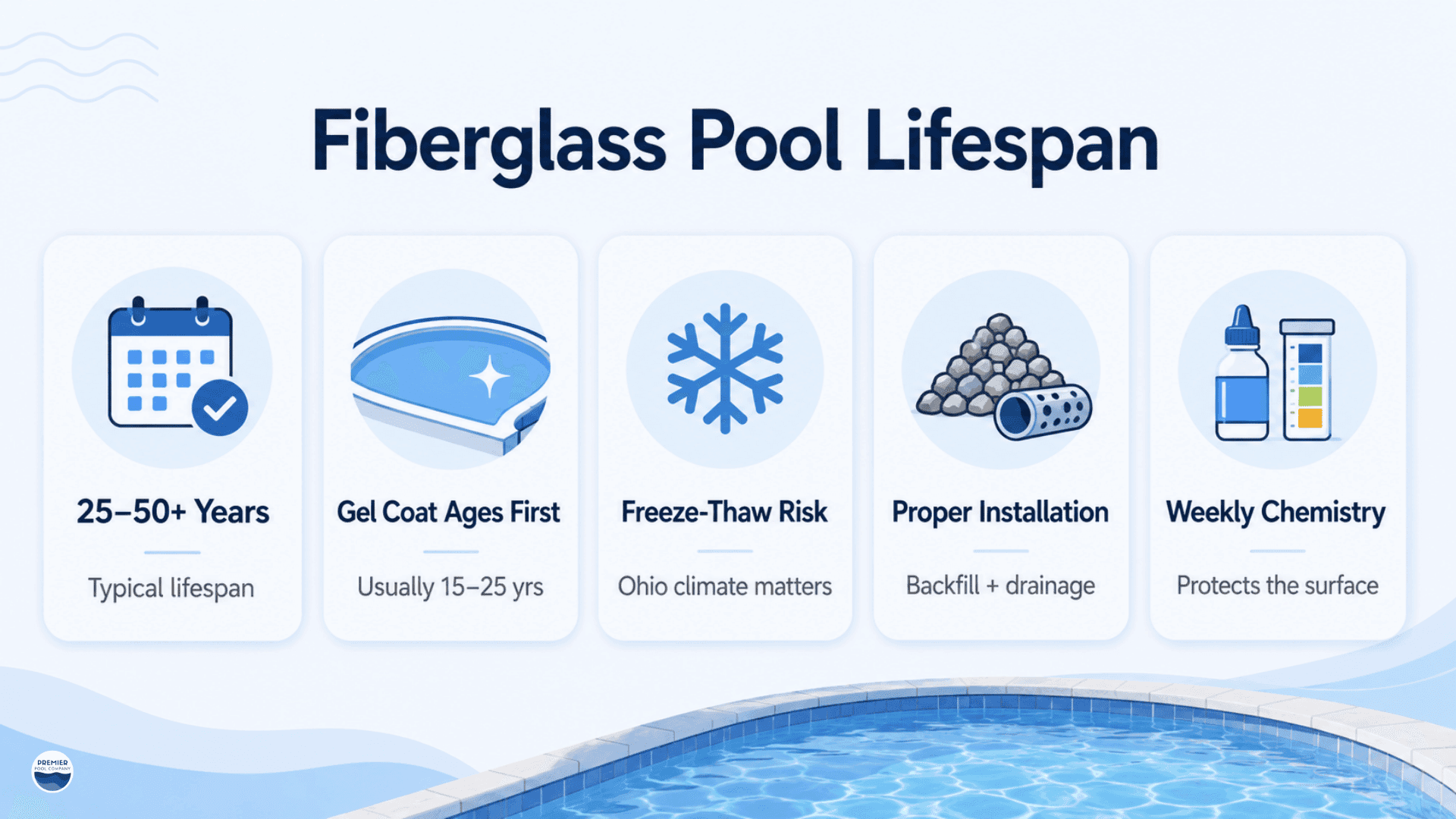
A properly installed, well-maintained fiberglass pool in Ohio has a lifespan of 25 to 50+ years.
The gel coat surface of the fiberglass pools is the first thing to age.
The gel coat may need restoration (not replacement) around years 15 to 25, at a cost of roughly $5,000 to $10,000.
Ohio's freeze-thaw cycle is the primary climate risk.
The freeze-thaw may threaten pools where the installation backfill and drainage systems were done poorly. (It doesn’t directly damage the fiberglass.)
Poor installation is the single most common cause of premature failure in Ohio fiberglass pools.
The shell quality matters, but what surrounds it matters just as much.
Consistent water chemistry is super important. Neglecting it can accelerate surface degradation significantly, especially during Ohio's long off-season.
Fiberglass wins on total cost of ownership over 20 to 40 years compared to concrete and vinyl liners..
Concrete pools may need replastering every 10 to 15 years.
Vinyl liner has to be replaced every 10-15 years.
Ready to invest in a pool that lasts? Contact The Premier Pool Co. for a free consultation and get started today.
Some Knowledge On What Fiberglass Actually Is And Why It Holds Up
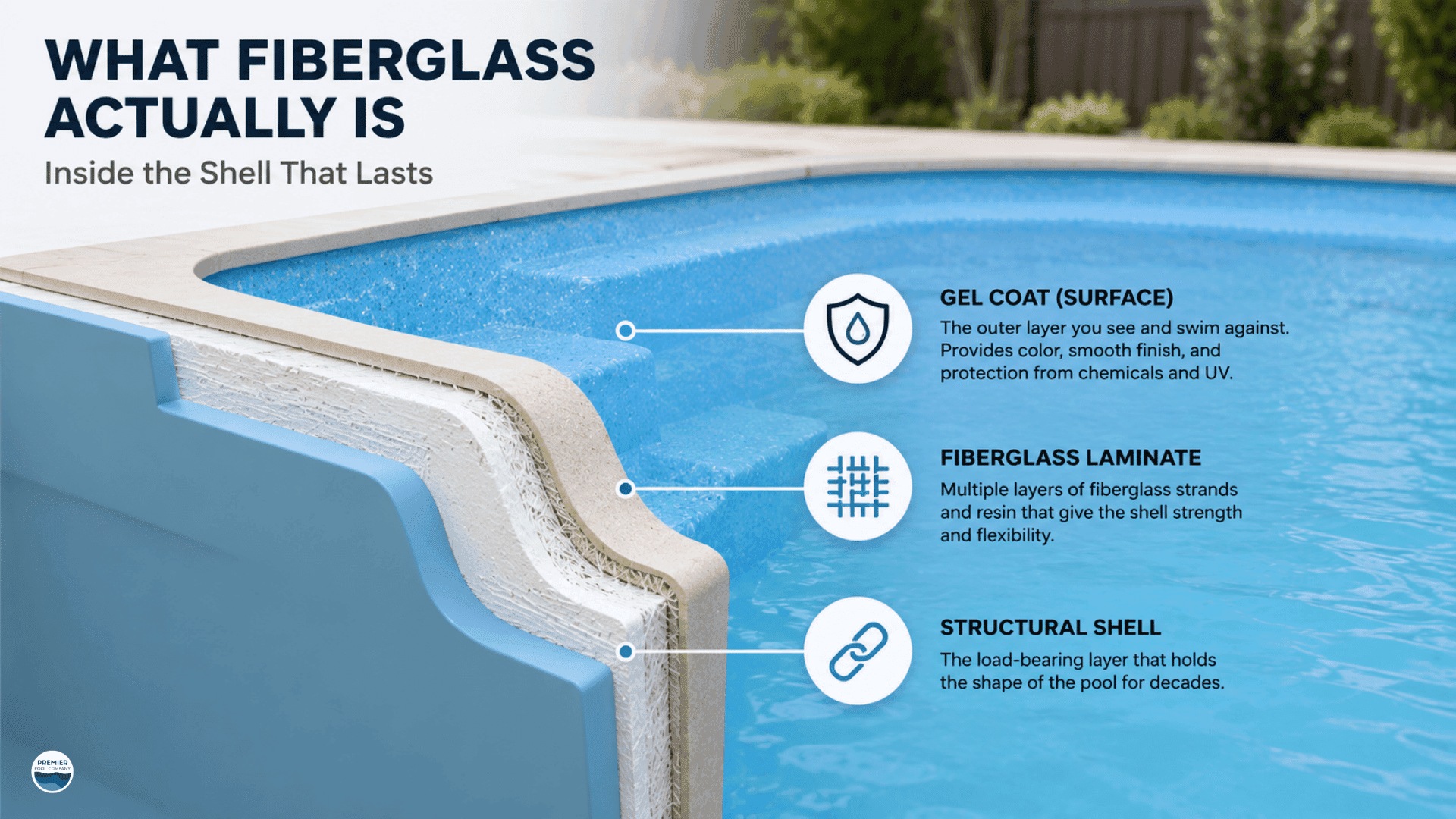
A fiberglass pool is a single molded shell with two layers that matter for longevity: the gel coat on the surface, and the structural laminate beneath it.
The gel coat is what you see and swim against. Being the outer layer, it ages first. The laminate is what holds the shape, and its quality depends almost entirely on the resin system the manufacturer used.
Premium shells use vinyl ester resin, which resists osmotic blistering (surface bubbling from water infiltration) far better over time. Budget shells use standard polyester, which is more vulnerable. You cannot see this difference in a showroom, which is why it is worth asking directly.
Ask every pool manufacturer or dealer you visit: Does your structural laminate use vinyl ester or standard polyester resin? If the salesperson cannot answer, that itself is an answer.
How Fiberglass Compares to Concrete and Vinyl Over Time
If you are asking about how long a fiberglass pool lasts, then I can presume you also want to make sure this lasts better than other pool types.
So here's the honest comparison from my perspective based on my experience.
Concrete pools
They look like the premium choice, and structurally, they are built to last.
But the surface inside a concrete pool, i.e., the plaster or pebble finish you actually swim against, is not as long-lasting.
The surface needs acid washing every few years and full replastering every ten to fifteen years.
In Ohio, that replastering may cost $10,000 to $20,000, and the pool is out of commission for weeks while it happens.
Over forty years, you are looking at two or three of those bills.
Vinyl liner pools
These swimming pools cost less to get into, but the liner itself wears out.
Between Ohio's UV exposure, chemical use, and freeze-thaw winters, most liners need replacing somewhere around the ten to fifteen-year mark.
They typically cost between $3,500 to $6,000 each time.
The walls underneath can also corrode due to Ohio's soil conditions, i.e., a risk of additional costs in repairs.
Still comparing your options? Check out our in-depth guide on gunite vs. fiberglass pools to help you make the right choice for your backyard.
Fiberglass swimming pools
Fiberglass costs more upfront than vinyl and gives you fewer shape options than concrete.
But over twenty or more years, it tends to cost significantly less in terms of overall cost.
The shell does not need routine resurfacing. It does not absorb water, so algae have a much harder time taking hold, and you spend less on chemicals.
The natural flex of the material handles Ohio's freeze-thaw ground movement better than rigid concrete does.
Want to dive deeper into why fiberglass outperforms the rest? Read our full breakdown of fiberglass pool benefits.
Fiberglass | Concrete | Vinyl Liner | |
|---|---|---|---|
Shell / Structure Lifespan | 25–50+ years | 50+ years (structure) | 20–30 years (walls) |
Surface Lifespan | 15–25 years (gel coat) | 10–15 years (plaster) | 10–15 years (liner) |
Surface Restoration Cost | $5,000–$10,000 | $10,000–$20,000 | $3,500–$6,000 |
Restoration Frequency | Once (typically) | 2–3x over 40 years | Every 10–15 years |
Freeze-Thaw Risk | Low–Moderate | High (porous, rigid) | Moderate |
Algae Resistance | High (non-porous) | Low | Moderate |
Table 1: Long-term comparison of pool types for Ohio homeowners
Ohio's Climate Is A Huge Factor In The The Lifespan Of A Fiberglass Pool
You will find several videos and articles on pool lifespan. But most of them are meant for locations where the climate is more tolerable. Like, if you are in Arizona or Florida, then those are perfect.
However, the Ohio climate brings three specific concerns that directly affect how long a fiberglass pool lasts and what kind of care it needs.
The Freeze-Thaw Cycle
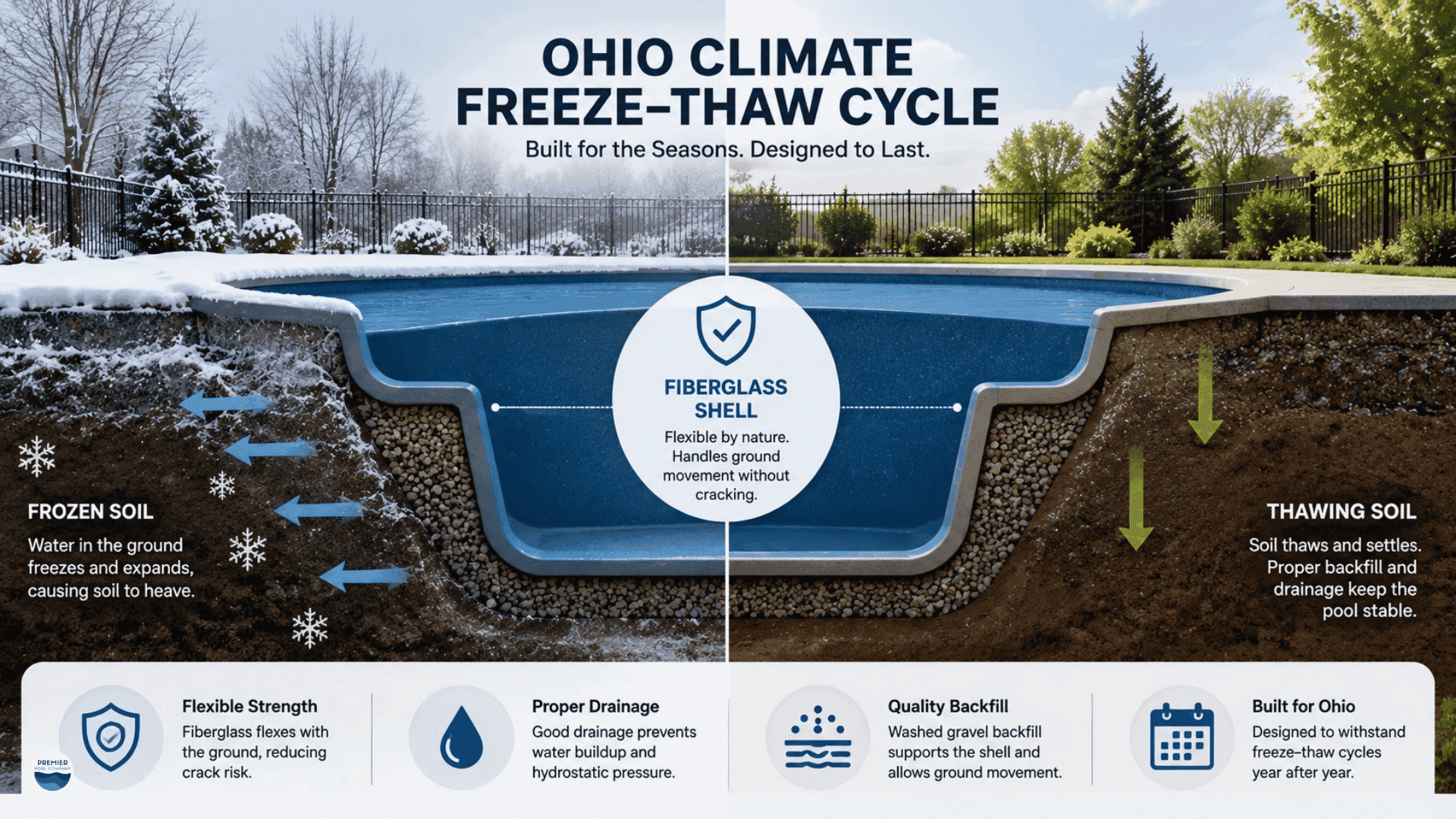
During Ohio winters, the ground may freeze up to 18 to 30 inches deep. And when frozen, the soil may expand, pushing the pool shell. But later, it thaws and shifts back.
A good fiberglass shell is flexible enough to handle that movement. Your concern will be based on what is packed around it.
That backfill material, the stuff filled in around the pool after installation, is what either cushions that pressure or concentrates it.
Clean gravel drains well, freezes evenly, and keeps pressure predictable.
Clay soil, which is common across central and northern Ohio (and costs installers nothing because they just dig it up), holds water, freezes unevenly, and creates uneven pressure that builds up over the years.
By year twenty, that difference shows up clearly in how the pool looks and performs.
Soil Conditions Across Ohio
Where you live in Ohio also affects the longevity of your pool.
Central Ohio (Columbus and surrounding areas) sits on heavy clay, so backfill and drainage choices are especially important.
Northern Ohio (around Cleveland and the Lake Erie basin), has clay mixed with glacial till that is particularly prone to frost heave in hard winters.
Southern Ohio tends to have sandier, better-draining soil, which makes installation a bit more forgiving.
If you are in central or northern Ohio, do not let your installer brush past the drainage question. It is one of the most important conversations you will have.
The Short Swim Season and Off-Season Chemistry
Pools in Ohio are open for roughly 100 to 120 days a year. The other 240-plus days, the water just sits there. So what’s the problem, right?
In Florida, pool owners are checking chemistry year-round, so small imbalances get caught and fixed quickly. In Ohio, if you close the pool in October with the water out of balance (maybe too acidic or too scale-heavy), that chemistry quietly works on your gel coat surface all winter with no one watching. By spring, the damage is already done.
Getting the chemistry right before closing and rechecking it carefully at opening is not optional maintenance. For Ohio pools specifically, it is some of the most important work you do all year.
The Four Key Factors That Actually Determine How Long Your Pool Lasts
Fiberglass pool life expectancy really depends on four specific variables, and if you understand them well, you may end up maintaining a pool without damage for the longest.
1. Manufacturing Quality
The shell you start with sets a ceiling on everything that follows.
Gel coat thickness, the resin system used in the laminate, and the quality controls in the manufacturing process all determine how the pool ages over two or three decades.
What you may find frustrating is that these important factors aren’t visible. You can’t see or feel them in a showroom.
A pool that looks beautiful on the floor could be built to last fifty years or twenty, and there is no obvious way to tell from the surface.
What you can do is research the manufacturer specifically (not just the dealer).
Ask about their resin system (vinyl ester vs. polyester).
Look for APSP compliance.
Read the structural warranty carefully.
A genuine twenty-five-year or longer structural warranty from a financially stable manufacturer is a meaningful signal.Also, talk to homeowners who have owned pools from that manufacturer for ten years or more. Their experience is more informative than any brochure.
2. Installation Quality
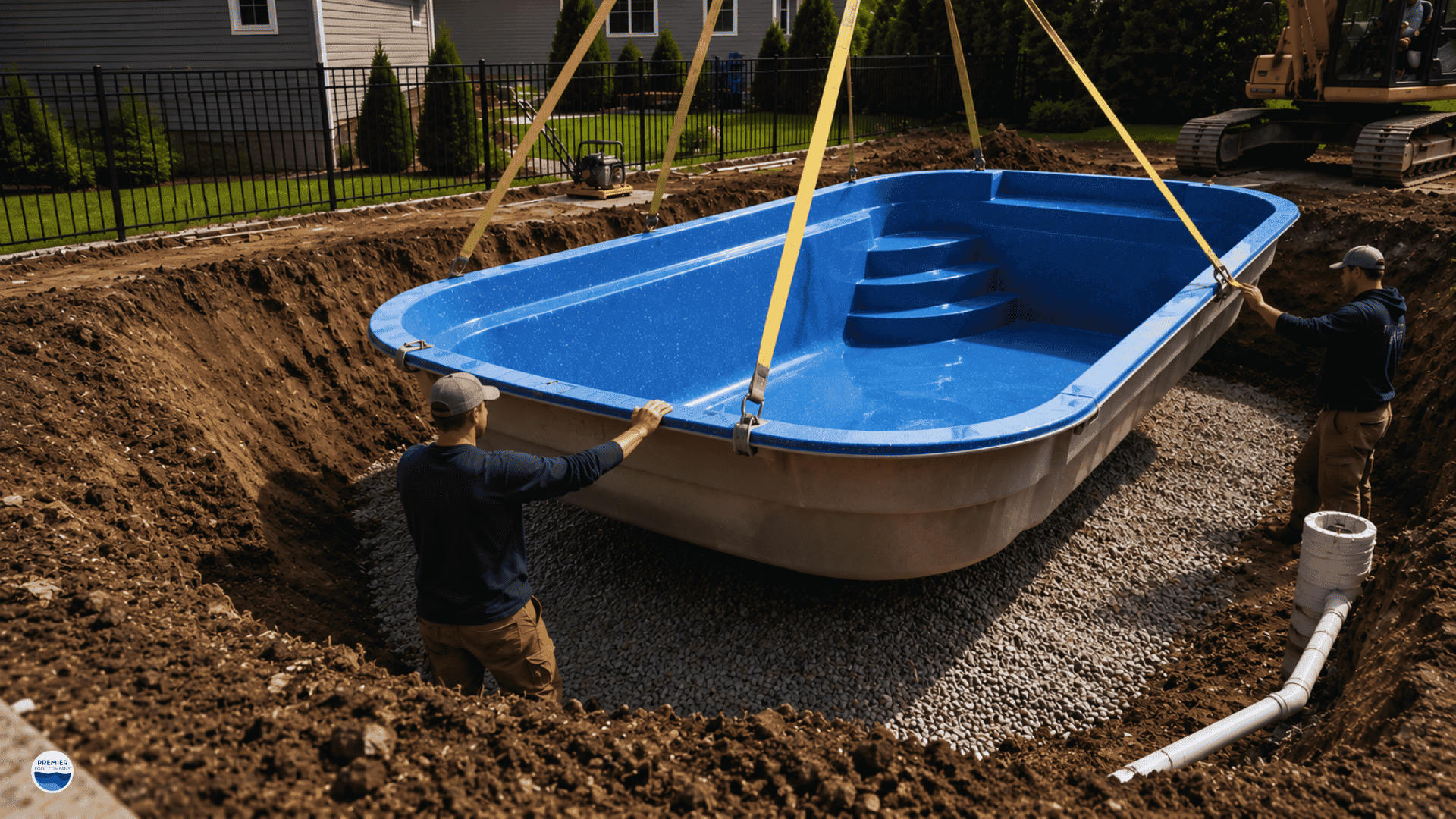
This is where you may have the most control over, yet make the most mistakes if not careful.
The best shell on the market will still have problems in Ohio if the installation crew does not understand what freeze-thaw winters do to the ground around a pool in Ohio.
Proper installation here means
leaving 12 to 18 inches of backfill space on all sides,
filling it with clean angular gravel or limestone that drains freely,
adding perforated drain tile where groundwater needs managing, and
getting the shell perfectly level before a single shovelful of backfill goes in.
These steps take time, and time costs money, so budget installers skip them.
When you are talking to installers, ask directly about their backfill material and drainage approach. Ask for references from customers with pools that are seven to ten years old (not one or two). A pool that looks fine at year two has not been through enough Ohio winters to reveal anything.
3. Water Chemistry
This one is easy to underestimate because nothing dramatic happens on any given day. The damage is slow, quiet, and cumulative.
Water that runs too acidic over time will gradually etch and dull the gel coat.
Water that runs too scale-heavy will deposit calcium on the shell surface until it becomes rough and needs polishing or acid washing.
Neither happens overnight, which is exactly why people let it go.
The LSI is what pool professionals use to measure whether the water is balanced, too aggressive, or too scale-forming.
A good testing service will calculate it for you.
Fiberglass gives you more wiggle room than concrete because the surface is non-porous, but that is not a reason to ignore chemistry it just means you have slightly more time before problems show up.
In Ohio, it also helps to know your local fill water's baseline chemistry, since calcium hardness and alkalinity vary across the state and affect how you need to balance from the very first fill.
Parameter | Target Range | Effect of Imbalance on Fiberglass |
|---|---|---|
pH | 7.4 – 7.6 | Low etches gel coat; high causes scaling and cloudiness |
Total Alkalinity | 80 – 120 ppm | Low causes pH swings; high contributes to scaling |
Calcium Hardness | 200 – 400 ppm | Low is corrosive to gel coat; high deposits calcium on surface |
Cyanuric Acid | 30 – 50 ppm | Too high reduces chlorine effectiveness; too low causes rapid UV loss |
Free Chlorine | 1 – 3 ppm | Low risks algae; excess can bleach and degrade gel coat |
Table 2: Water chemistry targets and their effect on fiberglass pool longevity
Also, if you're deciding between a traditional chlorine system and a saltwater setup, check out our guide on chlorine vs. saltwater fiberglass pools.
4. Winterization and Ongoing Maintenance
Winterizing your pool is not something you can skip or half-do in Ohio.
The goal is simple: protect the plumbing and equipment from freezing, while keeping enough water in the pool to hold it in place.
That second part surprises a lot of people. You do want to drop the water level below the skimmer, which protects your plumbing lines.
But you do not want to drain the pool completely.
An empty fiberglass shell in Ohio's clay soil can actually get pushed upward by groundwater pressure during a wet winter. Leave the water in; just lower it.
Beyond closing season, the maintenance habits that matter most are not complicated, they are just consistent.
Test your chemistry weekly while the pool is open.
Deal with small equipment issues when they come up rather than waiting.
Have a professional look over the shell, plumbing, and equipment once a year.
For a detailed step-by-step walkthrough on getting your pool ready for Ohio's cold months, check out our full guide on winterizing a pool in Ohio.
Pumps, heaters, and filters will eventually need replacing, usually somewhere in the ten to fifteen-year range. And that is completely normal regardless of what type of pool you have.
The problems come when equipment starts failing, and nobody acts on it, because one neglected issue has a way of creating the next one.
What Fiberglass Pool Aging Actually Looks Like… Stage by Stage
Years 1 to 10: Stable and Low-Maintenance
A well-installed fiberglass pool in its first decade requires almost no structural or surface attention. The gel coat is at peak condition. Maintenance is primarily chemistry management, routine cleaning, and equipment service. If you are experiencing gel coat crazing, blistering, or structural flex during this period, it is almost always a manufacturing or installation issue not normal aging and it should be escalated to the installer or manufacturer immediately.
Years 10 to 25: Chemistry History Becomes Visible
This is the period where cumulative water chemistry management starts showing up in gel coat condition. A pool consistently well-maintained will still look excellent at year fifteen and beyond. A pool with a history of chemistry neglect may show surface etching, fading, or a chalky texture. The good news is that most surface issues in this window are cosmetic, not structural, and can be addressed by a professional gel coat specialist through buffing, polishing, or spot repair without touching the shell itself.
Equipment replacement typically happens in this window: pumps, heaters, and filters generally have a ten to fifteen year useful life. Budget for it, and do not defer replacements when equipment starts underperforming.
Years 20 to 30+: The Gel Coat Decision
The most significant decision point for most fiberglass pool owners arrives somewhere between years fifteen and twenty-five: whether to invest in a full gel coat restoration. By this stage, even well-maintained gel coats have typically oxidized and lost some of its original luster. A full restoration involves applying a new gel coat layer over the existing surface, effectively giving the pool a new surface system while leaving the structural shell untouched. In Ohio, this typically costs between $5,000 and $10,000 for a standard pool, and it can reset the cosmetic lifecycle by another twenty years.
The underlying fiberglass shell, if it was properly manufactured and installed, is almost always in sound structural condition at this stage. Pools reaching this age with serious structural problems, significant blistering, cracking through the laminate, or delamination almost universally trace back to low-quality manufacturing or installation errors from day one. Proper material and proper installation genuinely prevent the majority of serious aging issues in this phase. Fiberglass pools from the 1980s and 1990s are still in service across Ohio today, with restored surfaces and updated equipment, proving the structural case for the material.
A Practical Decision Framework for Ohio Homeowners
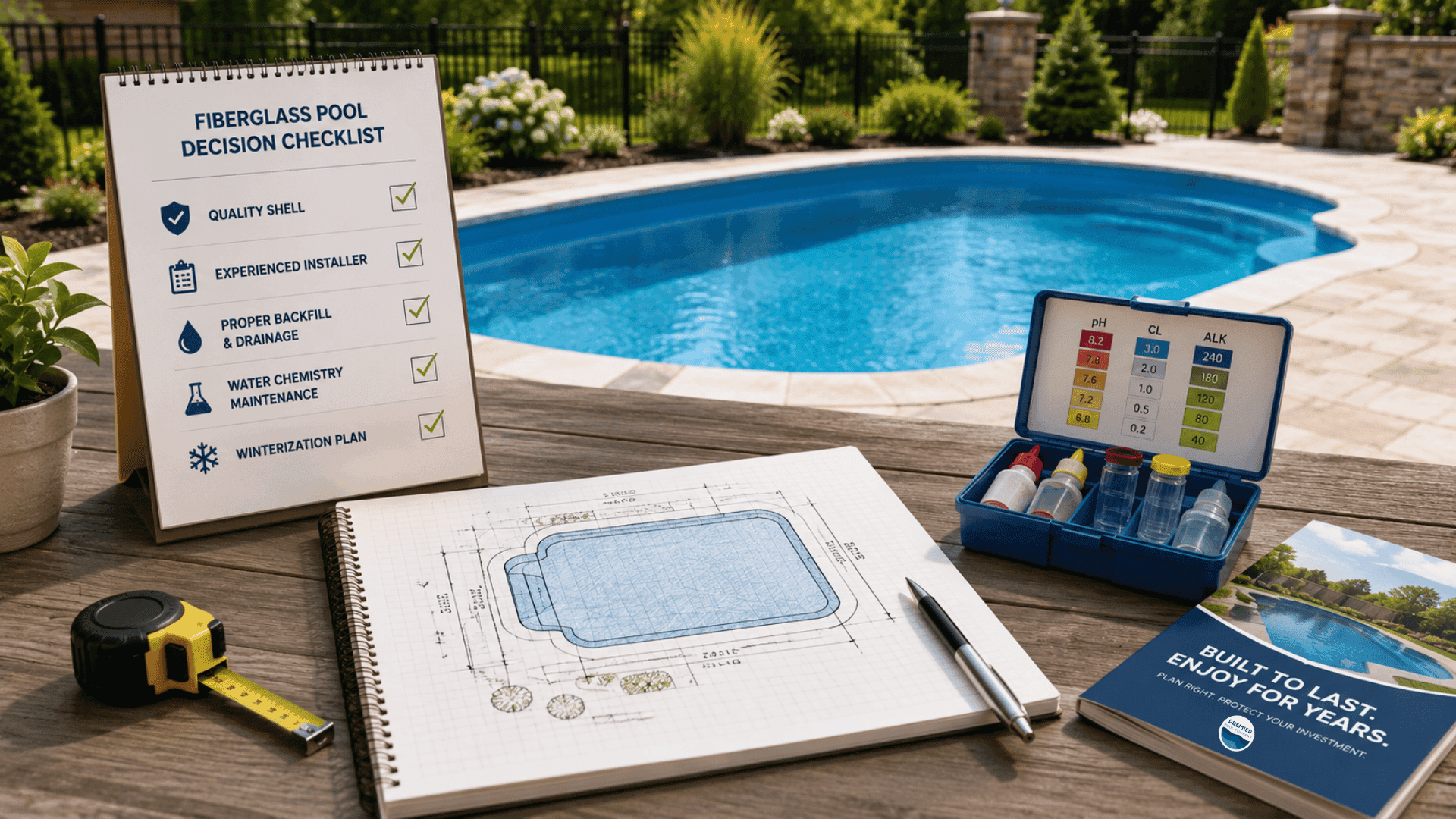
The lifespan question is ultimately a decision question: how do I make sure my investment reaches its potential? Here is how to apply everything in this article across the three stages where it matters most.
Before You Buy
Research manufacturers beyond the dealer's pitch.
Ask specifically about the resin system in the structural laminate,
read the structural warranty terms carefully, and
find owners of that manufacturer's pools who are a decade or more into ownership.
The information you get from a ten-year owner is worth more than any marketing claim.
Not sure yet what type of pool fits your budget? Our inground pool cost guide breaks down what to expect at every price point.
On the dealer side, get at least three installer quotes and ask each of them the same questions:
What backfill material do you use in Ohio clay conditions?
What is your drainage plan?
Can I speak to customers from seven to ten years ago?
During Installation
Stay engaged without hovering. Know what the critical phases are;
excavation depth and dimensions,
backfill material and compaction,
shell leveling,
drainage infrastructure,
and verify they are being executed as discussed.
If the crew is moving significantly faster than the timeline suggests, it is worth a direct conversation. Do not settle for rushed work because they want to maintain a schedule.
Also, the first water chemistry setup should follow manufacturer's startup guidelines precisely; the baseline established in the first weeks affects surface chemistry for years.
As An Ongoing Owner
Build a simple, sustainable rhythm.
Weekly chemistry testing during the season is the single highest-leverage habit.
Professional pool opening and closing each year, handled by someone who understands Ohio conditions, is the second.
Other than these, the principle is straightforward: if you ignore small issues, they may lead to higher costs, so identify and solve them early on.
Stage | Key Action | Why It Matters in Ohio |
|---|---|---|
Pre-Purchase | Confirm vinyl ester resin system | Determines osmotic blister resistance over 20+ years |
Pre-Purchase | Check 7–10 year-old installation references | Real performance data, not showroom condition |
Installer Selection | Ask about backfill material and drainage plan | Critical for freeze-thaw resistance in Ohio soils |
Installation | Ensure drainage infrastructure is included | Prevents water accumulation in clay-heavy Ohio soils |
First Season | Establish chemistry baseline professionally | Sets surface conditions for decades of use |
Every Season | Test and balance chemistry weekly | Highest-impact ongoing habit for gel coat longevity |
Every Fall | Professional winterization | Prevents freeze damage; correct water level critical in Ohio |
Years 15–25 | Evaluate and plan gel coat restoration | Timely restoration extends usable life by 20+ years |
Table 3: Ohio-specific decision framework for fiberglass pool longevity
Planning to start your pool project from scratch? Our step-by-step pool construction guide walks you through every phase of the process.
Frequently Asked Questions
How long do fiberglass pools last in Ohio, specifically?
A quality fiberglass pool, properly installed and maintained, has a structural lifespan of 25 to 50 years or more in Ohio. The gel coat surface will typically need restoration in the 15 to 25 year window, a surface treatment, not a structural replacement at a cost of roughly $5,000 to $10,000. The Ohio climate creates specific installation and maintenance requirements around freeze-thaw cycles and drainage, but these are manageable, not prohibitive.
What is the biggest risk to fiberglass pool lifespan in Ohio that most homeowners miss?
Installation quality, specifically backfill material and drainage. Ohio's freeze-thaw cycles exert lateral pressure on the pool shell each winter. A pool surrounded by properly compacted gravel backfill with adequate drainage handles this stress over decades without issue. A pool installed with native clay soil or in a poorly drained area accumulates increasing stress with each passing winter. Most homeowners never ask about this, which is exactly why it is the most common source of premature problems.
When should I expect to resurface my fiberglass pool, and what does it cost?
Most Ohio fiberglass pool owners will face a gel coat restoration decision between years 15 and 25, depending on how consistently water chemistry has been managed. The process involves applying a fresh gel coat layer over the existing surface, which addresses oxidation, fading, and minor surface wear without touching the structural shell. In Ohio, this typically runs $5,000 to $10,000 for a standard pool. It is a predictable maintenance investment, not an emergency, and it resets the pool's surface condition for another twenty or more years.
Is fiberglass a better long-term choice than concrete for Ohio homeowners?
For most Ohio homeowners, yes, particularly on total cost of ownership. Concrete pools require acid washing every three to five years and full replastering every ten to fifteen years, at costs of $10,000 to $20,000 per replastering. Concrete is also more vulnerable to freeze-thaw cracking because it is porous and absorbs water. Fiberglass requires less surface maintenance, handles ground movement better due to its flexibility, and is significantly cheaper to maintain over a 30-plus year horizon. Concrete wins on design flexibility and customization options, but for a standard residential pool where low maintenance and longevity are the priority, fiberglass is the stronger choice in Ohio's climate.
How does Ohio's short swim season affect water chemistry and pool longevity?
Ohio's roughly 100 to 120 day swim season means the pool sits unused for eight or more months each year. During that time, water chemistry cannot drift and self-correct the way it does in warmer climates where owners are active year-round. A pool closed in October with unbalanced water too aggressive or too scale-forming has all winter to interact slowly with the gel coat surface. This is why opening and closing chemistry deserves as much attention as mid-season balancing in Ohio, and why professional opening and closing services pay for themselves in surface longevity.
What are the early warning signs that a fiberglass pool is heading toward problems?
Surface warning signs include persistent chalking or fading despite normal chemistry, visible bubbles or blisters forming in the gel coat (osmotic blistering), and developing roughness in areas that should be smooth. These are typically cosmetic and manageable when caught early. Structural warning signs are more serious: cracking in the shell that extends below the surface layer, separation between the pool shell and surrounding deck, unexplained water loss beyond normal evaporation, or visible movement in the shell. Any structural sign warrants immediate professional evaluation. The distinction matters because surface issues handled promptly stay surface issues but deferred, they can eventually become structural ones.
Final Thoughts
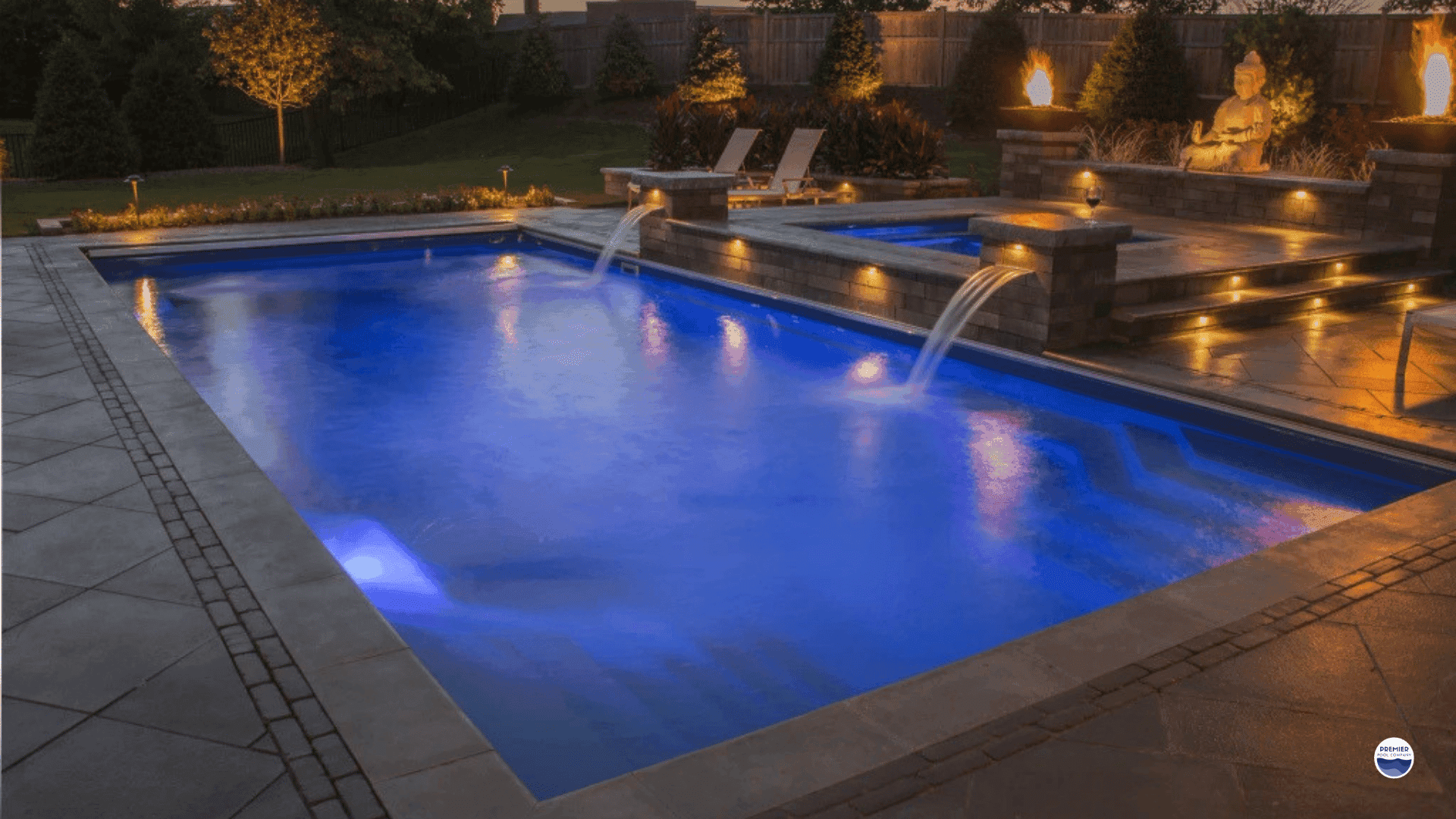
The fiberglass pool life expectancy equation in Ohio is not complicated, but it is specific.
Good manufacturing, competent Ohio-aware installation, consistent chemistry management, and proper annual winterization will serve your pool to last longer without overwhelming costs or damage beforehand.
Your concerns would mainly be the freeze-thaw cycle, clay soils, and short swimming season. And you need to make sure you plan ahead for them.
As explained above, fiberglass is obviously the best choice vs concrete or vinyl liner pools. Its flex tolerates ground movement that cracks concrete. Its non-porous surface resists the algae that Ohio's humid summers promote. And its maintenance profile suits a climate where the pool is in use for a limited window each year.
The pools that last fifty years are the product of good decisions compounded over time, starting with the manufacturer, running through the installer, and continuing with the owner.
Make those decisions carefully, and Ohio's climate will be very manageable for you.
If you have learned something new, feel free to comment below.
If you are ready to build a fiberglass pool in Ohio that stands the test of time,
get in touch with The Premier Pool Co.Our team is here to help you every step of the way.
— End of Article —
For Ohio homeowners and pool industry professionals
More Blogs

Aaron Lehner
Pool Water Testing in Ohio: A Beginner's Guide to Getting It Right
Pool water testing in Ohio was simple. Learn how to test chlorine, pH, alkalinity, and calcium hardness to keep your pool clear, balanced, and swim-ready.

Aaron Lehner
Paver Patio vs Concrete Pool Decks (Based on Ohio Climate)
Compare paver patio vs concrete pool decks in Ohio. Learn how pavers vs concrete patio options handle freeze-thaw cycles, drainage, heat, and maintenance.

Aaron Lehner
7 Best Pool Features To Add To Your Backyard In 2026
Discover the best pool features, custom pool features and swimming pool features for 2026, plus practical pool feature ideas that keep your Ohio backyard stunning and durable.