

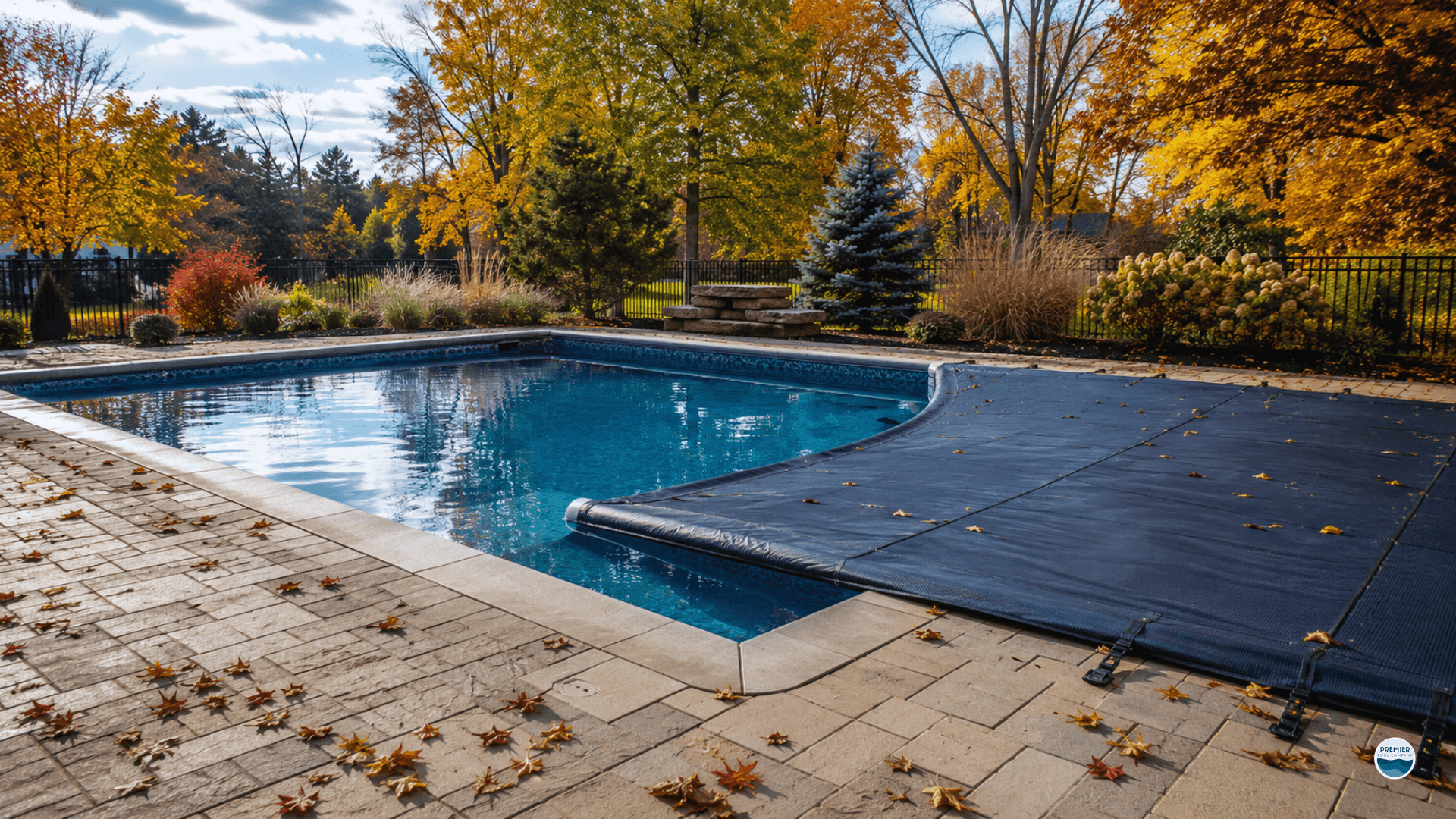
Winterizing A Pool - How To Prepare For Ohio Winters
Ohio winters are not the coldest in the country, but they might be the most punishing for a pool.
The problem isn't the extreme cold.. It's the freeze-thaw cycle.
A hard freeze in November, a January thaw that hits 50°F, then another freeze in February.
That back-and-forth is what cracks plumbing, pops skimmers, and turns a pool into an expensive headache come spring. And to avoid these, it’s important to start winterizing a pool before the first hard freeze.
Believe me, I’ve dealt with several homeowners who faced huge costs because they ignored the importance of this. And the main reason people ignore it is that there aren’t enough guides or directions in winterizing a pool. Even pool experts do not really talk about it when you consult them for building a pool.
The funny thing is, the process is actually quite simple. Winterizing a pool the right way takes just a few hours and costs relatively little.
So today I’ve decided to share a bit of knowledge from my experience and give you a quick guide on how you should prepare for Ohio winners to protect your pool from the hard cold cycle.
I’ll try to keep things very specific and easy. I understand, if you are a homeowner, you wouldn’t want a lot of complex actions. So don’t worry. You won’t be dealing with anything too difficult.
Now, let’s begin.
TL;DR - Winterizing A Swimming Pool For Ohio Winters
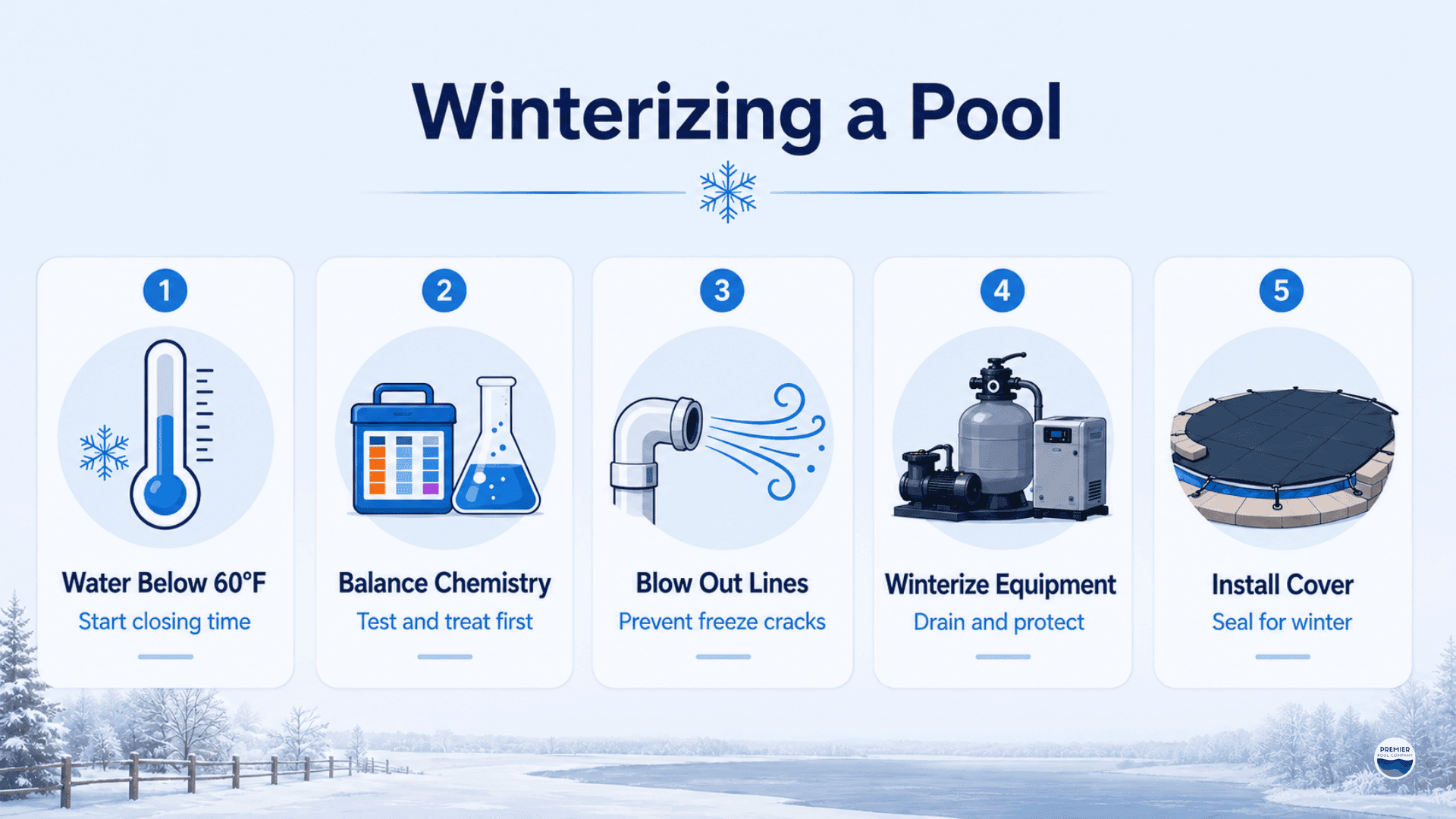
Start winterizing and cover up the pool when the pool water hits 60°F.
Always test the water, not weather, because water temperature lags behind air by weeks.
Balance the chemistry 24-48 hrs before covering up the pool.
Make sure to run the pump after you add chemicals so everything circulates.
Add algaecide after your chlorine drops below 3 ppm or they may become non-functional.
When blowing out lines, plug each one immediately, don't move to the next line first.
Don't drain a fiberglass pool below the skimmer bottom, else the shell can shift or pop.
Remove and store your saltwater cell indoors as they may crack during hard freezes.
Don't cover the pool until chlorine is below 3 ppm else it may bleach the vinyl liner or discolor fiberglass.
In northeast Ohio, antifreeze in the lines and a good cover is not optional.
A professional close costs $150–$350 whereas a cracked return line costs $1,500–$5,000.
Want to skip the checklist and have a professional handle your pool closing? Schedule your pool closing with The Premier Pool Co. For a technical overview of what proper pool winterization entails, the Pool & Hot Tub Alliance (PHTA) pool care resources are a great place to start.
Why Ohio Is Harder on Pools Than You'd Think
The challenge in Ohio isn't that winters are extreme. Rather it's the unpredictable fluctuation of the temperature.
Northern Ohio (Cleveland, Akron) gets lake-effect snow and can see temperatures swing 40 degrees in a week.
Central Ohio (Columbus) has milder winters but regularly gets surprise freezes in October before most people have covered their pools.
Southwest Ohio (Cincinnati, Dayton) tends to be the mildest, but that can create a false sense of security.. Sometimes, a bad year still happens.
The practical lesson: prepare for the worst Ohio can do, not the average. Closing your pool properly costs the same regardless of what the winter turns out to be.
When To Start Winterizing: It's About Water Temperature, Not the Date
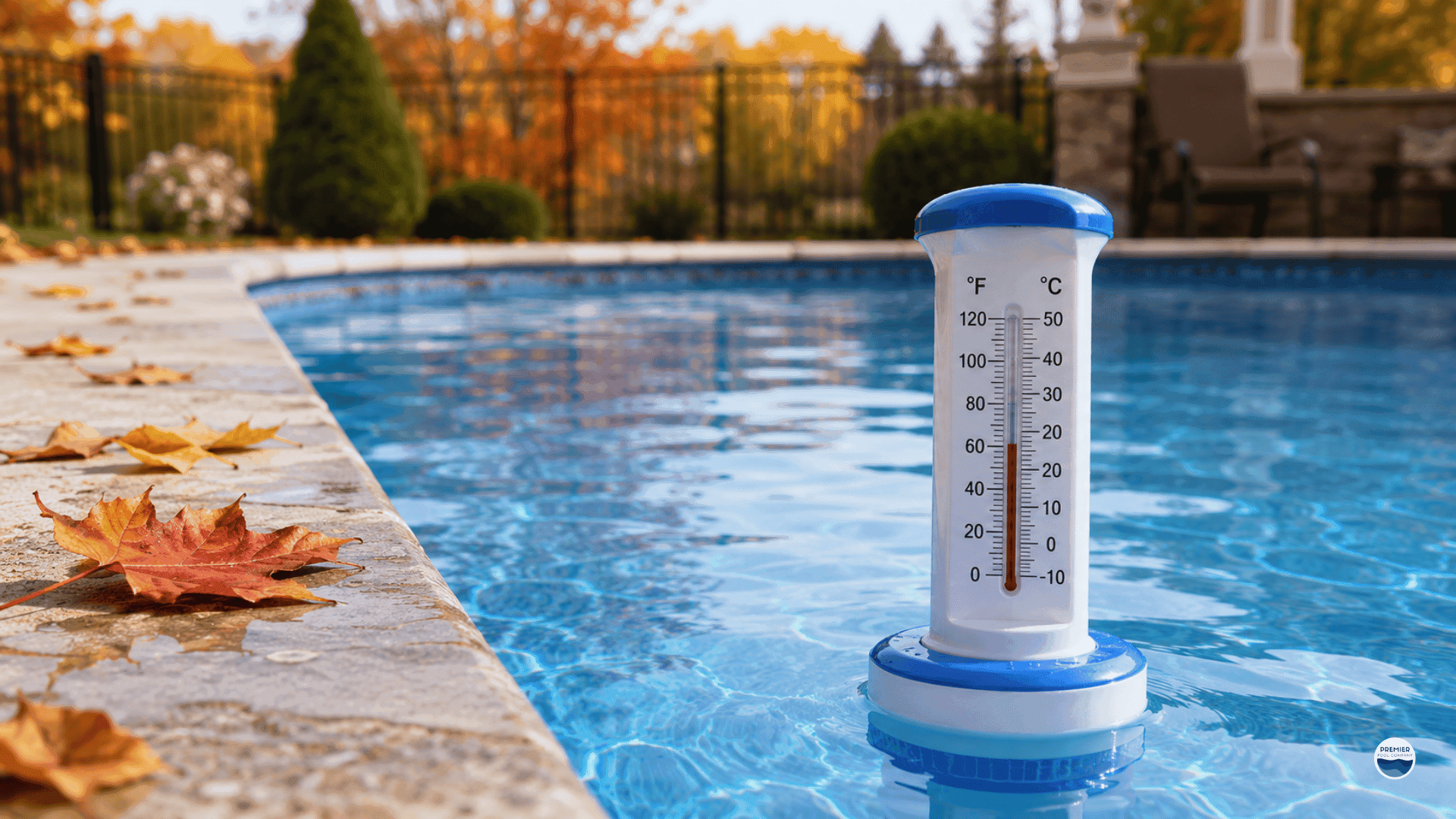
The rule is simple. Cover up when your water consistently reads below 60°F. At that temperature, algae essentially stops growing. Above it, algae can still bloom under your cover if the chemistry isn't perfect.
In most of Ohio, that 60°F threshold arrives between mid-September and mid-October. Start watching your pool thermometer after Labor Day. When you see it trending toward 65°F and dropping, start getting your supplies together and pick a closing date.
Aim for a calm, dry weekend, but make sure you have at least a day in hand for your final chemical treatment before putting the cover on.
Water Chemistry: The Step Most People Rush
This is the part that matters most. Unbalanced water doesn't stop reacting with your pool just because it's cold outside.
Low pH water will slowly eat away at plaster and corrode fittings.
High pH water deposits scale.
An under-shocked pool can harbor algae spores all winter and bloom in the spring.
Get your water tested and hit these targets before you do anything else:
Parameter | Target Range | What Goes Wrong If You Don't |
|---|---|---|
pH | 7.2 – 7.6 | Too low etches surfaces; too high causes scale buildup |
Total Alkalinity | 80 – 120 ppm | Keeps pH from swinging all winter |
Calcium Hardness | 200 – 400 ppm | Prevents plaster erosion and equipment corrosion |
Chlorine | 1 – 3 ppm before shock | Baseline before adding closing shock |
Phosphates | Below 200 ppb | High phosphates feed algae under the cover |
After balancing, add a winterizing shock. Wait for chlorine to drop back below 3 ppm before adding your algaecide (because high chlorine will break it down on contact). Run the pump for 24 hours after the algaecide before closing.
One note for fiberglass pool owners: don't over-shock. High chlorine concentrations can discolor the gelcoat surface of fiberglass pools. Use a gentler formula, pre-diluted in a bucket of water before adding it to the pool.
The Physical Steps
So, here’s a quick step by step process of winterizing a pool.
1. Clean the Pool
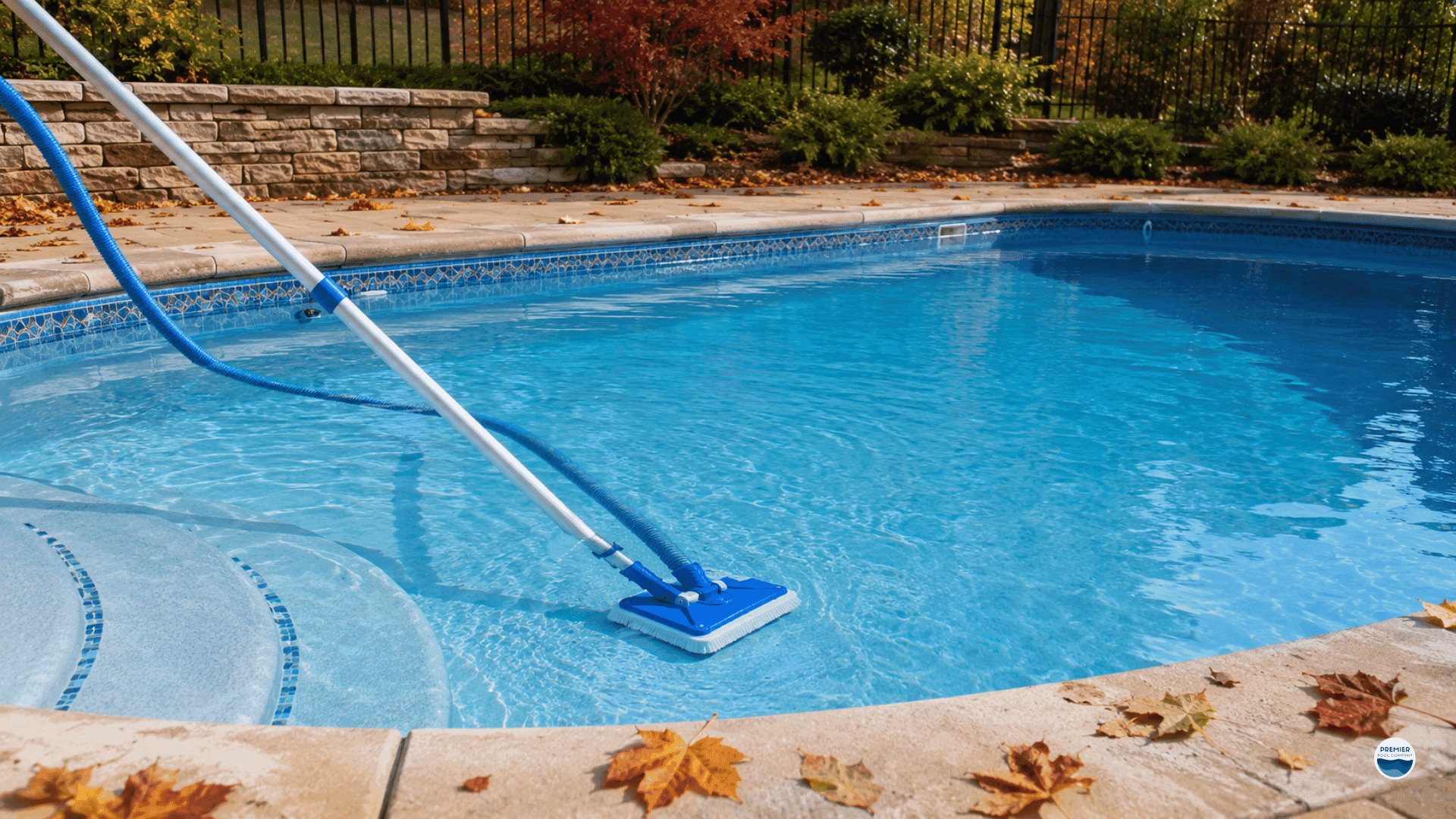
Brush the walls and floor, then vacuum to waste, meaning the water goes out to waste rather than back through your filter.
Every bit of debris left in the pool becomes a nutrient source for algae over winter.
I want to stress that I shouldn't skip the brushing… Algae usually start on the walls, not the floor.
2. Lower the Water Level
The goal is to get the water below the skimmer so it doesn't freeze inside the skimmer housing. For most pools in Ohio, 4–6 inches below the skimmer opening is the right amount.
Fiberglass pools are the exception. Only lower to the bottom of the skimmer, not below it. Fiberglass shells need water inside them to counteract soil and groundwater pressure from outside. If you drain it too much, the shell can pop or shift. (Ohio's clay soils make this risk real.) This is the most critical rule when winterizing a fiberglass swimming pool; the water is structural, not optional.
Vinyl liner pools: Keep the water level reasonable. Liners can shrink in cold weather, and dropping the water too far can cause wrinkling that's hard to fix in spring.
3. Blow Out the Plumbing Lines
This is the most important physical step that you cannot afford to do wrong or skip (many do skip, surprisingly).
Every inch of plumbing that holds water can easily lead to a horrific crack. Water expands 9% when it freezes. That expansion has to go somewhere, and it usually goes into a fitting or pipe wall.
Use a shop vac or a dedicated pool blower to push air through every return line, skimmer line, and main drain line until water stops coming out. Then plug each line with a rubber expansion plug from inside the pool.
In northern Ohio especially, add non-toxic pool antifreeze to the skimmer lines as a backup layer of protection. Trust me with this. It's cheap insurance.
4. Winterize Your Equipment
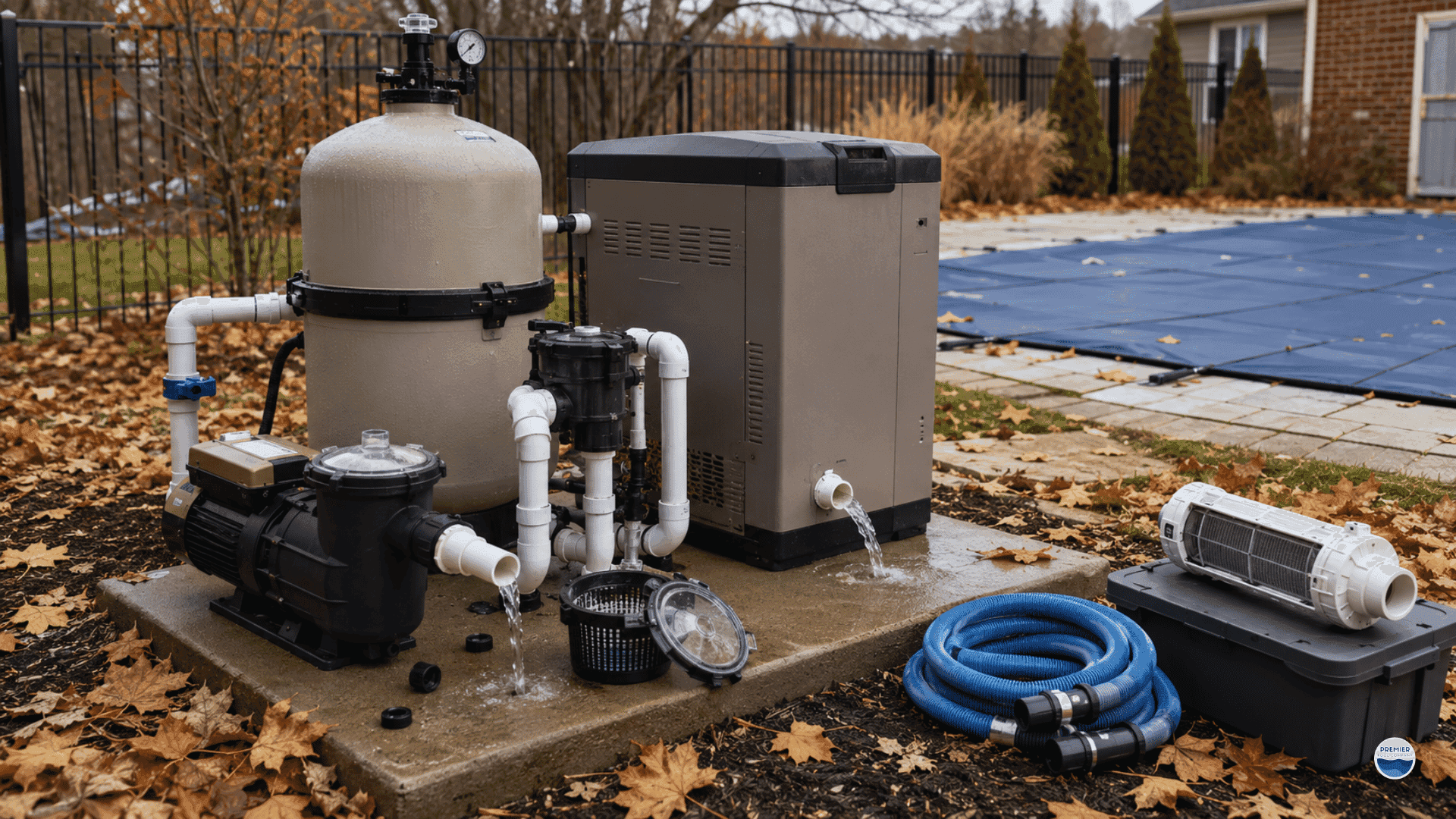
Drain the pump completely. You should have a drain plug at the base. Remove it and let it drain. Then store the pump indoors if you can.
Sand filters: backwash and drain, then store the multiport valve indoors.
Cartridge filters: pull and clean the cartridges, store them inside.
Gas heaters: drain the heat exchanger. Heat pump heaters: follow the manufacturer's drain instructions carefully.
If you have a saltwater chlorine generator, remove the cell and store it indoors. They're expensive to replace and freezing damage to the electrodes is common.
5. Cover the Pool
The two main options are solid covers and mesh covers.
Solid covers block light completely, which is good for algae prevention. But it may collect standing water on top, which becomes heavy ice during winter in Ohio. If you use a solid cover, a cover pump is basically required.
Mesh covers let water pass through, so no standing water, but fine debris and some light can get in. With balanced chemistry and algaecide, this is manageable.
Safety covers, the kind anchored to the deck with stainless steel springs, are the best option overall. They're secure, long-lasting (10–15 years), and can hold the weight of an adult. They cost more upfront but eliminate the annual hassle of water bags blowing off in a November windstorm.
Quick Guide by Pool Type
The basics are the same for every pool, but a few things change depending on what yours is made of:
Pool Type | Biggest Risk | Key Difference at Closing |
|---|---|---|
Concrete / Plaster | Algae bloom; surface etching from low pH | Be aggressive with shock; keep calcium hardness 250–400 ppm |
Shell pop from draining too low | Lower water to skimmer bottom only; use enzyme treatment; gentle shock | |
Vinyl Liner | Liner cracking; calcium scaling at waterline | Use ice equalizers; keep calcium 150–250 ppm; don't over-drain |
Ohio Regional Quick Reference
Region | Main Risk | Key Adjustment |
|---|---|---|
Northeast Ohio (Cleveland, Akron) | Hard freeze + lake-effect snow weight | Close mid-September; antifreeze in lines; heavy-duty cover |
Central Ohio (Columbus) | October warm spells causing delayed close | Watch temps, not the calendar; close by early October |
Southwest Ohio (Cincinnati, Dayton) | Under-preparing due to mild assumptions | Still blow out lines; don't skip steps just because winters feel mild |
DIY vs. Hiring a Pro
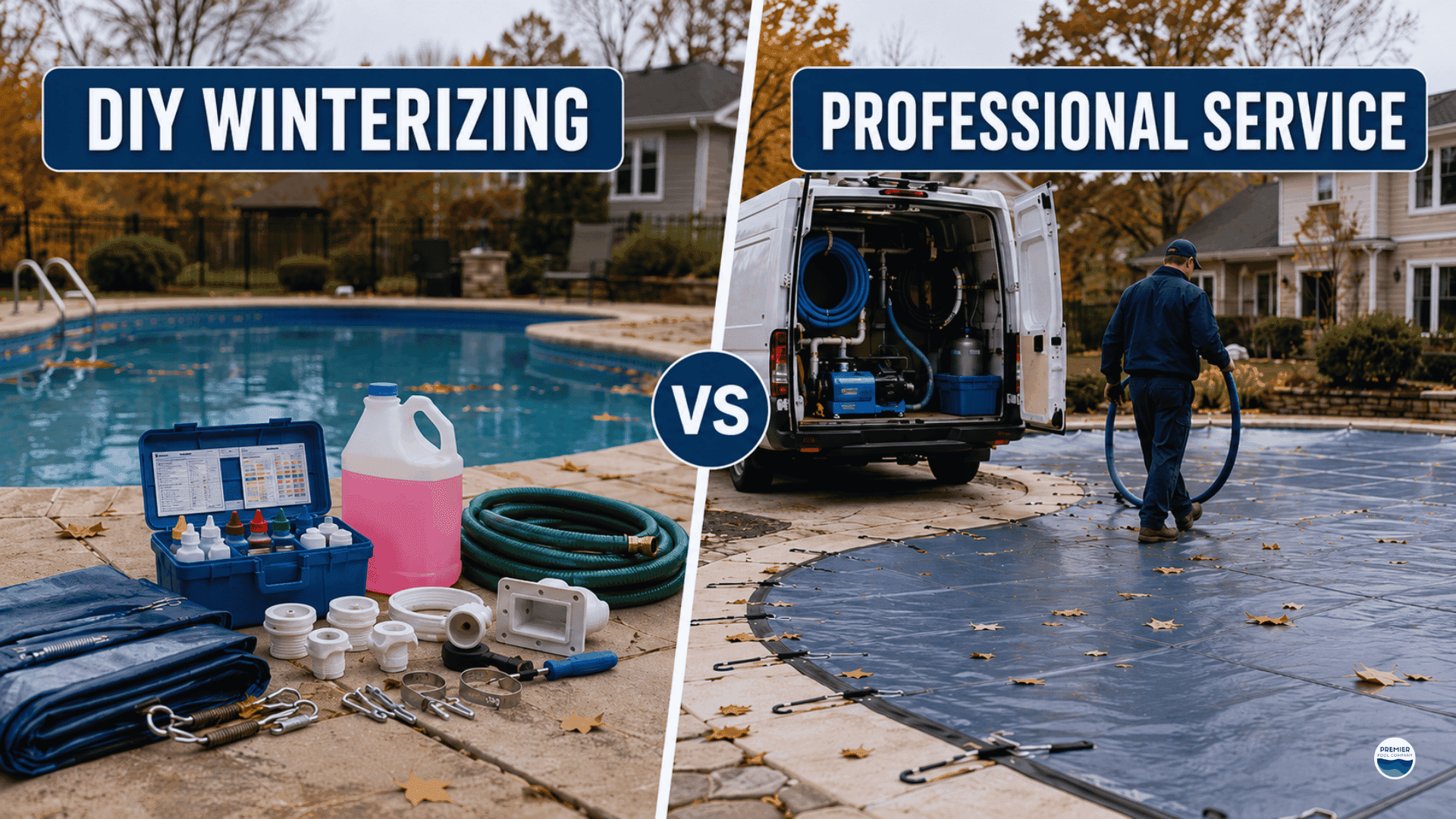
A basic inground pool with a single pump and filter is very manageable to winterize a pool yourself, especially once you've done it once.The chemicals, plugs, and equipment you need are available at any pool supply store, and the process takes a few hours.
Hire a professional if: your pool has a heater, saltwater system, in-floor cleaners, or a spa; you've never closed a pool before; or you're in northern Ohio where the freeze risk is highest.
Pros have pressure testing equipment to find plumbing issues before winter makes them worse. The cost is $150–$350 for most Ohio pools, which is a reasonable trade-off for peace of mind. Curious about what a new inground pool actually costs in Ohio? Check out our complete inground pool cost guide for Ohio homeowners.
One Thing That Makes Spring Opening Much Easier
On a mild day in January or February, check on your pool. Pull back a corner of the cover and look at the water. Test the chemistry if you can.
Ohio's January thaws regularly dump rain or snowmelt into pools, which can throw off your pH and alkalinity. Catching it mid-winter and adding a small corrective dose takes 10 minutes and saves you from opening to murky or stained water in April.
A pool that was closed right opens in a day or two. A pool that wasn't can take a week of heavy chemical treatment to fix. The work you put in during the winterizing process pays back directly in spring.
Final Thoughts
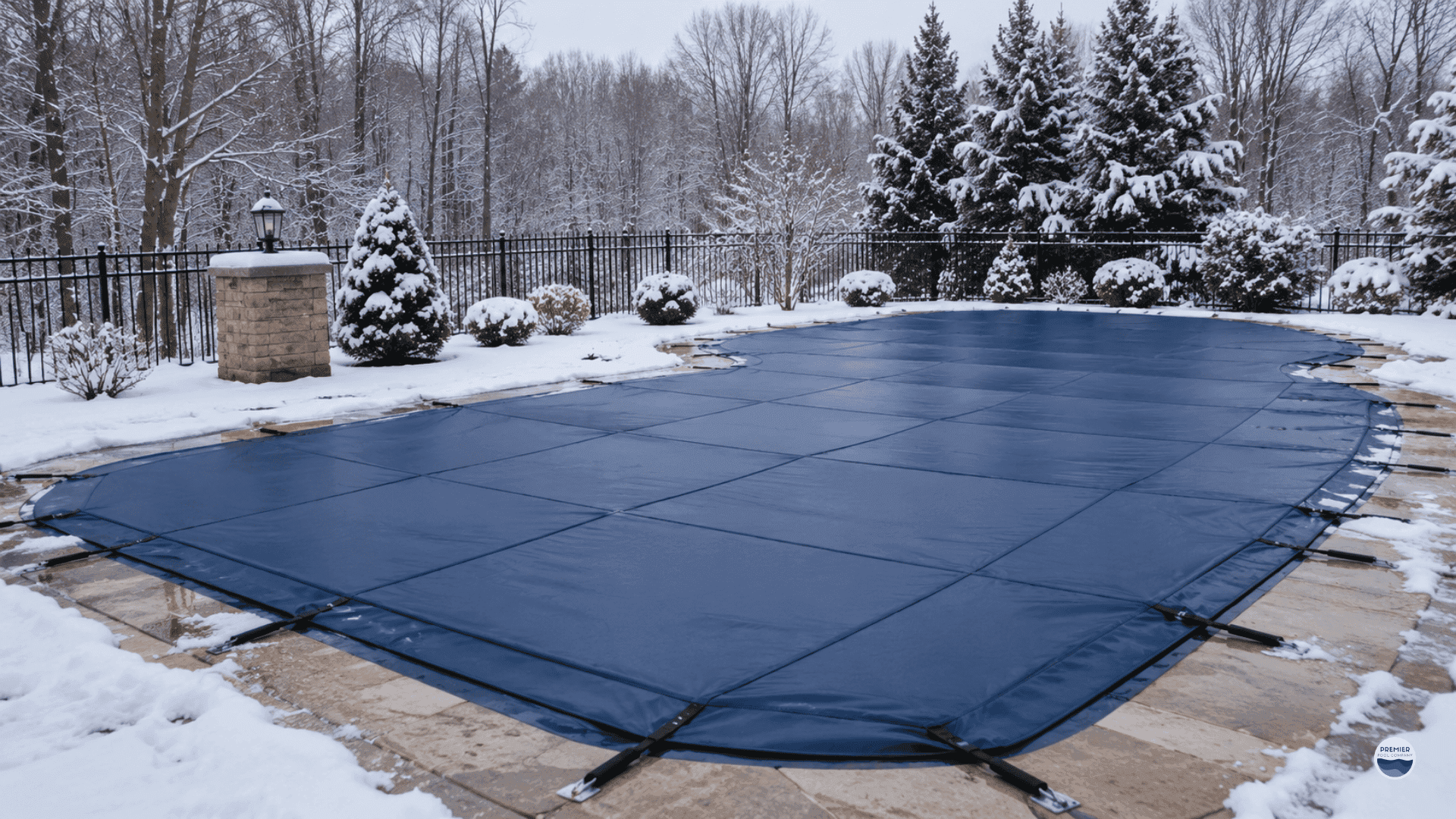
Winterizing a swimming pool in Ohio doesn't have to be complicated. Get the chemistry right, blow out the lines, protect the equipment, and put on a good cover. Those four things done well will get your pool through whatever Ohio winter throws at it.
The only real mistake is rushing or skipping steps because the season is over and you're tired of dealing with it. That feeling is understandable, but it's exactly how you end up replacing a skimmer or a plumbing section in March when you'd rather be planning your first pool party of the year.
If you're in Central Ohio and want your pool properly closed before the first hard freeze,
get in touch with The Premier Pool Co. and our team will handle your pool closing from start to finish.
Frequently Asked Questions
What temperature should I close my Ohio pool?
Close when your water temperature is consistently below 60°F. That's the point where algae stops being a serious risk. In Ohio, this typically falls between mid-September and mid-October depending on where you are in the state. Check the water temperature, not the calendar.
Do I need antifreeze in my pool plumbing?
In northern Ohio, yes, it's worth doing. Use non-toxic propylene glycol pool antifreeze, not automotive antifreeze (which is toxic). Pour it into the skimmer and return lines after blowing them out. In central and southern Ohio, properly blown and plugged lines usually hold up fine without it, but the cost of a gallon is trivial compared to the cost of a cracked pipe.
Should I drain my fiberglass pool for winter?
No. This is one of the most common and costly mistakes fiberglass pool owners make. The water inside the pool keeps the shell stable against soil and groundwater pressure. Drain it too far, especially in spring when the water table rises and the shell can shift or pop out of the ground. Lower the water to the bottom of the skimmer and stop there.
What's the single most common closing mistake?
Skipping or rushing the water chemistry. By late September, people are done with pool maintenance for the year and just want to cover it. But unbalanced water spends the entire winter slowly damaging your pool surface, fittings, and equipment. Low pH is the worst offender, it etches plaster and corrodes metal. Spend 30 minutes on chemistry. It's the highest-return thing you can do.
How much does it cost to professionally close a pool in Ohio?
Most pool companies in Ohio charge $150–$350 for a standard inground pool close. Pools with heaters, saltwater generators, or spas cost more and take longer. If something goes wrong from skipping winterization, a cracked return line, for example - repairs typically run $1,500–$5,000. Professional closure is usually worth it.
More Blogs

Aaron Lehner
Pool Water Testing in Ohio: A Beginner's Guide to Getting It Right
Pool water testing in Ohio was simple. Learn how to test chlorine, pH, alkalinity, and calcium hardness to keep your pool clear, balanced, and swim-ready.

Aaron Lehner
Paver Patio vs Concrete Pool Decks (Based on Ohio Climate)
Compare paver patio vs concrete pool decks in Ohio. Learn how pavers vs concrete patio options handle freeze-thaw cycles, drainage, heat, and maintenance.

Aaron Lehner
7 Best Pool Features To Add To Your Backyard In 2026
Discover the best pool features, custom pool features and swimming pool features for 2026, plus practical pool feature ideas that keep your Ohio backyard stunning and durable.